Airport Charging That Keeps Travelers Connected

A traveler at 12% battery is not thinking about terminal design, retail strategy, or the quality of the lounge furniture. They are looking for an outlet – and often finding one already occupied. Airport charging turns that familiar point of frustration into a visible service that helps passengers stay connected to boarding passes, airline apps, work, entertainment, and ground transportation.
For airport operators, concession managers, lounge providers, and terminal planners, charging is more than an amenity. Done well, it can reduce crowding around wall outlets, encourage travelers to remain in commercial areas, support paid services, and reinforce the impression that a facility is designed around real passenger needs.
Why Airport Charging Is a Passenger Experience Issue
Mobile devices now carry much of the travel journey. A phone may hold a digital boarding pass, gate-change alert, hotel confirmation, rideshare access, payment method, and family contact information. Tablets and laptops are equally important for business travelers facing delays or long connections.
When power is scarce, travelers react quickly. They sit on terminal floors near outlets, leave seats to hunt for power, or buy a low-quality disposable charger they may never use again. Those behaviors create a poor visual experience and take people away from restaurants, shops, gates, and lounges.
Convenient charging changes the equation. A passenger who can charge securely at their seat, table, or gate is more likely to stay comfortable, keep using airport services, and view a delay as manageable rather than disruptive. That matters most in large hubs, international terminals, and airports where gate holds can extend without warning.
The Right Airport Charging Format Depends on the Location
There is no single charging product that fits every part of an airport. The best deployment starts with where passengers wait, how long they stay, what devices they carry, and whether staff can monitor the equipment.
Gate areas need high visibility and high capacity
Gate areas experience concentrated demand, especially when flights are delayed or multiple departures share the same seating zone. Charging tables, benches with integrated power, and freestanding charging kiosks work well here because they put power where passengers are already seated.
The priority is availability. A few wall outlets will not serve a full gate area, particularly when travelers are carrying phones, tablets, laptops, headphones, and battery-powered medical accessories. Equipment should support current USB-C charging alongside traditional USB and AC power where appropriate. Visible instructions and clear status indicators help passengers use the station without asking for assistance.
Secure lockers fit long dwell times
Charging lockers are useful in terminals, lounges, and airport retail zones where passengers want to walk away while their device charges. A lockable compartment lets someone charge a phone or tablet while getting food, visiting a store, or taking a call without carrying a low battery device in their hand.
Security is the deciding feature. Open charging points are excellent for someone sitting nearby, but they are less suitable for a traveler who needs to move around. Lockers should be durable, easy to understand, and designed to protect both the device and the charging hardware from misuse. For airports, that means considering cleaning access, cable management, and the ability to handle frequent daily use.
Lounges and premium spaces need charging that feels integrated
Airport lounges have a different expectation. Guests do not want to search for a kiosk or compete for the one outlet beside a chair. Desktop chargers, charging tables, and furniture-integrated power create a more polished experience while keeping surfaces organized.
For these environments, placement matters as much as quantity. Put charging within reach of every work surface and seating cluster. Include laptop-ready options for guests who need to work, but avoid overbuilding with equipment that dominates the room or creates cable clutter. The goal is quiet convenience.
Retail and food courts can use charging to extend dwell time
Restaurants, bars, and retail operators benefit when customers have a reason to sit longer and stay engaged. A charging table near a food court seating area can make that zone more attractive than a nearby competitor. A compact countertop unit may be enough for a café with short visits.
There is a trade-off. Free charging can build goodwill and support a better customer experience, while pay-per-use charging can help offset equipment, maintenance, and operating costs. The right model depends on passenger volume, local pricing expectations, and whether the airport or concessionaire is managing the service.
Free Charging, Paid Charging, or Both?
Airport charging can be treated as a basic public amenity, a premium convenience, or a commercial service. Each approach has a place.
Free-use charging is often the strongest choice at gates and in public waiting areas. It supports accessibility, reduces passenger stress, and demonstrates that the airport has accounted for modern travel behavior. It can also be sponsored, with branding from an airline, telecom provider, credit card company, or local business.
Paid charging is more practical when it provides added value, such as secure locker access, longer charging sessions, power bank rental, or a premium charging location. POS-enabled stations allow operators to set a price, collect payment, and create a measurable return from a service travelers already seek out.
A blended model is often the most effective. Offer accessible free power in core passenger areas, then provide secure lockers or portable power options as a paid convenience. That keeps the airport passenger-friendly without giving up every revenue opportunity.
What to Look for in Airport Charging Equipment
Airport environments are demanding. Equipment can be used continuously, exposed to spills and heavy luggage traffic, and relied on by travelers who may have only minutes before boarding. The lowest-cost station is rarely the lowest-cost decision over time.
Start with device compatibility. USB-C is essential for many current phones, tablets, and laptops, but a mixed charging environment may still require USB-A ports and AC outlets. Consider the power available at each location and whether the equipment can charge multiple devices without creating a slow, disappointing experience.
Next, consider physical security and safety. Lockable compartments, protected cables, stable enclosures, and charging safeguards reduce risk for both travelers and operators. Public charging equipment should also be simple to clean and built to withstand repeated use. Loose cables, damaged ports, and confusing controls create support issues that busy airport teams do not need.
Finally, consider administration. Larger airports may need asset management features, usage reporting, payment integration, or the ability to configure stations across multiple terminals. A smaller regional airport may prioritize plug-and-play deployment and a straightforward maintenance plan. The right system matches the operational capacity of the team that will own it.
Placement Makes or Breaks the Investment
A charging station hidden behind a column or placed far from seating will underperform, no matter how capable it is. Start by observing passenger behavior. Where do people gather during delays? Where are travelers sitting on the floor near outlets? Which food court tables fill first? Those are clear signals of unmet demand.
Place public stations where travelers can see them from a distance and use them without blocking circulation. At gates, that may mean the perimeter of a seating area. In a retail zone, it may mean a highly visible charging table that invites people to stop. For lockers, choose a monitored, well-lit location with enough room for passengers to open compartments without creating a bottleneck.
Signage should be direct. Travelers do not need marketing copy when their phone is dying. They need to know whether charging is free or paid, what devices are supported, how long a session lasts, and where to get help if there is a problem.
Build Airport Charging Into the Terminal Experience
Charging is most effective when it is included in a broader passenger experience plan rather than added as an afterthought. Coordinate airport charging with seating upgrades, lounge improvements, concession strategy, digital wayfinding, and passenger communications. If a gate renovation adds more seats but not more power, the problem has only moved to a newer-looking area.
It also pays to plan for changing device habits. Travelers increasingly expect USB-C, higher-power laptop charging, and the ability to keep multiple devices running at once. Infrastructure that can be updated, expanded, or deployed in different formats gives airport teams more flexibility as demand shifts.
ChargeBar works with organizations that need charging lockers, kiosks, furniture-based power, and commercial charging options without forcing every location into the same format. That flexibility is especially valuable in airports, where a gate hold room, premium lounge, food court, and rental-car center each serve travelers differently.
The best charging program is the one passengers barely have to think about: power is easy to find, safe to use, and available where the next hour of their trip is already happening.
Related posts
Airport Charging That Keeps Travelers Connected
Nov 28, 2026
Airport charging keeps travelers connected, reduces gate-area stress, and creates a practical revenue opportunity for terminals, lounges, and busy airports.
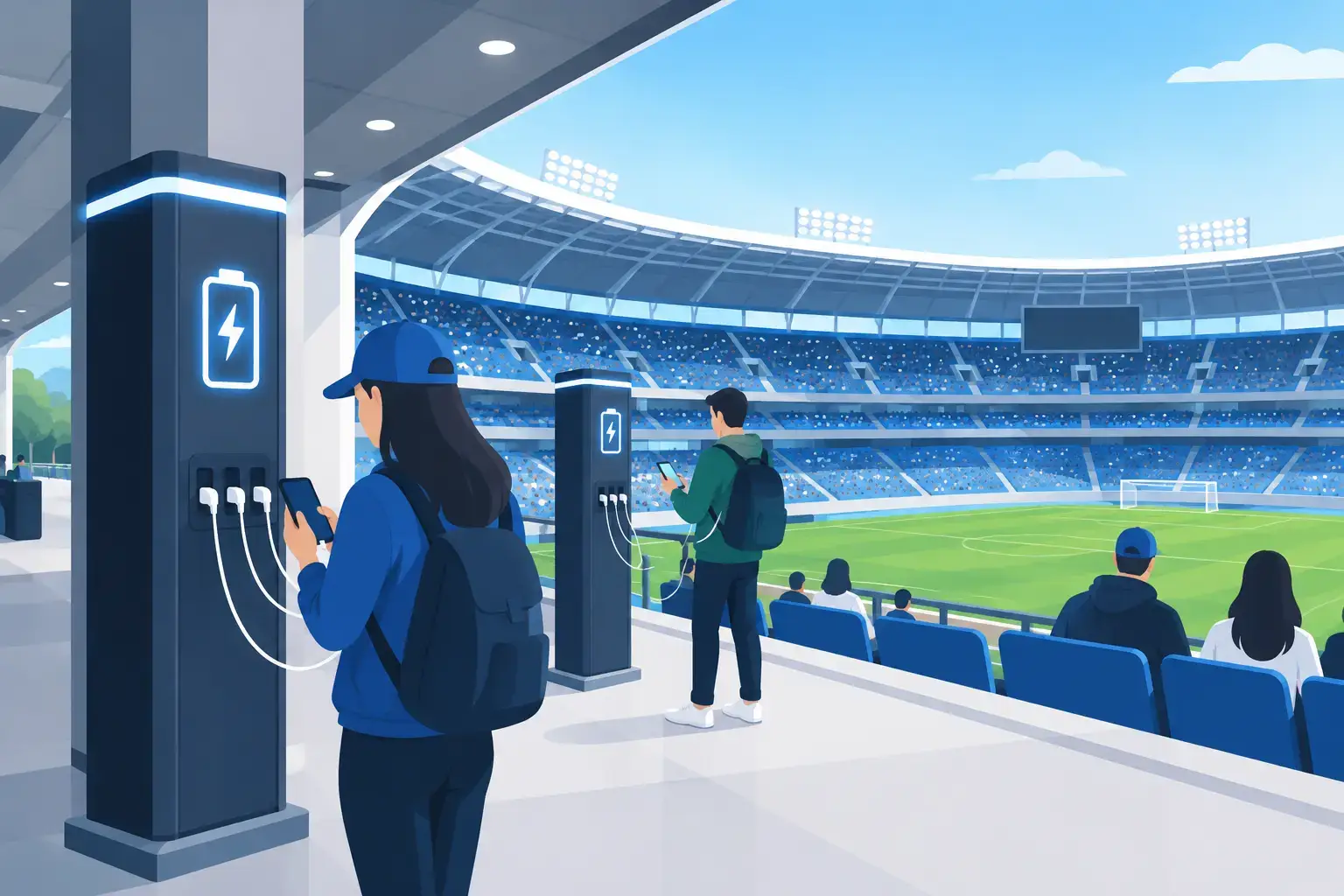
Best Charging Solutions for Stadiums Today
Nov 26, 2026
Compare the best charging solutions for stadiums, from secure lockers to power bank rentals, and build a safer, higher-revenue fan experience at scale.
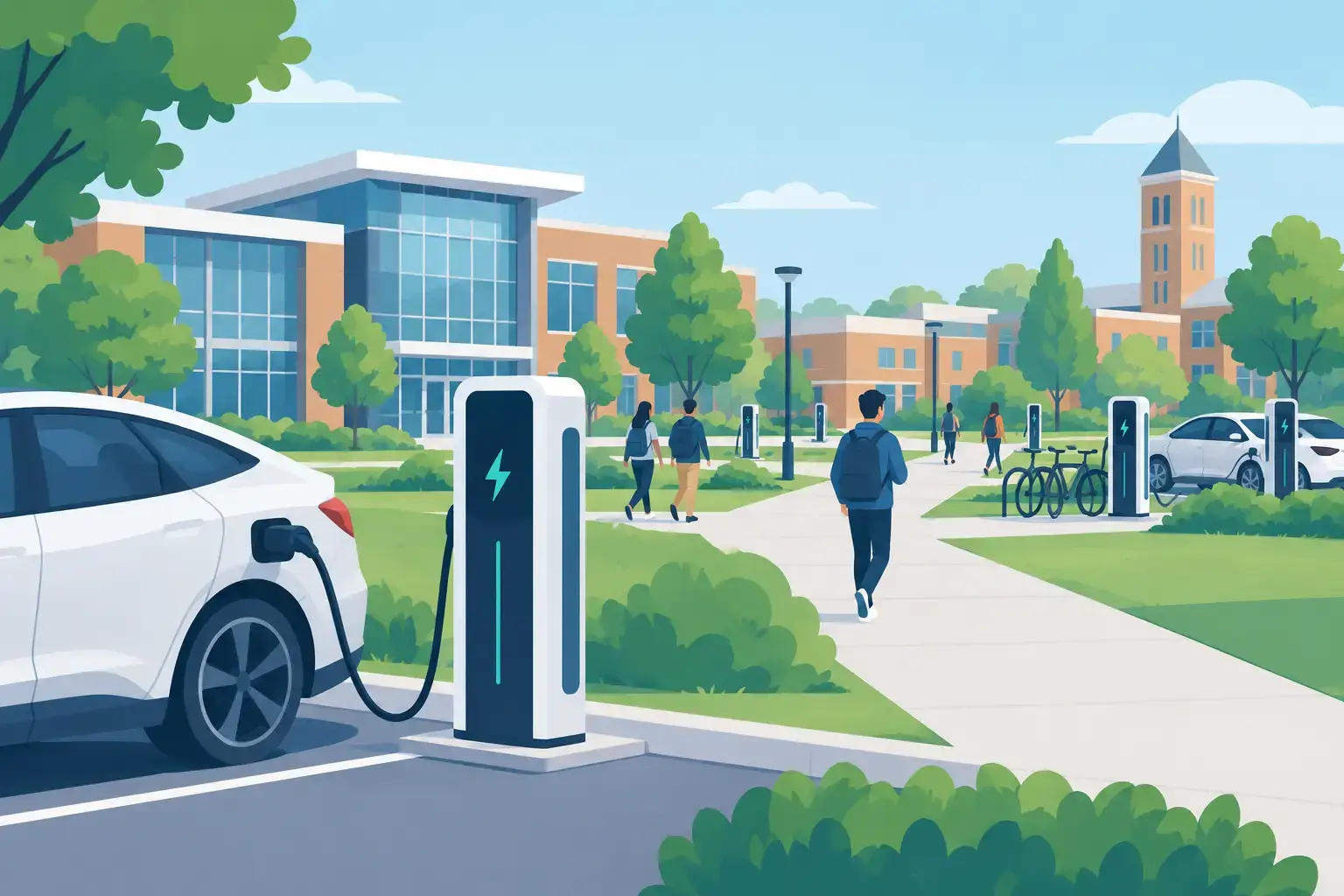
How to Deploy Chargers Across Campuses at Scale
Nov 24, 2026
Learn how to deploy chargers across campuses with secure, scalable stations that support students, staff, visitors, and campus revenue opportunities.

Hospital Charging Checklist for Better Patient Care
Nov 22, 2026
Use this hospital charging checklist to give patients, visitors, and staff safe, secure device power while improving flow, satisfaction, and uptime daily.
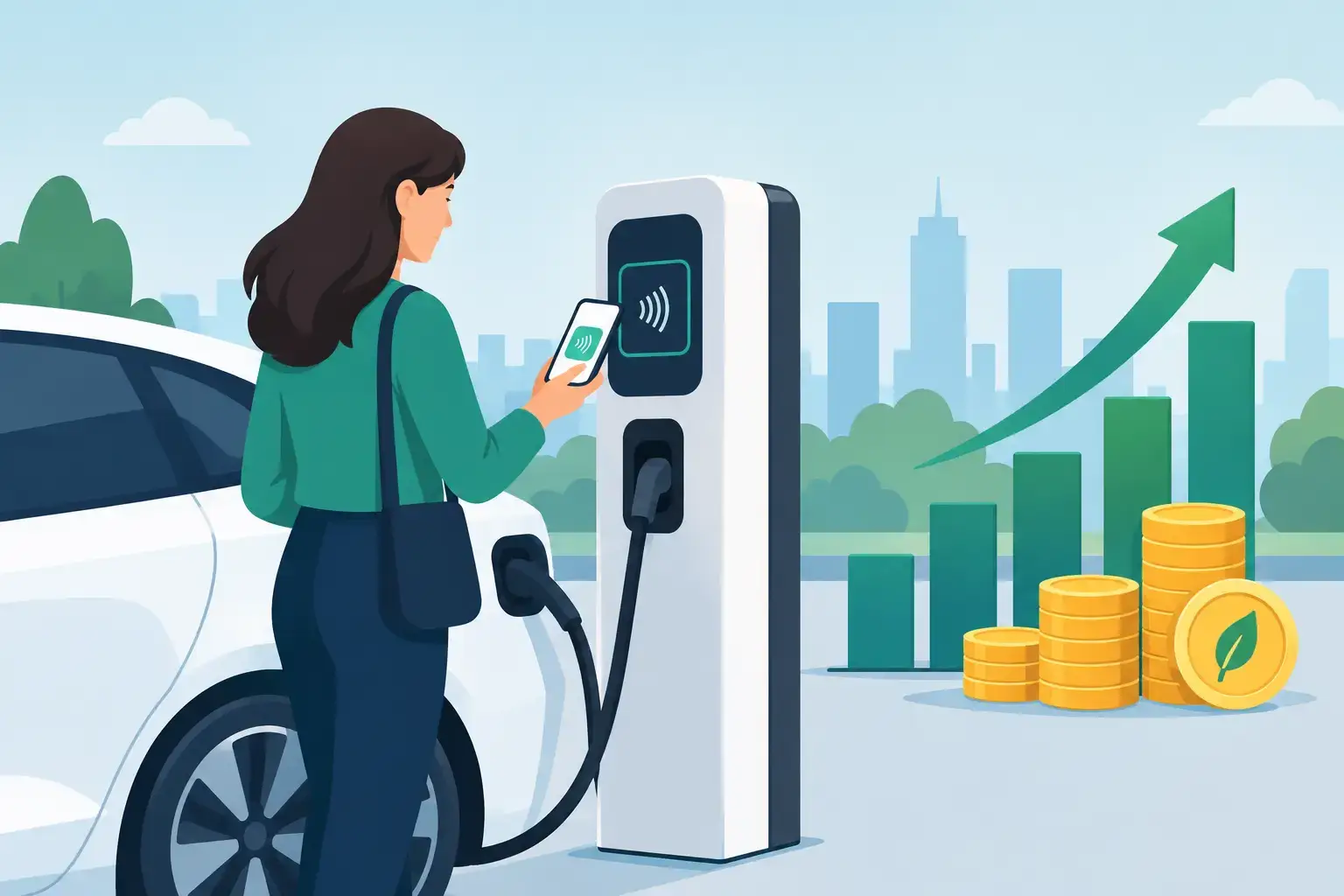
Charging Station Payment Trends That Drive Revenue
Nov 20, 2026
Charging station payment trends are shifting toward tap-to-pay, flexible pricing, and smarter reporting. Learn what operators should prioritize for ROI.
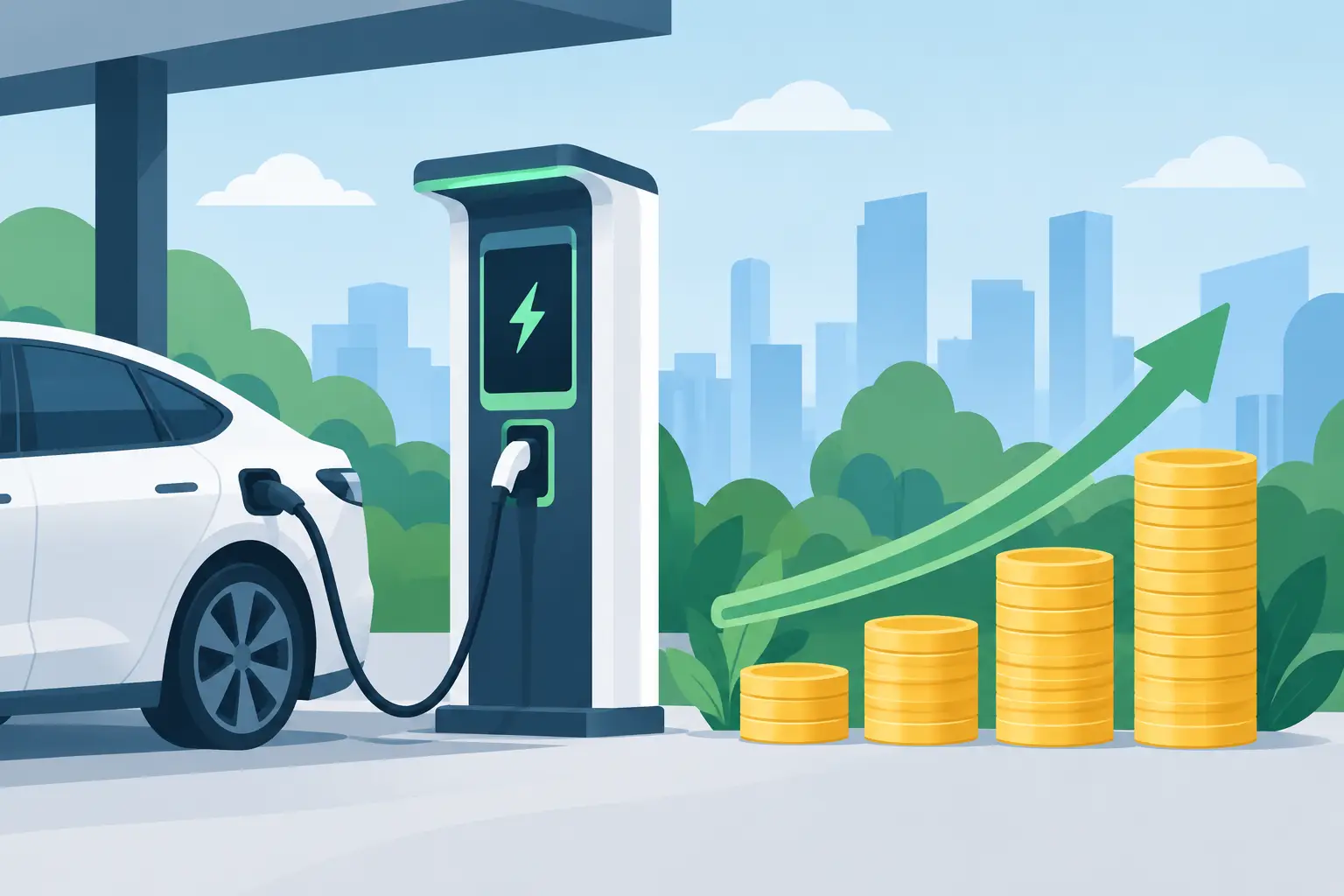
Charging Kiosk Revenue: What Drives Real Returns
Nov 18, 2026
Charging kiosk revenue depends on placement, pricing, uptime, and payment flow. Learn how to build a charging program that earns its place every day.
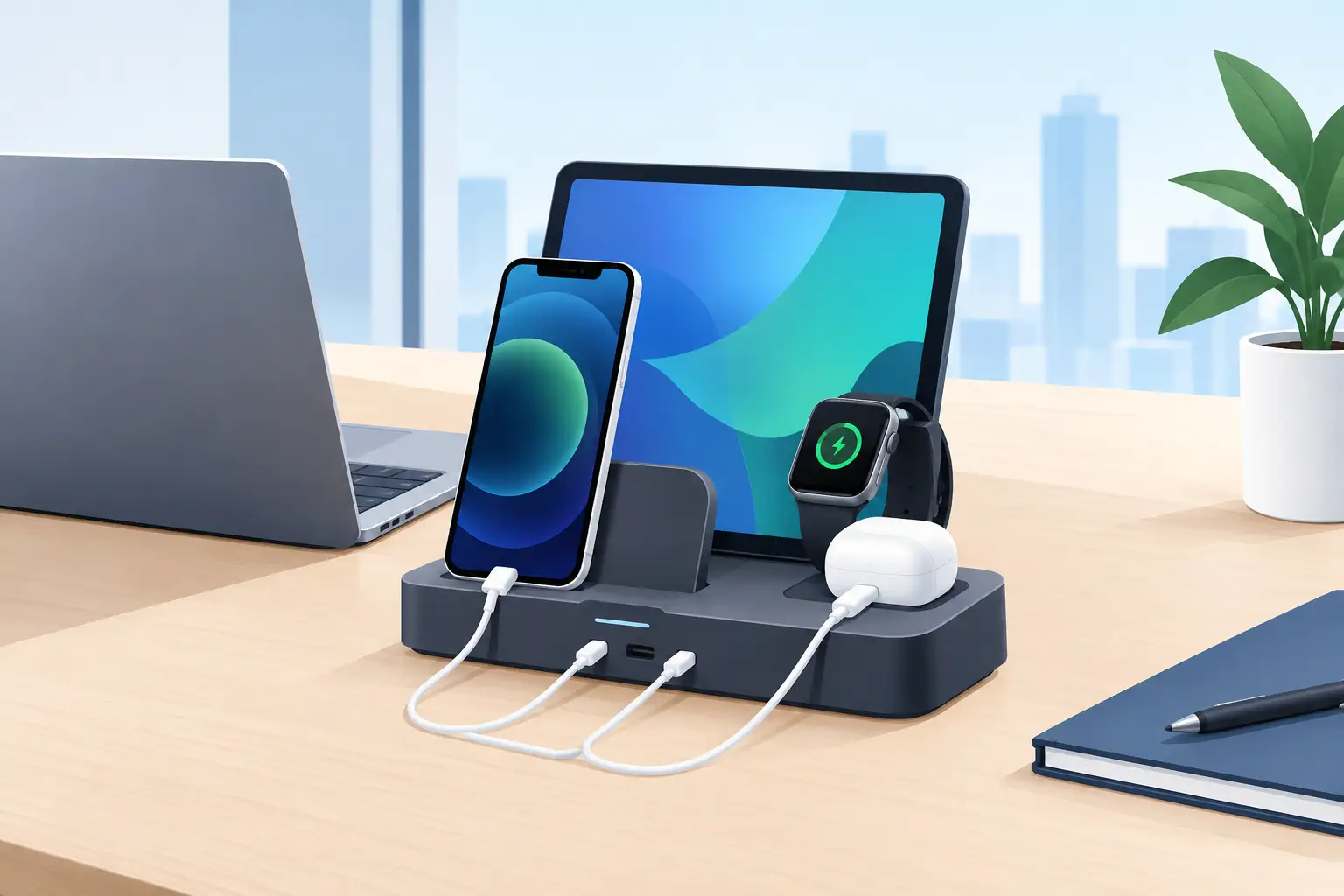
Multi Device Charger Review for Business Buyers
Nov 16, 2026
Our multi device charger review shows business buyers what matters most: charging speed, security, compatibility, uptime, and revenue potential at scale daily.

How to Customize Charging Furniture for Your Space
Nov 14, 2026
Learn how to customize charging furniture with branding, ports, security, payments, and placement that improve guest experience and business results today.
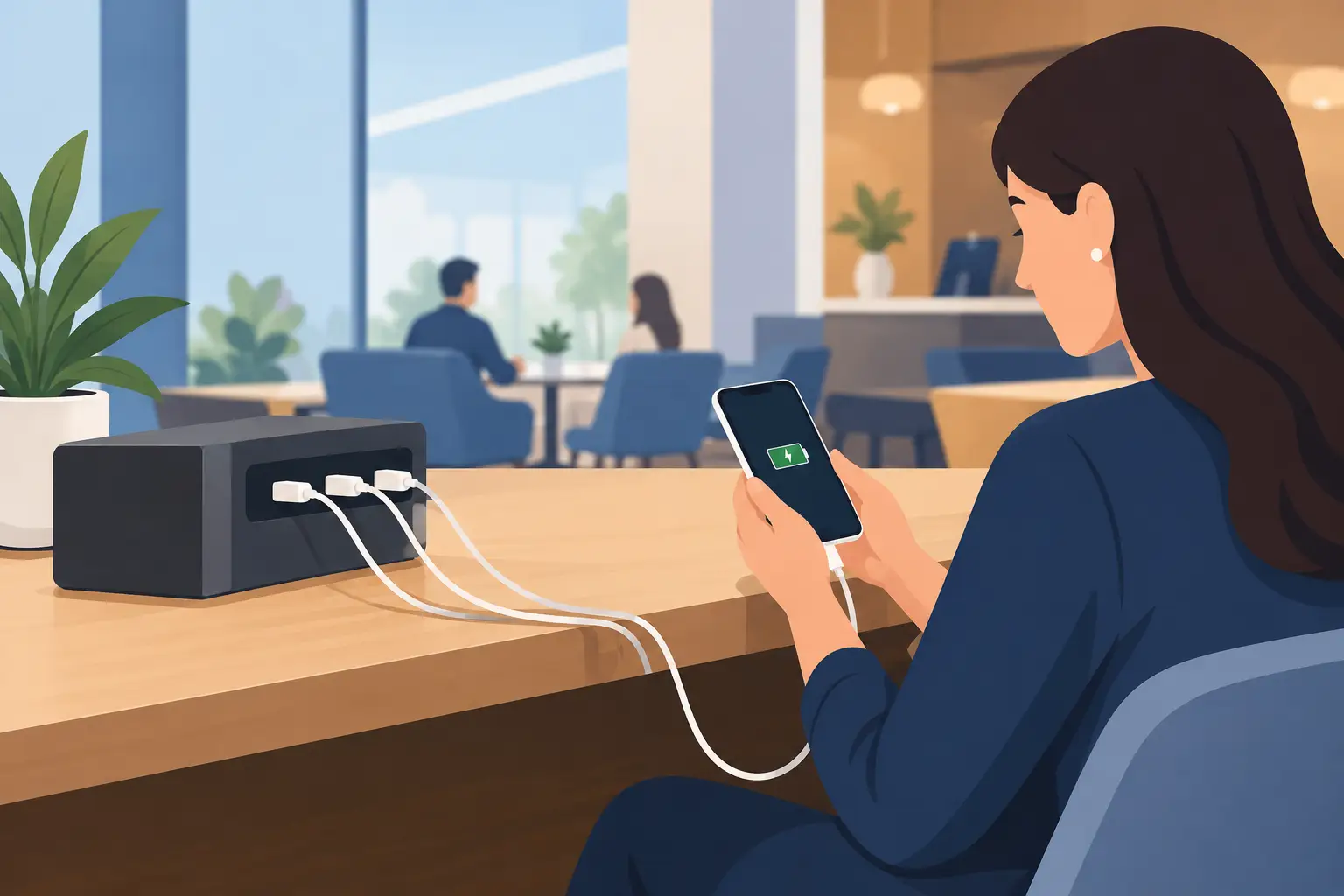
Should Venues Provide Charging Cables for Guests?
Nov 12, 2026
Should venues provide charging cables? Learn when cables improve guest experience, when they create risk, and how secure charging stations deliver value.

University Charging Options Students Will Use
Nov 08, 2026
University charging options keep students connected, protect devices, reduce support needs, and can create practical campus revenue in busy spaces daily.
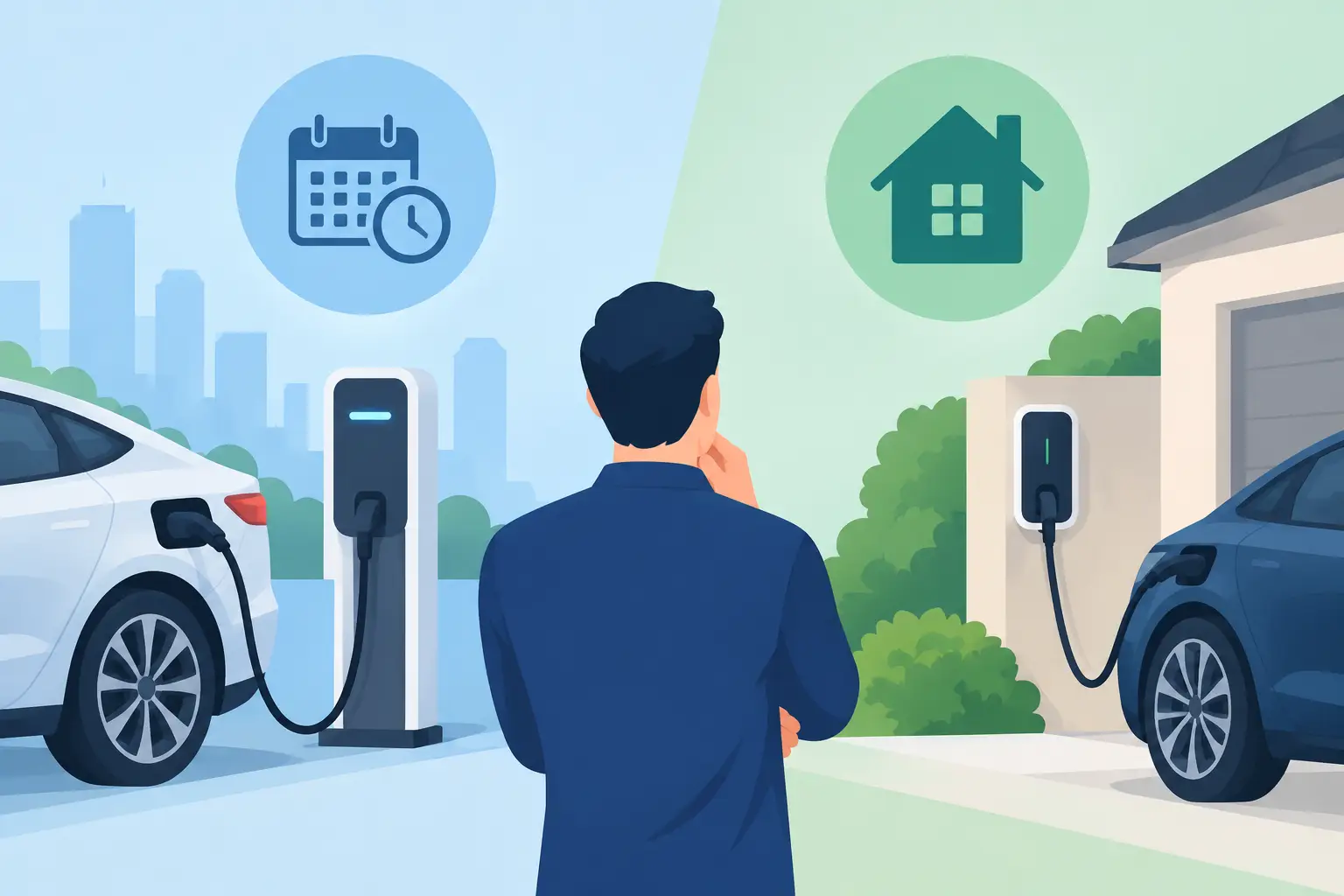
Rental Versus Purchase Charging: Which Fits?
Nov 06, 2026
Compare rental versus purchase charging for events, venues, and workplaces. Choose a secure, scalable model for demand, budget, revenue, and growth ahead.
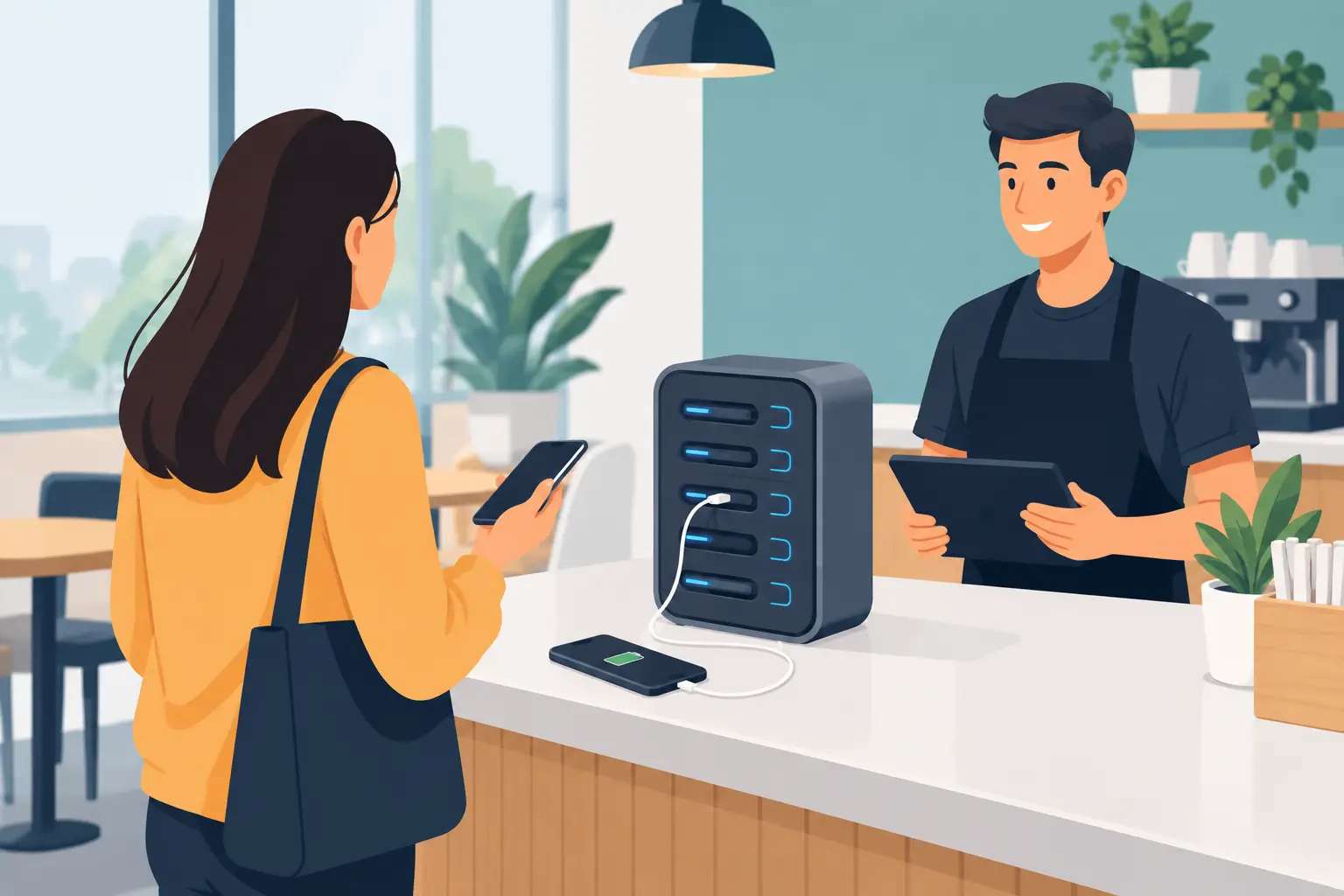
How to Charge Customers for Phone Charging
Nov 05, 2026
Learn how to charge customers for phone charging with practical pricing, payment, placement, and service strategies that turn power into revenue reliably.
Power Bank Sharing Trends Businesses Can Use
Nov 02, 2026
Power bank sharing trends are reshaping venue charging. See what operators need to know about convenience, security, payments, and deployment options.
USB-C Migration Trends Businesses Need to Plan For
Oct 31, 2026
USB-C migration trends are changing public charging. See what businesses should upgrade to support phones, tablets, laptops, safety, and revenue growth.
Event Charging Sponsorship Guide for Better ROI
Oct 29, 2026
Use this event charging sponsorship guide to build sponsor value, select the right charging setup, measure results, and improve attendee experience now.
Charging Station Financing Options for Business
Oct 28, 2026
Compare charging station financing options for your business, from purchase and leasing to rentals and revenue-share models that fit your rollout goals.

Charging Furniture That Keeps Visitors Longer
Oct 25, 2026
Charging furniture gives visitors a place to power up, stay longer, and keep moving. Learn how to choose secure, profitable options for your space with confidence.
Kiosk Revenue Case Study That Can Pay Off
Oct 23, 2026
A kiosk revenue case study for venue operators: learn how pricing, foot traffic, payment flow, and placement shape charging station returns over time.
How to Lease Charging Equipment for Your Venue
Oct 21, 2026
Learn how to lease charging equipment that fits your venue, protects devices, supports modern USB-C needs, and can create a new revenue stream for guests.
How to Prevent Cable Theft at Charging Stations
Oct 19, 2026
Learn how to prevent cable theft at public and workplace charging stations with better hardware, placement, inspections, and simple operating policies.
Charging Station Durability That Holds Up
Oct 17, 2026
Charging station durability protects uptime, visitor trust, and revenue. Learn what to look for in materials, cables, locks, power, and service needs.
Commercial Charging Procurement Guide for Buyers
Oct 15, 2026
Use this commercial charging procurement guide to choose secure, scalable device charging for venues, staff, and events while managing cost and ROI wisely.
Public Phone Charging Setup Guide for Venues
Oct 13, 2026
A public phone charging setup guide for venues that want safer access, longer visits, and practical revenue from reliable charging stations on site daily.
What Is Power Bank Rental for Businesses?
Oct 11, 2026
What is power bank rental? Learn how rental stations work, where they fit, and how businesses can improve guest experience and create revenue on-site.
Charging Station Sponsorship Results That Matter
Oct 09, 2026
Measure charging station sponsorship results with practical metrics for brand exposure, engagement, leads, dwell time, and revenue across live events.
How to Finance Charging Infrastructure Wisely
Oct 07, 2026
Learn how to finance charging infrastructure with purchase, lease, rental, and revenue models that fit your venue, event, budget, and growth goals today.
How to Install Charging Lockers Safely at Work
Oct 05, 2026
Learn how to install charging lockers safely with practical placement, power, security, and maintenance guidance for workplaces and public venues every.
Commercial Charging Locker Review for Buyers
Oct 03, 2026
A commercial charging locker review for buyers comparing security, charging speed, payment options, capacity, and long-term operating value at venues.

How to Manage Shared Devices Without the Chaos
Oct 01, 2026
Learn how to manage shared devices with clear ownership, secure charging, simple checkout rules, and reporting that keeps teams productive every shift.
Charging Station Maintenance That Protects Uptime
Sep 29, 2026
Charging station maintenance protects uptime, revenue, and user trust with practical inspections, cleaning, cable care, and payment system checks weekly.
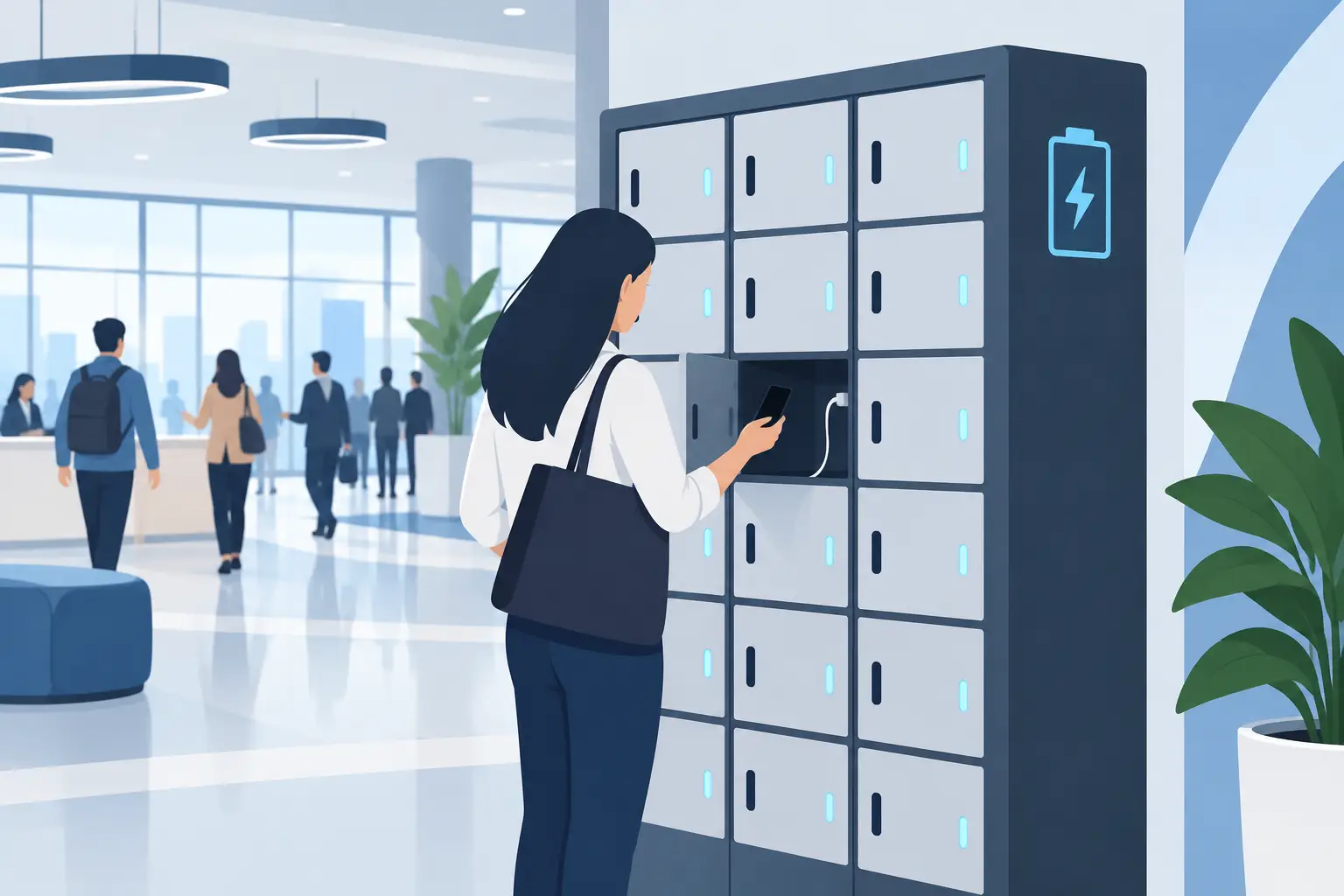
Charging Locker System Review for Busy Venues
Sep 27, 2026
Read this charging locker system review to compare security, charging speed, payment options, and ROI for events, offices, retail, and venues nationwide.
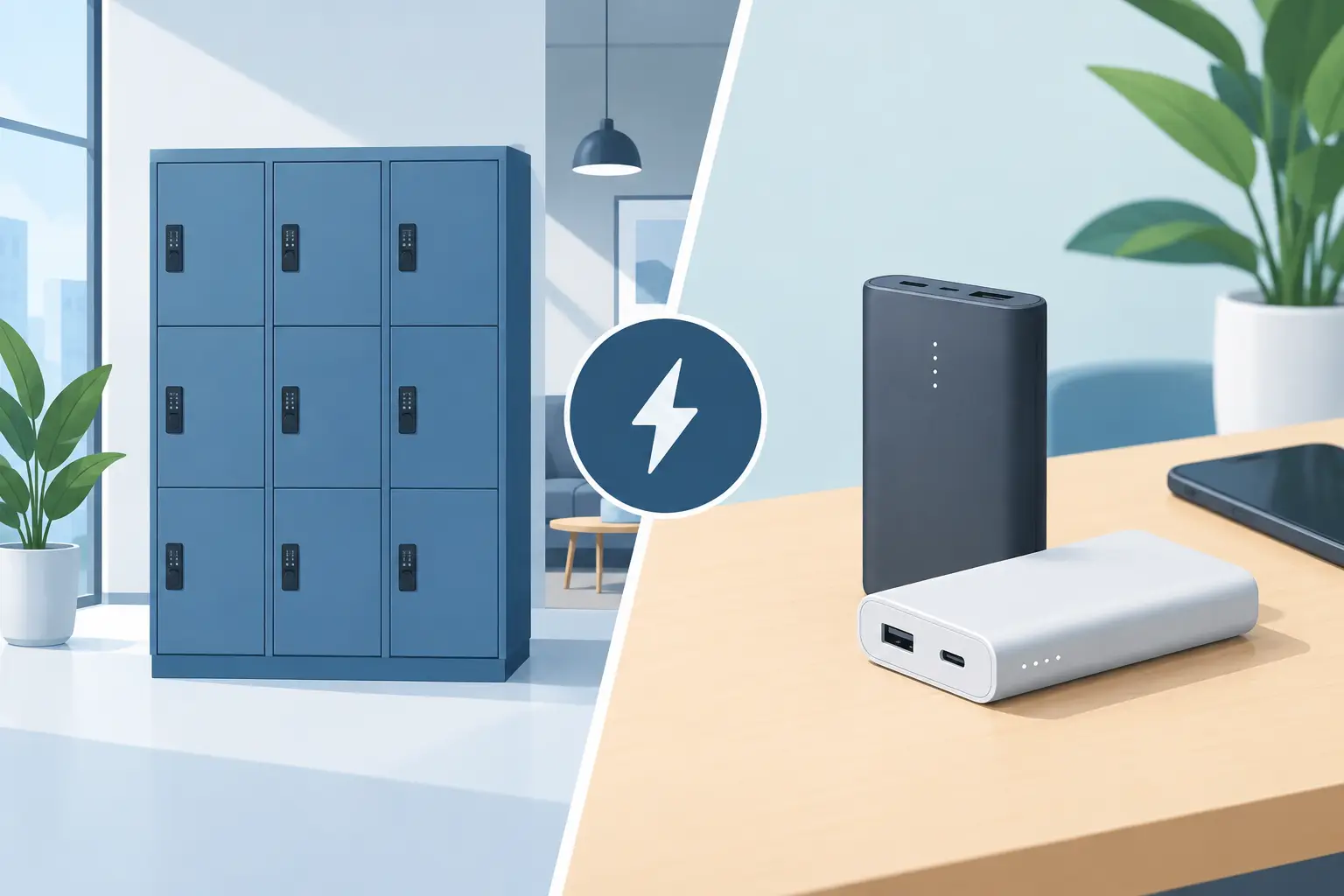
Lockers Versus Powerbanks: Which Fits Your Space?
Sep 25, 2026
Lockers versus powerbanks: compare security, dwell time, staffing, revenue, and deployment needs to choose the right charging amenity for your venue today.
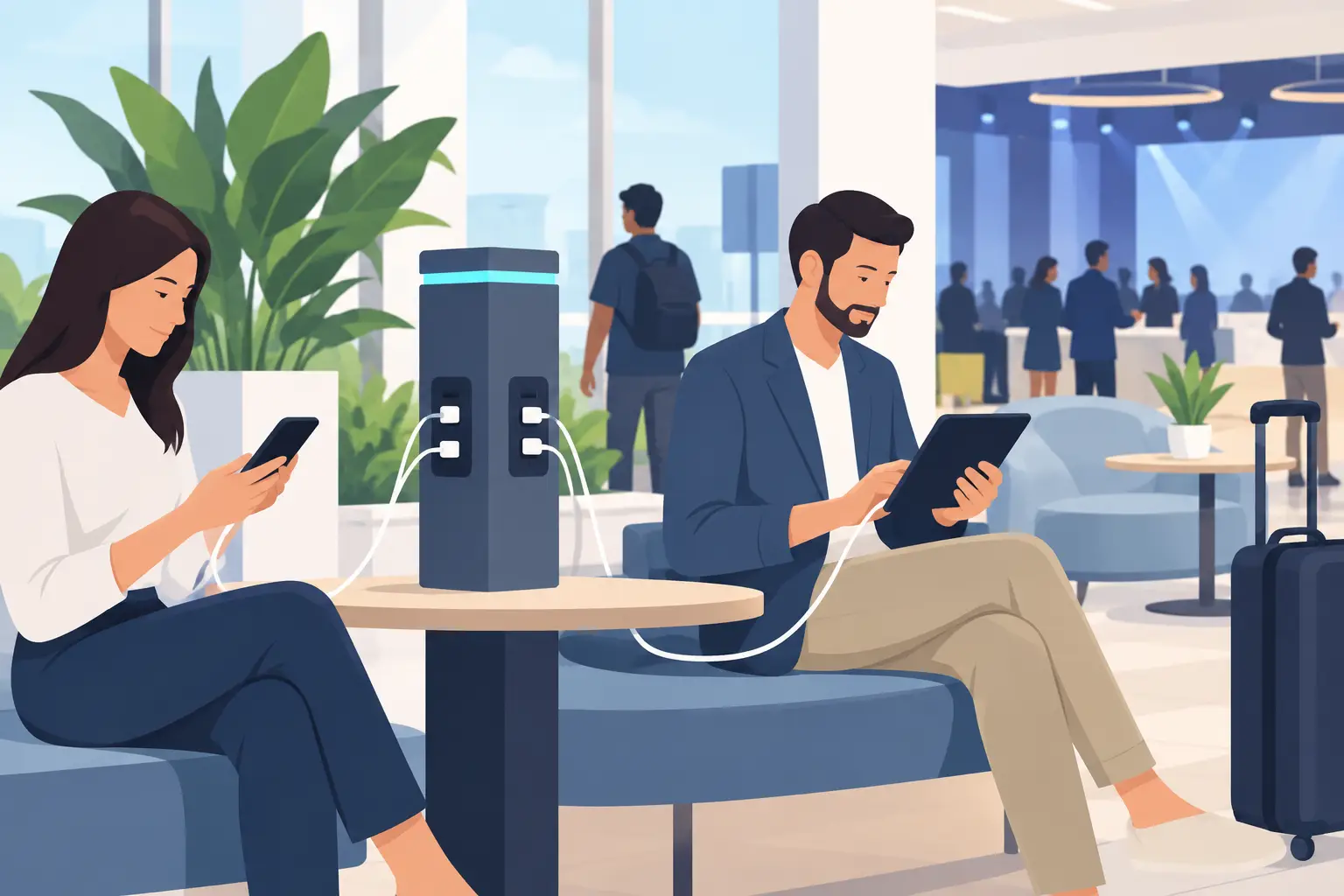
Public Device Charging Trends for Venues
Sep 23, 2026
Public device charging trends are reshaping venues, events, and workplaces with secure USB-C access, locker charging, and revenue-ready options for guests.
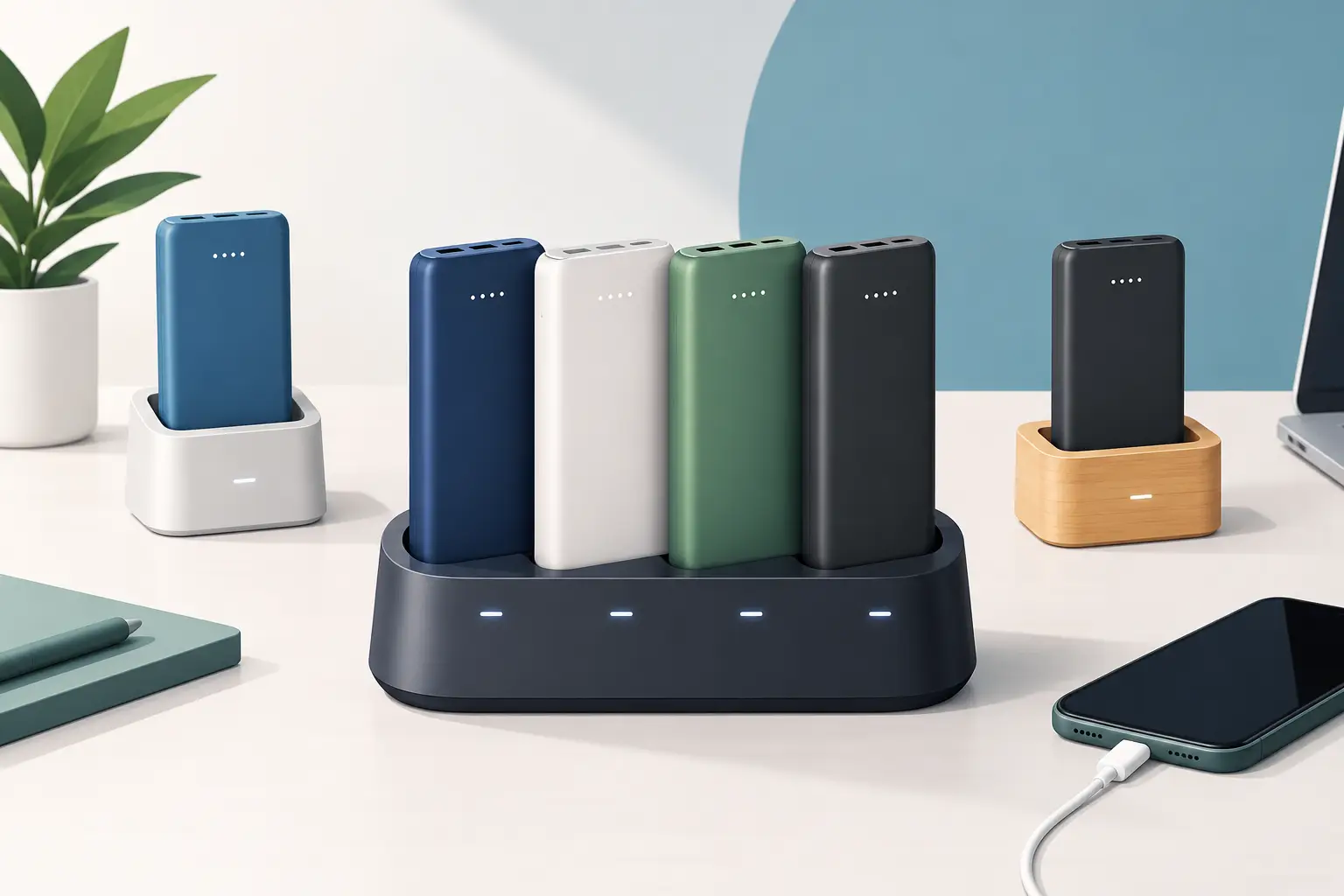
How to Create Branded Power Bank Docks That Sell
Sep 21, 2026
Learn how to create branded power bank docks that keep visitors engaged, strengthen your brand, and support free or paid charging programs on-site daily.

Locker Deployment Example for Busy Venues
Sep 19, 2026
See a locker deployment example that helps venues provide secure phone charging, reduce low-battery stress, and create a practical revenue option for guests.
Hotel Charging That Keeps Guests On Property
Sep 17, 2026
Hotel charging gives guests a secure place to power phones and laptops, extend their stay, and create new hospitality revenue opportunities on site daily.
How to Add Phone Charging to Your Business
Sep 15, 2026
Learn how to add phone charging to your business with secure, scalable stations that improve guest experience, dwell time, and revenue potential daily.
Best Secure Tablet Storage for Shared Devices
Sep 13, 2026
Find the best secure tablet storage for shared devices, events, offices, and public spaces with charging, access control, and room to scale confidently.

Power Bank Docking Review for Busy Venues
Sep 11, 2026
Use this power bank docking review to compare charging speed, security, payment options, branding, and operating costs before committing to deployment.

Charging Locker Procurement That Pays Off
Sep 09, 2026
Make charging locker procurement simpler with a practical plan for capacity, security, payment options, deployment, and long-term operating daily value.
Phone Charging Station Leasing for Businesses
Sep 08, 2026
Phone charging station leasing gives businesses a flexible way to add secure, branded charging while protecting cash flow and creating new revenue streams

Multi Device Charging Cabinets for Busy Venues
Sep 06, 2026
Multi device charging cabinets give visitors secure power, help staff manage shared devices, and create a practical amenity or revenue stream for venues.
How to Rent Charging Stations for Your Event
Sep 04, 2026
Learn how to rent charging stations for events, offices, and venues, from choosing secure formats to planning power, branding, delivery, and ROI needs.
Best Phone Charging for Hotels and Their Guests
Sep 02, 2026
Find the best phone charging for hotels with secure, guest-ready options that improve stays, support staff, and create new revenue opportunities on property.
Do Charging Lockers Prevent Theft at Events?
Aug 31, 2026
Do charging lockers prevent theft? Learn how lockable charging stations protect devices, reduce staff burden, and improve visitor confidence on site daily.
The Future of Public Charging Is Built for Dwell Time
Aug 29, 2026
The future of public charging will reward venues that pair fast, secure power with payment flexibility, strong uptime, and better visitor experiences.

How to Deploy Phone Charging Furniture Well
Aug 27, 2026
Learn how to deploy phone charging furniture in high-traffic spaces, from selecting locations and power to security, branding, pricing, and daily upkeep.
Can Charging Lockers Fit Laptops? What to Check
Aug 25, 2026
Can charging lockers fit laptops? Learn which locker dimensions, outlets, cables, and power limits support secure laptop charging at work and events today.
How to Lease Charging Lockers for Your Venue
Aug 23, 2026
Learn how to lease charging lockers with the right term, payment model, security features, and deployment plan for each location.
Best Charging Kiosks for Retail Stores Compared
Aug 21, 2026
Compare the best charging kiosks for retail to increase dwell time, protect customer devices, support modern USB-C needs, and create new revenue safely.
Can Charging Stations Charge Laptops Safely?
Aug 19, 2026
Can charging stations charge laptops? Learn which ports, wattages, and safety features businesses need to provide laptop power for visitors and staff.
Emergency Phone Charger Kiosk for Busy Venues
Aug 17, 2026
An emergency phone charger kiosk keeps guests connected, extends dwell time, and can turn charging access into a secure revenue opportunity for your venue today.
Fleet Device Charging Management That Works
Aug 15, 2026
Fleet device charging management keeps phones, tablets, and laptops ready, secure, and accounted for across every shift, site, and deployment without delays daily.
Best Event Phone Charging Rentals for Busy Venues
Aug 13, 2026
Find the best event phone charging rentals for secure, fast, branded power that keeps attendees engaged, extends dwell time, and can create event revenue.
Power Bank Rental vs Lockers: Which Fits?
Aug 11, 2026
Compare power bank rental vs lockers to choose the right charging solution for your venue, event, or workplace and improve guest experience and ROI today.
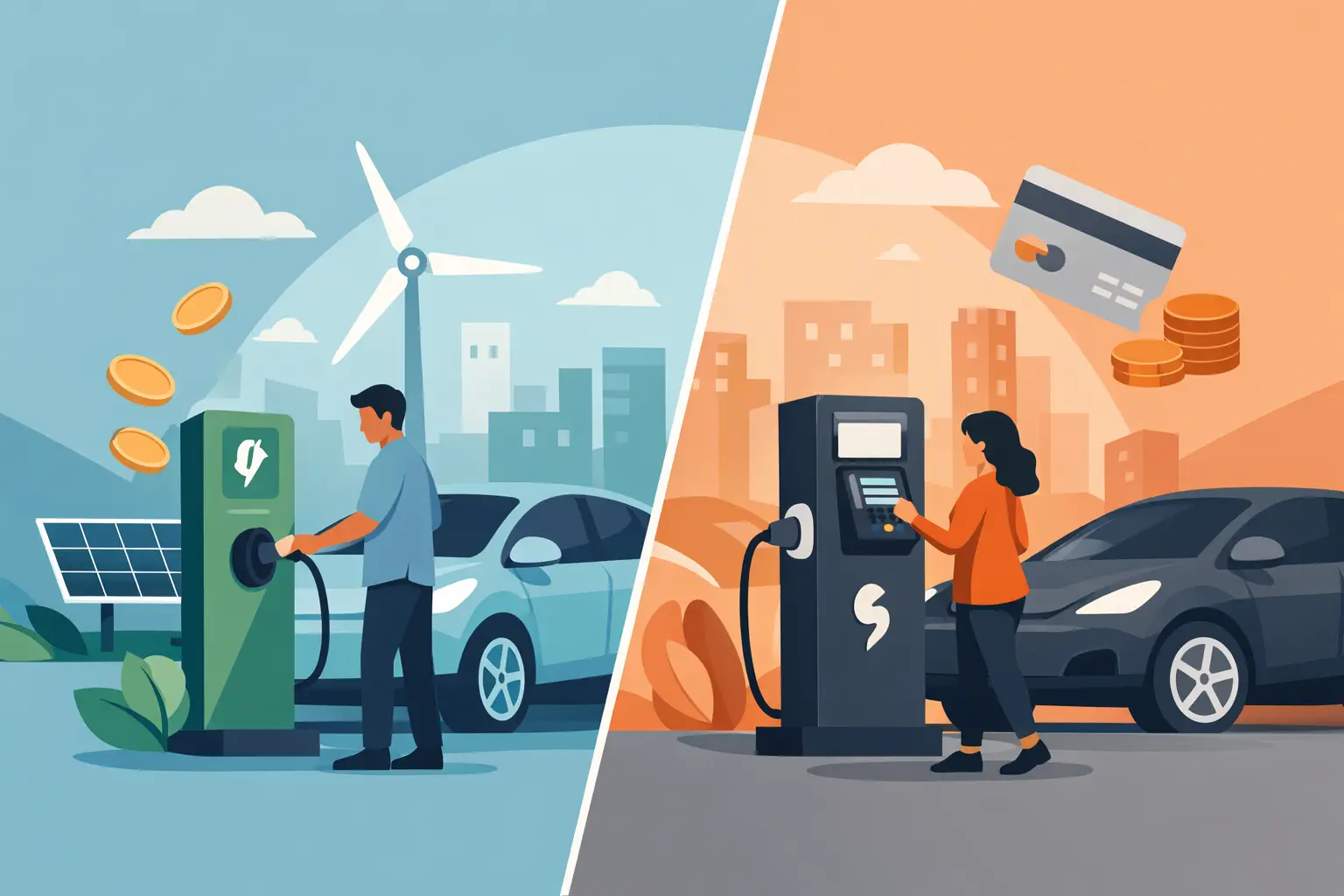
Free Charging vs Paid Charging: Which Works?
Aug 09, 2026
Free charging vs paid charging can improve visitor experience or create revenue. Learn how to choose the right model for your venue, event, or workplace.
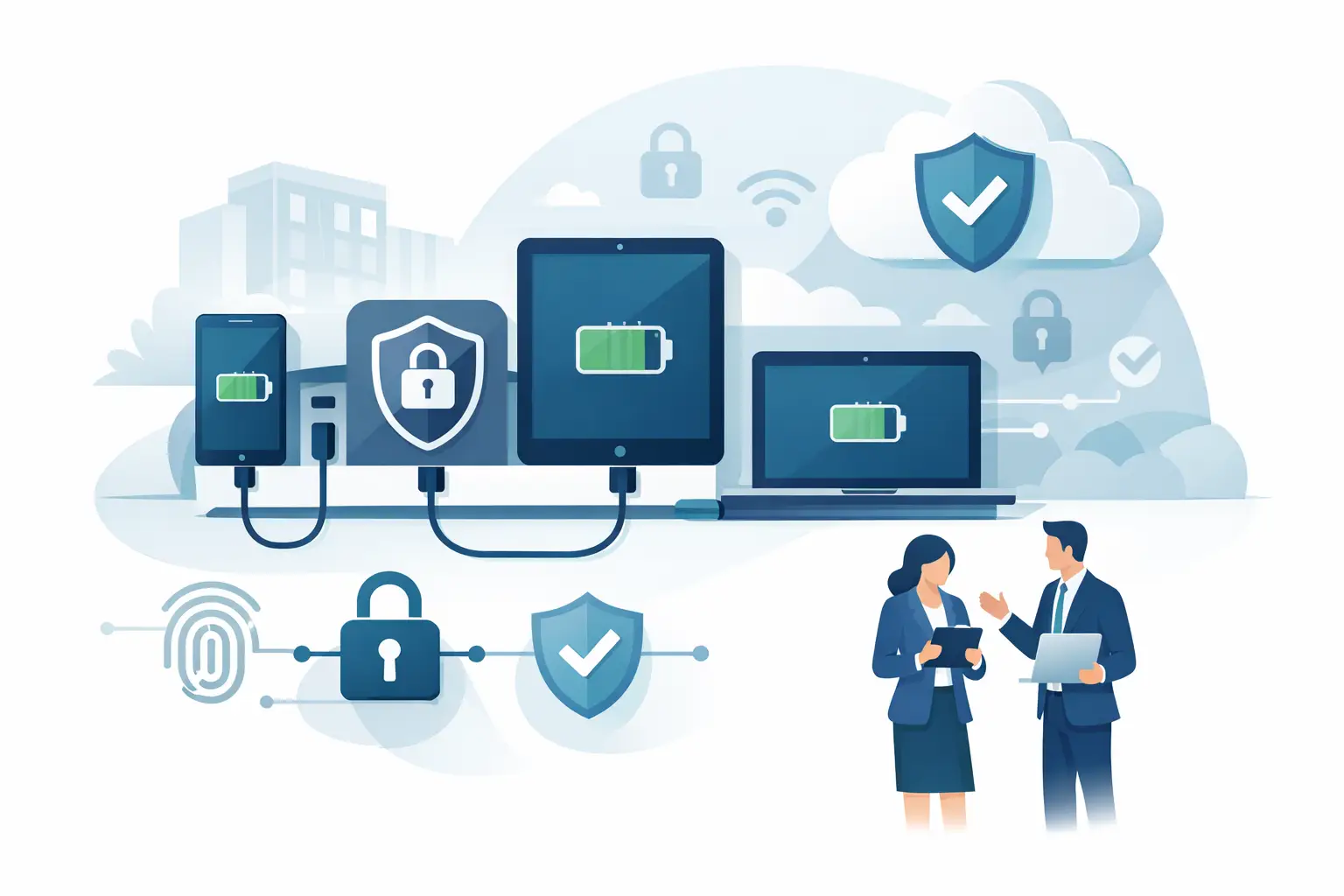
Secure Device Charging Guide for Businesses
Aug 07, 2026
Use this secure device charging guide to protect phones, tablets, and laptops while providing reliable, convenient power for every guest at your venue.
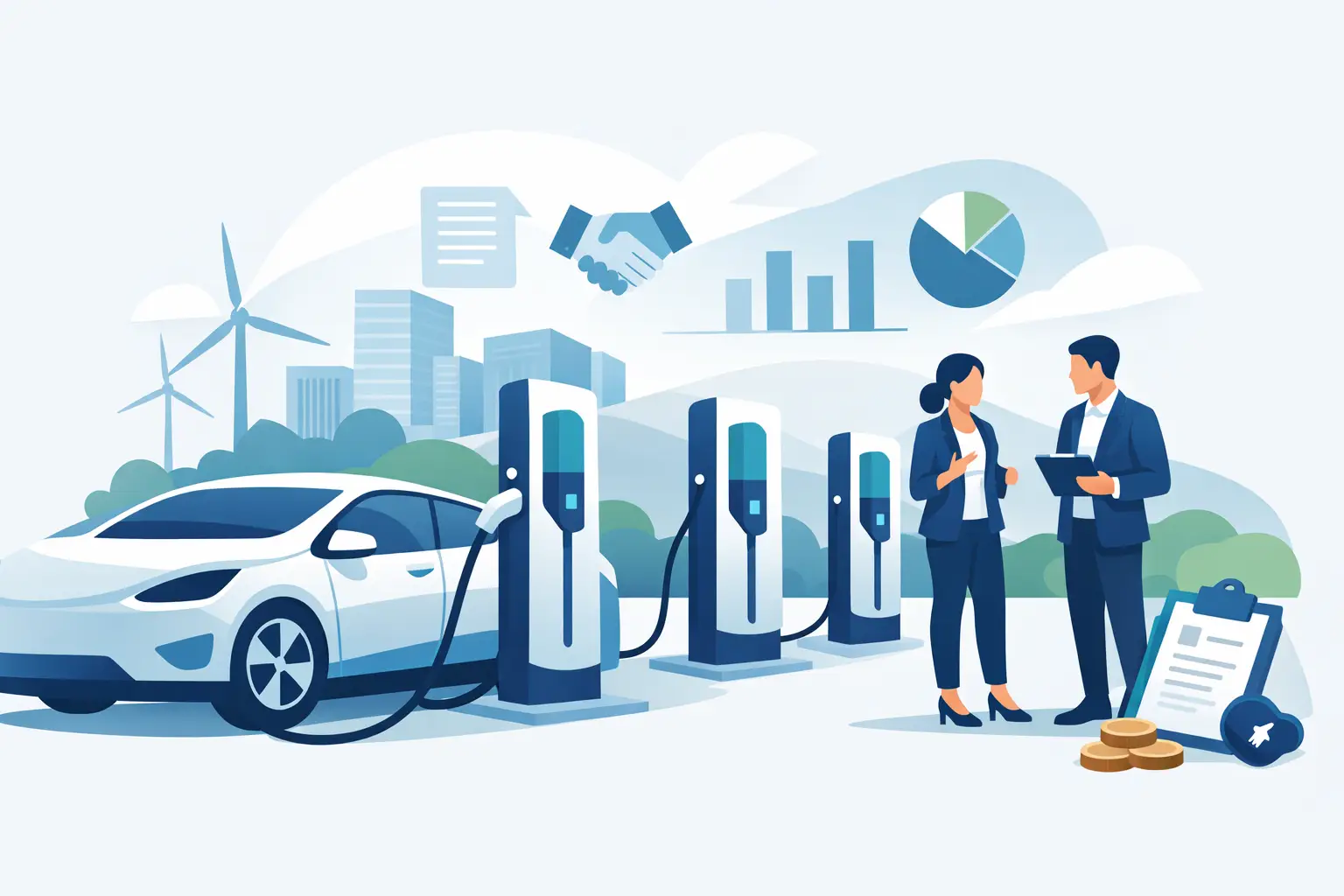
Charging Station Leasing Guide for Businesses
Aug 04, 2026
Use this charging station leasing guide to compare terms, station types, payment options, and ROI before adding secure device charging to your space today.
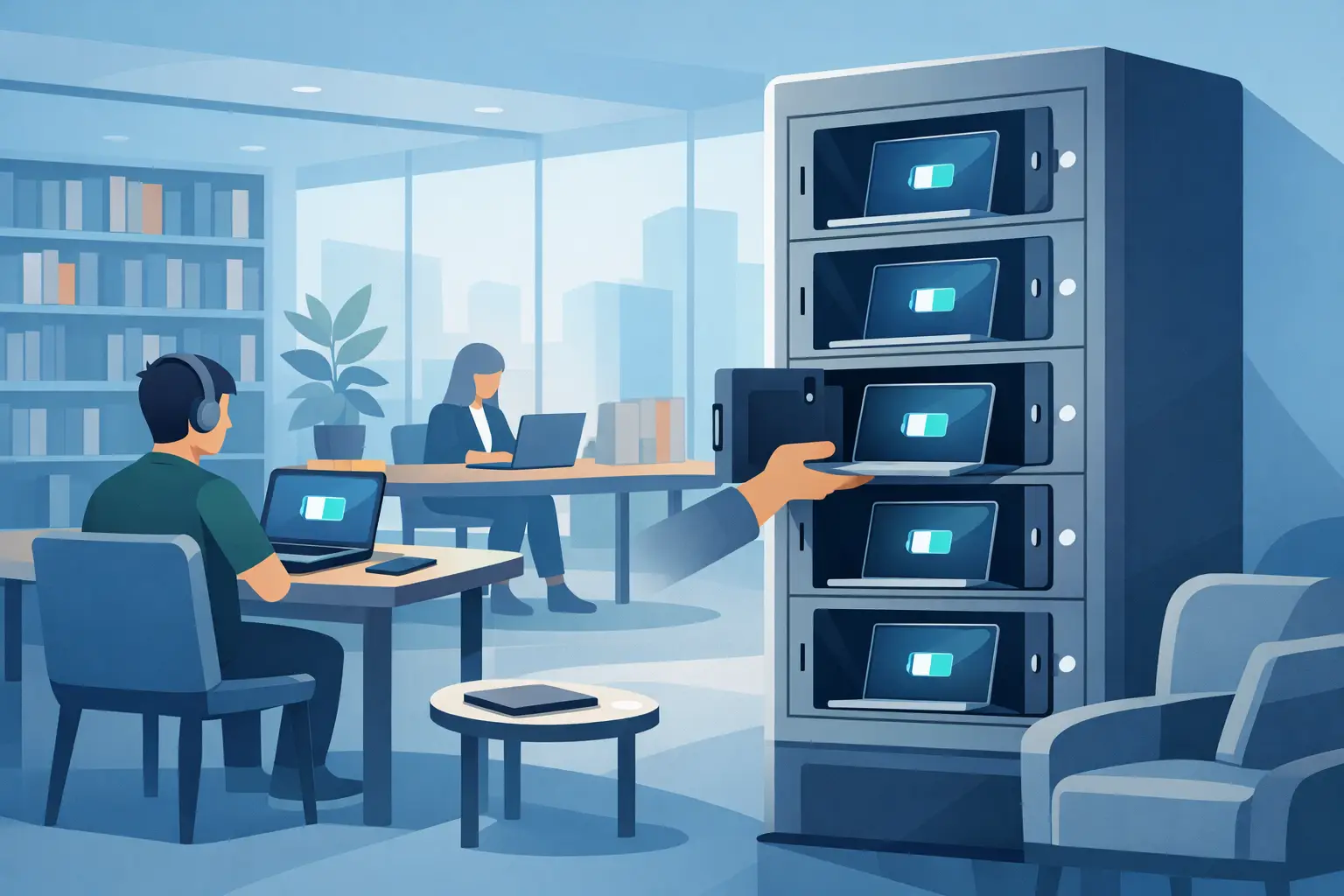
Laptop Charging Kiosk for Libraries That Works
Aug 03, 2026
Choose a laptop charging kiosk for libraries with secure storage, laptop-ready power, simple access, and a funding model that fits your space reliably.
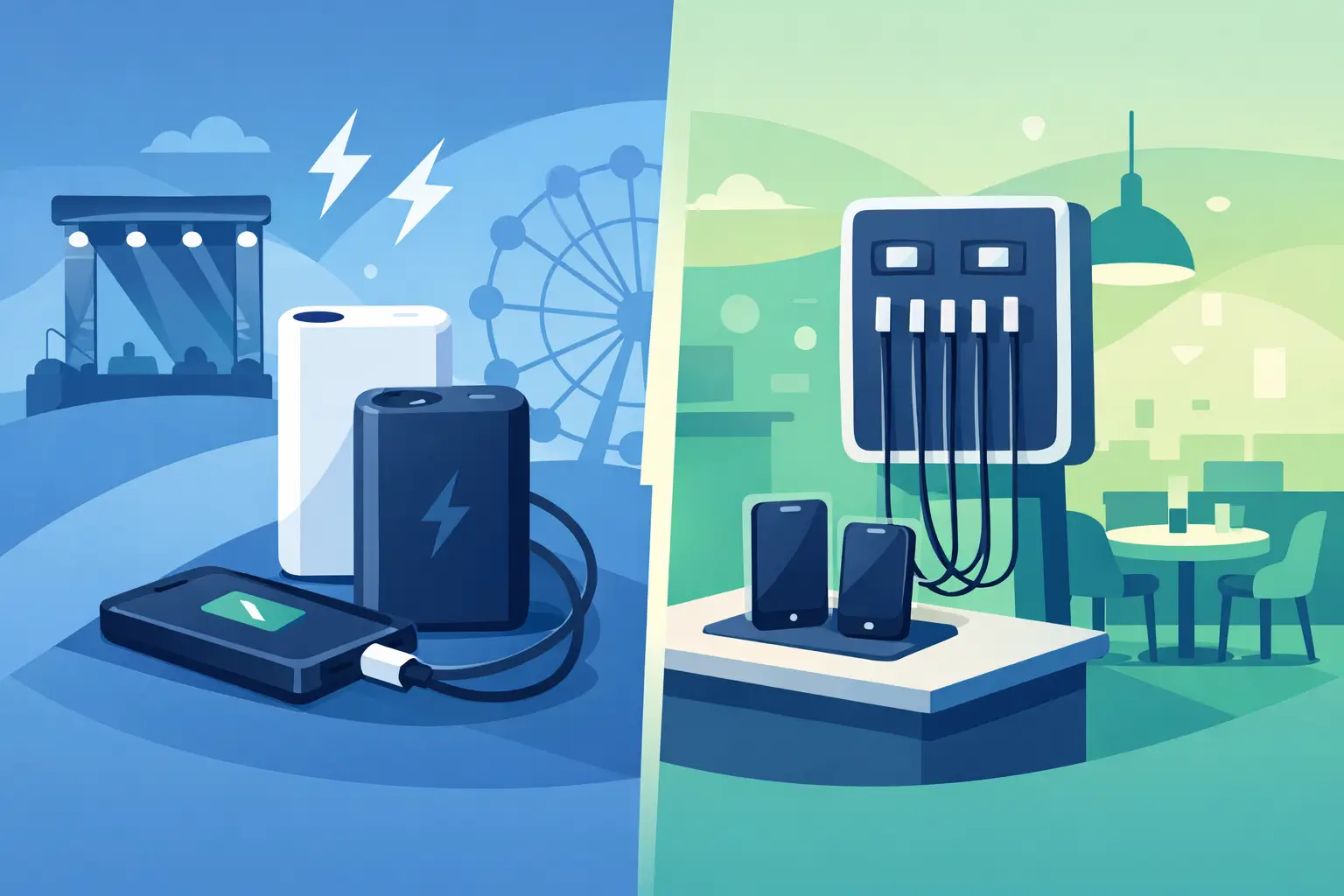
Power Banks vs Fixed Chargers for Venues
Aug 01, 2026
Compare power banks vs fixed chargers for events, venues, and workplaces. Choose secure charging that improves guest experience, uptime, and revenue onsite.
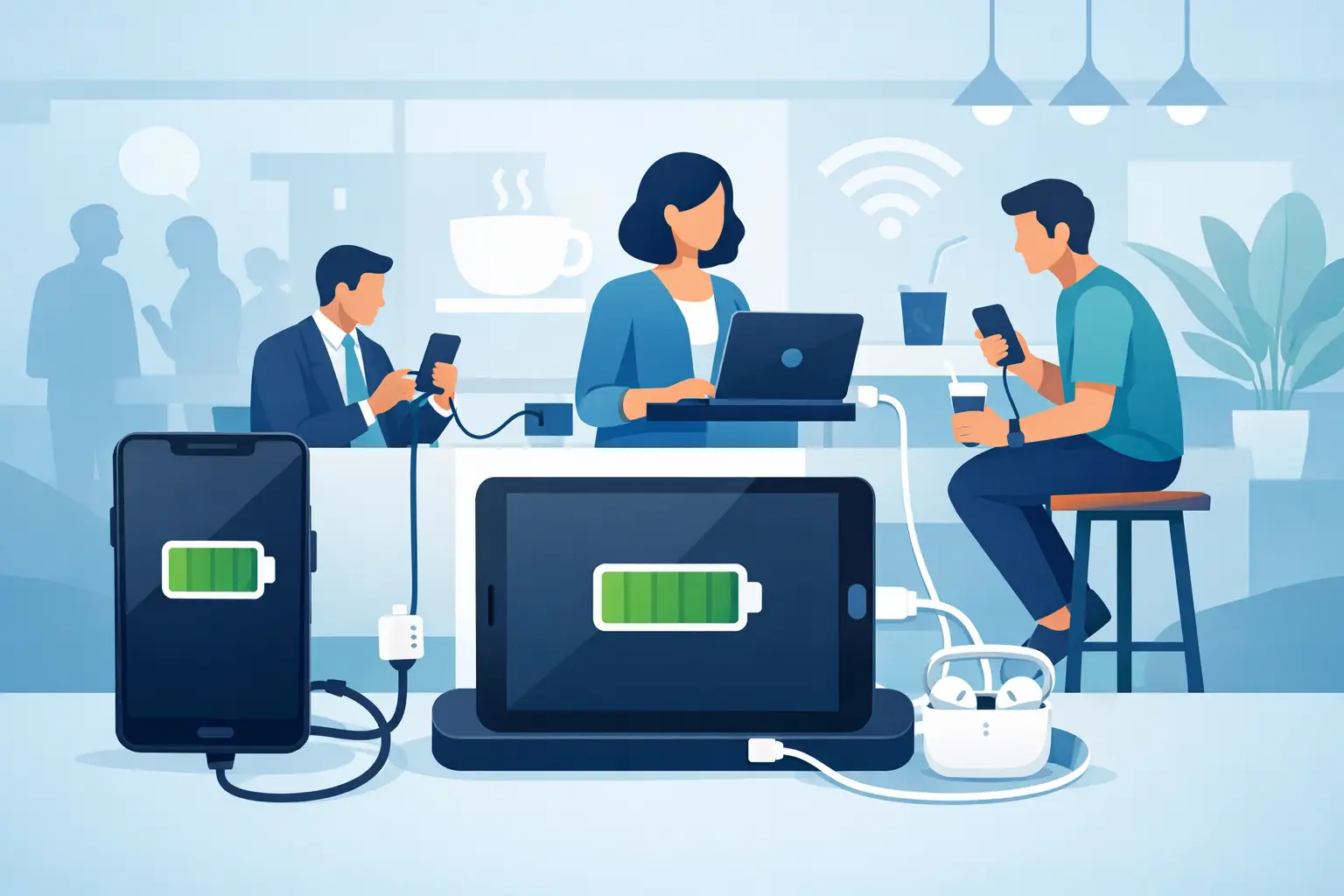
Why Offer Free Device Charging at Your Venue?
Jul 29, 2026
Why offer free device charging? Learn how it keeps visitors engaged, strengthens your brand, supports operations, and can create new revenue opportunities.
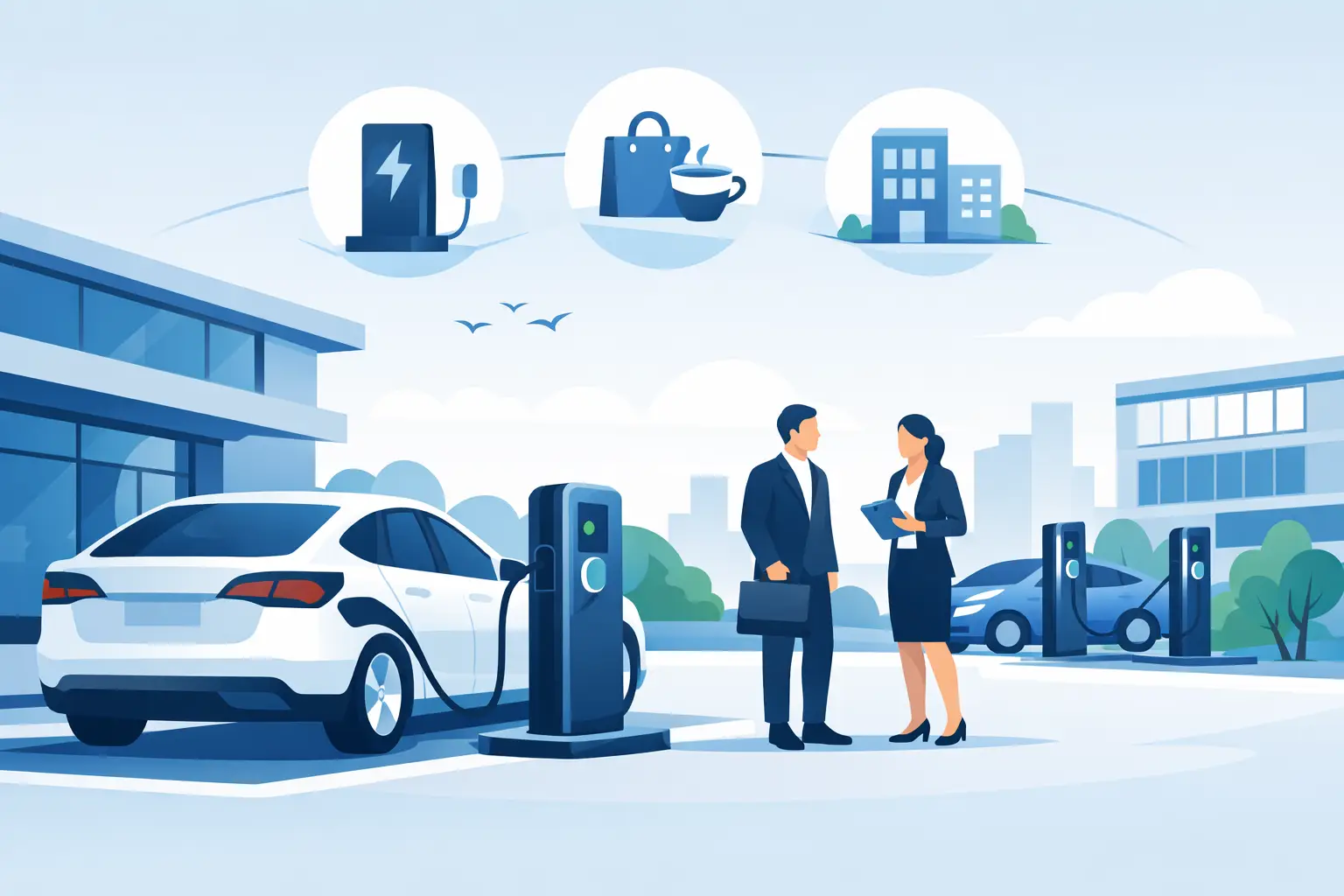
Public Charging Station Benefits for Business
Jul 27, 2026
Public charging station benefits include longer visits, happier guests, stronger brand visibility, and practical revenue options for high-traffic venues.

Phone Charging Lockers for Gyms That Members Use
Jul 26, 2026
Phone charging lockers for gyms keep members powered, valuables secure, and workouts on track while creating a valuable amenity or revenue opportunity.
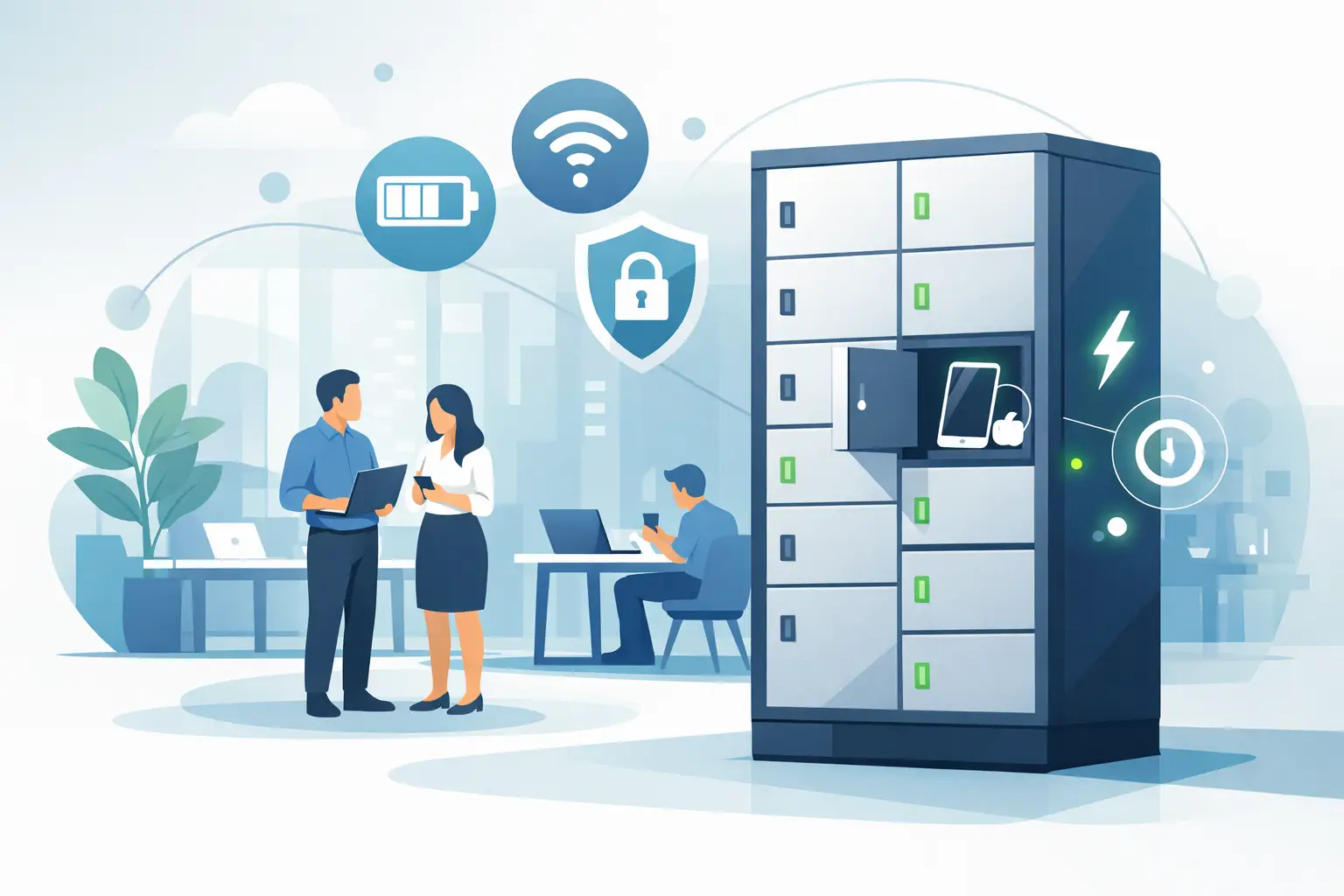
Best Charging Lockers for Offices in 2026
Jul 23, 2026
Find the best charging lockers for offices with secure storage, USB-C support, smart access, and the right capacity for staff, guests, and shared devices.
Phone Charging Stations That Work Harder
Jul 21, 2026
Phone charging stations keep guests engaged, staff productive, and events moving. Learn how to choose secure, scalable options that can earn revenue too.

How to Deploy Charging Amenities That Pay Off
Jul 19, 2026
Learn how to deploy charging amenities that keep visitors powered, increase dwell time, support operations, and create revenue in any venue with clarity.
Secure Charging for Employee Devices at Work
Jul 18, 2026
Secure charging for employee devices keeps work moving while protecting phones, tablets, and laptops. Learn what a practical workplace setup needs today.
Venue Device Charging Solutions That Pay Off
Jul 16, 2026
Venue device charging solutions keep guests connected, increase dwell time, protect devices, and can create new revenue at events and public spaces daily.
Can Charging Kiosks Take Payments? Yes, Here’s How
Jul 14, 2026
Can charging kiosks take payments? See how POS-enabled charging turns low-battery demand into convenience, longer visits, and new venue revenue streams.

Custom Branded Charging Stations That Earn Attention
Jul 11, 2026
Custom branded charging stations turn low-battery stress into longer visits, stronger brand visibility, and a practical revenue opportunity for venues.
Charging Kiosks That People Actually Use
Jul 10, 2026
Charging kiosks keep guests powered, on-site, and engaged. Learn how to choose the right setup for security, revenue, and everyday use.
Charging Stations for Convention Centers
Jul 08, 2026
Charging stations for convention centers reduce attendee stress, boost dwell time, support sponsors, and create new revenue opportunities.
How to Lease Charging Kiosks Smartly
Jul 06, 2026
Learn how to lease charging kiosks with the right terms, pricing, features, and support so your venue adds convenience and potential revenue.
Visitor Amenity Charging Kiosk: What to Buy
Jul 04, 2026
A visitor amenity charging kiosk helps venues keep guests powered, engaged, and on-site while supporting security, branding, and revenue goals.
Business Charging Station Buying Guide
Jul 02, 2026
Business charging station buying guide for choosing secure, scalable charging solutions that improve guest experience and create revenue.
Contactless Payment Charging Station Benefits
Jun 30, 2026
A contactless payment charging station helps venues boost convenience, capture revenue, and keep guests engaged without adding operational friction.
How to Choose Charging Lockers for Your Space
Jun 28, 2026
Learn how to choose charging lockers for events, venues, offices, and retail spaces based on security, device mix, power needs, and ROI.
Are Public Charging Stations Safe to Use?
Jun 26, 2026
Are public charging stations safe to use? Learn the real risks, how secure charging stations work, and what businesses should provide.
Best Desktop Charging Station for Office Use
Jun 24, 2026
Find the right desktop charging station for office use with tips on safety, device mix, cable management, security, and long-term value.
Leasing vs Buying Charging Stations
Jun 22, 2026
Leasing vs buying charging stations comes down to budget, flexibility, and ROI. Learn which model fits events, venues, offices, and retail.
Charging Lockers vs Kiosks: What Fits Best?
Jun 20, 2026
Charging lockers vs kiosks: compare security, throughput, revenue, and fit by venue so you can choose the right charging setup for your space.

Charging Locker ROI Calculator Guide
Jun 17, 2026
Use a charging locker ROI calculator to estimate payback, revenue, and visitor impact. Learn which costs, assumptions, and metrics matter most.
How to Monetize Charging Kiosks
Jun 16, 2026
Learn how to monetize charging kiosks with the right pricing, placement, sponsorships, and formats to turn charging access into revenue.
What Is Juice Jacking Protection?
Jun 13, 2026
What is juice jacking protection? Learn how it blocks data theft through USB ports and why businesses should offer safer public charging access.
USB C Charging Trends Businesses Should Track
Jun 12, 2026
USB C charging trends are reshaping public, workplace, and event charging. See what matters for compatibility, speed, safety, and ROI.
USB C Charging Station Commercial Guide
Jun 09, 2026
A practical look at usb c charging station commercial options, including use cases, power, security, placement, pricing, and ROI for busy venues.
Charging Table for Waiting Room Buyers
Jun 08, 2026
A charging table for waiting room spaces keeps guests powered, improves dwell time, and adds convenience without adding operational friction.

What a Custom Charging Kiosk Wrap Should Do
Jun 07, 2026
A custom charging kiosk wrap should attract attention, fit the venue, and support ROI. Learn what to include and what to avoid.
Branded Charging Station for Events That Works
Jun 06, 2026
A branded charging station for events keeps guests powered, boosts dwell time, supports sponsors, and adds measurable value to the event floor.
Conference Charging Locker Rental That Works
Jun 05, 2026
Conference charging locker rental keeps attendees powered, secure, and engaged while creating smoother events, stronger sponsor value, and revenue.
Trade Show Phone Charging Station Guide
Jun 04, 2026
A trade show phone charging station can boost booth traffic, dwell time, and leads while reducing attendee battery stress and improving event ROI.
Event Charging Station Rental That Works
Jun 03, 2026
Event charging station rental keeps guests powered, engaged, and on site longer. Learn what to rent, what to ask, and how to avoid event-day issues.

Free Phone Charging Station Retail ROI
Jun 02, 2026
See how free phone charging station retail setups increase dwell time, improve customer experience, and support smarter in-store traffic flow.
Charging Kiosk With Payment System: Worth It?
Jun 01, 2026
A charging kiosk with payment system can add revenue, improve guest experience, and extend dwell time. Here's how to choose the right setup.
Pay Per Use Charging Station ROI Explained
May 31, 2026
Learn how a pay per use charging station creates revenue, improves visitor experience, and fits retail, events, offices, and public venues.
Power Bank Rental Station Buyer’s Guide
May 30, 2026
A power bank rental station helps venues keep guests charged, boost dwell time, and create revenue with flexible, low-friction charging access.
Choosing a Laptop Charging Locker Cabinet
May 29, 2026
Learn how to choose a laptop charging locker cabinet for offices, schools, events, and venues with the right mix of security, power, and ROI.

Tablet Charging Locker for Schools: What Matters
May 28, 2026
A tablet charging locker for schools improves device security, charging access, and classroom readiness. Here’s what buyers should evaluate.
Secure Phone Charging Locker Buying Guide
May 27, 2026
Choose a secure phone charging locker that protects devices, improves guest experience, and fits your space, budget, and usage model.

Phone Charging Station for Business ROI
May 26, 2026
A phone charging station for business can boost dwell time, improve customer experience, and create revenue when matched to the right space.

How to make your phone battery last longer
Mar 20, 2025
It’s no secret that some smartphones have more powerful and longer lasting batteries than others. However, no matter how powerful the battery or how energy efficient your phone is, there are a number of apps and settings that will drain your battery faster. Identifying these apps and settings will help you keep usage to a […]
Phone Batteries – The Best and The Worst
Mar 29, 2017
When buying a new smartphone, there are a number of factors you will consider. From the brand and price, to the operating system, and other features like the camera. No matter what kind of phone you choose or the reason behind your purchase, one thing is for sure – you want the battery to last […]
What is USB-C and why is it important?
Mar 15, 2017
By now, you may have heard people talking about USB type C or perhaps you have even tried it out yourself. Either way, many experts agree that this is the future of USB ports and cables. What many people may not realize is that this particular type of connection is significantly different from older types […]