USB C Charging Trends Businesses Should Track
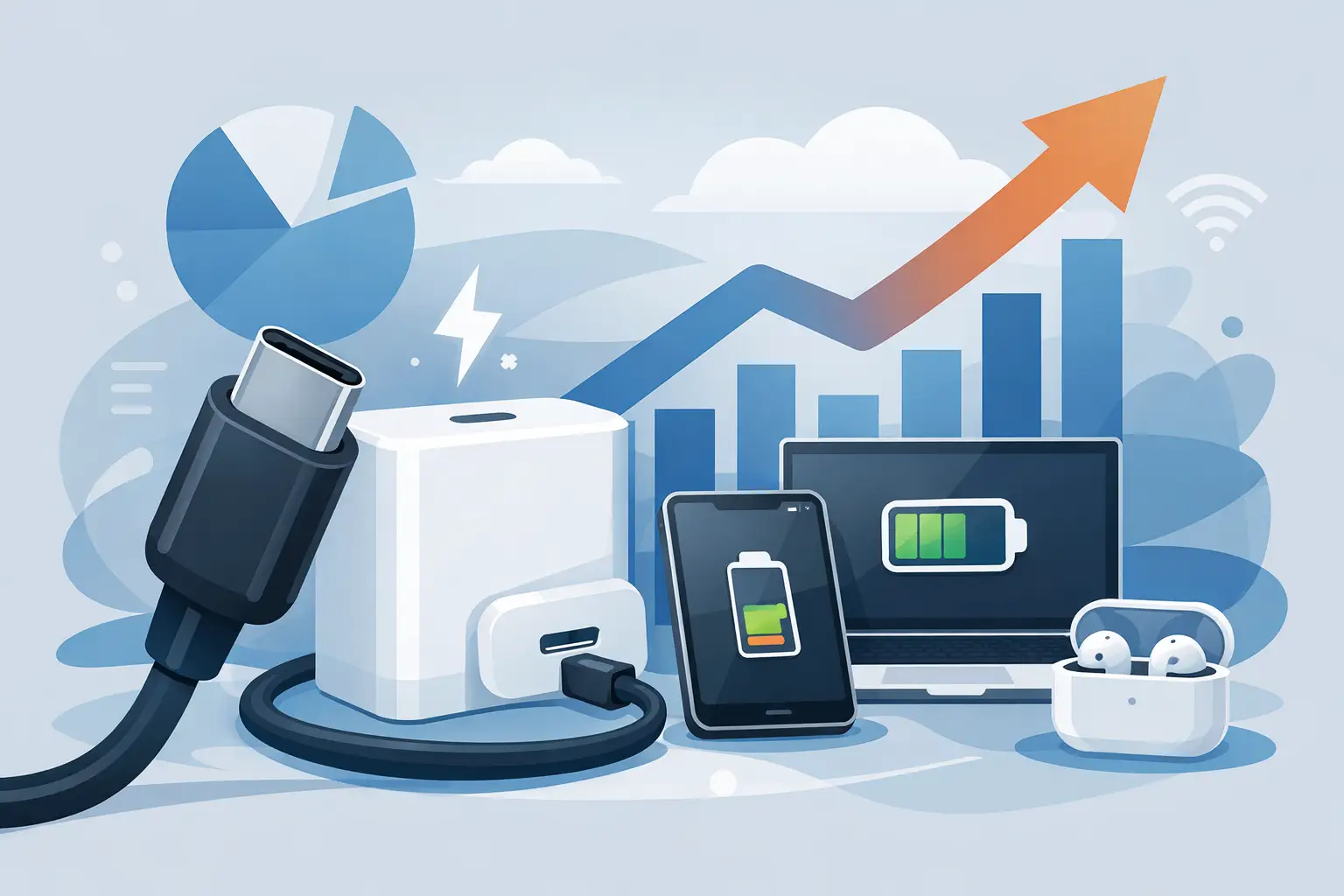
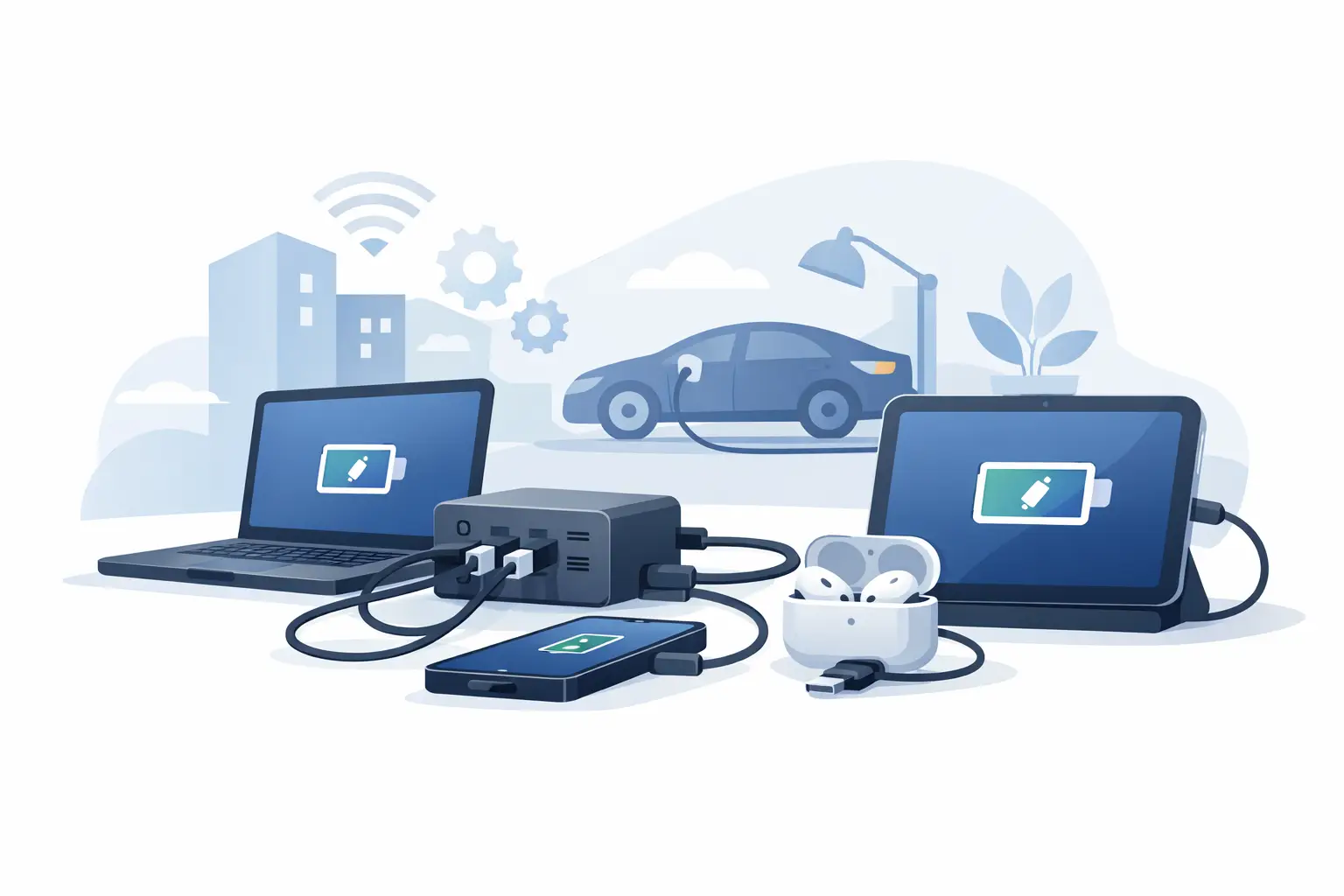
A few years ago, offering a phone charger in a public space usually meant covering the basics with Lightning, Micro USB, and maybe a standard USB port. That mix is changing fast. USB C charging trends now affect not just device compatibility, but how businesses plan charging stations, manage power delivery, and turn charging into a better customer experience.
For venue operators, facilities teams, and event planners, this shift is not a minor cable update. It changes what people expect when they approach a charging locker, kiosk, table, or power bank station. More guests are carrying USB-C phones, tablets, laptops, earbuds, and accessories. They want faster charging, fewer adapter hassles, and confidence that the station in front of them will actually work with what they brought.
Why USB C charging trends matter to commercial spaces
USB-C has moved from helpful option to primary standard across a growing share of consumer and business devices. That includes newer Android phones, many tablets, Windows laptops, accessories, and an increasing number of Apple products. For businesses that provide charging access, the practical implication is simple: if your charging setup does not reflect current device behavior, it starts looking outdated.
That matters because charging is tied directly to dwell time, visitor satisfaction, and perceived convenience. In retail, hospitality, airports, campuses, healthcare waiting areas, and trade shows, a dead battery can shorten visits and raise frustration. A well-placed charging solution can do the opposite. It keeps people on site, keeps them engaged, and in some cases creates a direct revenue stream.
USB-C also expands what commercial charging can support. Older USB approaches were mostly about phones. USB-C, especially when paired with the right power architecture, makes it more realistic to support tablets and laptops in shared environments. That opens the door for more valuable deployments in offices, conferences, libraries, coworking spaces, and any setting where people need productivity devices powered up, not just personal phones.
The biggest USB C charging trends shaping deployments
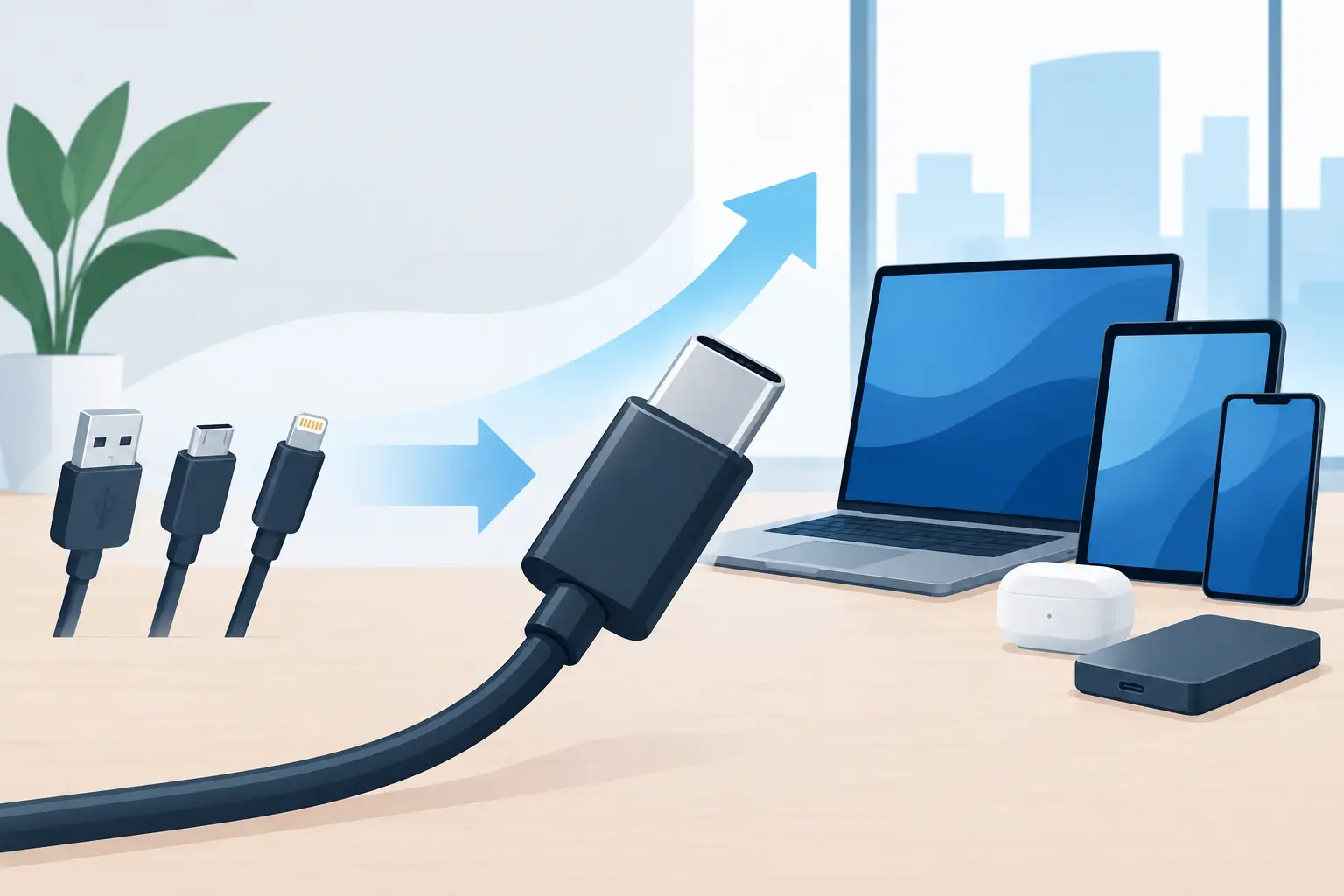
One clear trend is the move from mixed legacy charging toward USB-C-first design. Businesses are not abandoning support for older devices overnight, because many visitors still carry legacy cables. But new deployments increasingly treat USB-C as the default rather than the extra. In practice, that means more USB-C ports, more integrated USB-C cables, and more attention to power output than in earlier station designs.
Another trend is the rise of USB-C Power Delivery. This is where the conversation shifts from basic charging to meaningful charging speed. For a business, that difference matters. If a guest plugs in for 15 minutes between sessions at a conference or while waiting for a table, slow charging is barely noticeable. Higher-output USB-C charging makes short sessions more useful, which improves the perceived value of the amenity.
There is also a growing expectation that one charging solution should work across multiple device categories. People do not think in terms of charging standards. They think, “Will this charge my phone?” or “Can I top off my laptop before boarding?” USB-C supports that expectation better than older connector mixes, but only if the station is engineered for the right load and use case.
A fourth trend is cleaner hardware design. USB-C supports more compact, modern-looking deployments with less cable clutter. That may sound secondary, but in customer-facing environments, appearance matters. A charging station that looks current tends to get used more than one that looks like a tangle of leftover adapters.
Faster charging is raising the bar for user expectations
The speed side of USB-C is where many business buyers need to look more closely. Not every USB-C port performs the same way. Some deliver basic charging. Others support fast charging for phones. Others can provide enough power for tablets and many laptops. From the user perspective, these are all just USB-C. From the operator perspective, the difference affects satisfaction, equipment design, and cost.
This is where buyers can make mistakes if they purchase on connector type alone. A station may advertise USB-C and still underdeliver in the real world if power output is too low for the intended setting. A hotel lobby, conference venue, or university commons area may benefit from higher-output charging because users are often in a hurry. A waiting room with longer dwell time may not need the same power profile.
So the trend is not just more USB-C. It is more scrutiny around what kind of USB-C charging is being offered, how many simultaneous users it supports, and whether the power budget matches actual traffic.
USB C charging trends are pushing safety and hardware quality higher
As charging loads increase, so does attention to protection. That is especially true in unattended or semi-public environments where users connect a wide range of personal devices. Commercial charging infrastructure needs to do more than provide power. It has to manage heat, protect connected devices, and hold up under repeated daily use.
This is one reason businesses are moving away from improvised charging counters and toward purpose-built infrastructure. Public charging is no longer a side amenity built from consumer-grade components. It is part of the guest experience and, in many locations, part of the revenue model. Reliability matters because downtime is visible. Safety matters because trust is everything when someone is plugging in a thousand-dollar phone or laptop.
The move to USB-C makes product quality even more important. Better cables, stronger connectors, stable power regulation, and secure physical design are now core buying factors, not nice extras. For IT teams and facilities managers, this usually means evaluating charging solutions more like durable equipment and less like accessories.
What this means for charging lockers, kiosks, and shared stations
For secure charging lockers, USB-C is increasing the range of devices users expect to charge while they are away from them. That includes laptops and tablets, not just phones. Locker deployments may need higher wattage options, more deliberate cable management, and enough internal space for larger devices.
For kiosks and countertop stations, the trend points toward simplified user choice. Too many connector types can create confusion and increase maintenance. Too little USB-C support creates frustration. The sweet spot often depends on audience mix. A trade show with a broad public audience may still need a balanced connector setup. A corporate office or newer university environment may justify a stronger USB-C tilt.
For rental power banks and mobile charging solutions, USB-C matters on both ends. Users increasingly want USB-C output to charge their devices, and many also expect to recharge the power bank itself via USB-C. That makes turnaround faster and standardization easier.
Businesses planning new installations should also consider monetization. As charging becomes more useful for more device types, users may place higher value on premium, secure, or fast-charging access. That can support pay-per-use models in the right settings, especially high-traffic venues where battery anxiety is immediate and visible.
How buyers should respond to USB C charging trends
The first step is to look at your audience, not just the spec sheet. If your visitors carry newer phones and laptops, USB-C needs to be central to the deployment. If your audience is broader or more mixed, a hybrid setup may still make sense. The right answer depends on device mix, dwell time, and whether charging is meant to be a free amenity, a premium feature, or both.
Next, think about session length. Short sessions usually call for faster charging to create a noticeable benefit. Longer sessions may let you prioritize capacity, security, or cost efficiency over maximum wattage. This is where a one-size-fits-all buying approach tends to fail.
It also helps to think beyond ports. Public charging is an operational tool. Can the solution handle repeated use? Is it simple for guests to understand? Does it fit the space visually? Can it support branding, payment integration, or asset security if those matter to your model? Experienced providers like ChargeBar build around those real-world questions because connector standards are only one part of a successful deployment.
The broader lesson is straightforward. USB-C is not just replacing older plugs. It is changing what people expect from commercial charging and raising the standard for speed, compatibility, and reliability. Businesses that adapt early can reduce customer friction and make charging a stronger part of the on-site experience.
The best time to rethink your charging setup is before guests start noticing that it feels behind.
Related posts
Best Charging Solutions for Stadiums Today
Nov 26, 2026
Compare the best charging solutions for stadiums, from secure lockers to power bank rentals, and build a safer, higher-revenue fan experience at scale.
How to Deploy Chargers Across Campuses at Scale
Nov 24, 2026
Learn how to deploy chargers across campuses with secure, scalable stations that support students, staff, visitors, and campus revenue opportunities.

Hospital Charging Checklist for Better Patient Care
Nov 22, 2026
Use this hospital charging checklist to give patients, visitors, and staff safe, secure device power while improving flow, satisfaction, and uptime daily.
Charging Station Payment Trends That Drive Revenue
Nov 20, 2026
Charging station payment trends are shifting toward tap-to-pay, flexible pricing, and smarter reporting. Learn what operators should prioritize for ROI.
Charging Kiosk Revenue: What Drives Real Returns
Nov 18, 2026
Charging kiosk revenue depends on placement, pricing, uptime, and payment flow. Learn how to build a charging program that earns its place every day.
Multi Device Charger Review for Business Buyers
Nov 16, 2026
Our multi device charger review shows business buyers what matters most: charging speed, security, compatibility, uptime, and revenue potential at scale daily.
How to Customize Charging Furniture for Your Space
Nov 14, 2026
Learn how to customize charging furniture with branding, ports, security, payments, and placement that improve guest experience and business results today.
Should Venues Provide Charging Cables for Guests?
Nov 12, 2026
Should venues provide charging cables? Learn when cables improve guest experience, when they create risk, and how secure charging stations deliver value.

University Charging Options Students Will Use
Nov 08, 2026
University charging options keep students connected, protect devices, reduce support needs, and can create practical campus revenue in busy spaces daily.
Rental Versus Purchase Charging: Which Fits?
Nov 06, 2026
Compare rental versus purchase charging for events, venues, and workplaces. Choose a secure, scalable model for demand, budget, revenue, and growth ahead.
How to Charge Customers for Phone Charging
Nov 05, 2026
Learn how to charge customers for phone charging with practical pricing, payment, placement, and service strategies that turn power into revenue reliably.
Power Bank Sharing Trends Businesses Can Use
Nov 02, 2026
Power bank sharing trends are reshaping venue charging. See what operators need to know about convenience, security, payments, and deployment options.
USB-C Migration Trends Businesses Need to Plan For
Oct 31, 2026
USB-C migration trends are changing public charging. See what businesses should upgrade to support phones, tablets, laptops, safety, and revenue growth.

Event Charging Sponsorship Guide for Better ROI
Oct 29, 2026
Use this event charging sponsorship guide to build sponsor value, select the right charging setup, measure results, and improve attendee experience now.
Charging Station Financing Options for Business
Oct 28, 2026
Compare charging station financing options for your business, from purchase and leasing to rentals and revenue-share models that fit your rollout goals.

Charging Furniture That Keeps Visitors Longer
Oct 25, 2026
Charging furniture gives visitors a place to power up, stay longer, and keep moving. Learn how to choose secure, profitable options for your space with confidence.
Kiosk Revenue Case Study That Can Pay Off
Oct 23, 2026
A kiosk revenue case study for venue operators: learn how pricing, foot traffic, payment flow, and placement shape charging station returns over time.
How to Lease Charging Equipment for Your Venue
Oct 21, 2026
Learn how to lease charging equipment that fits your venue, protects devices, supports modern USB-C needs, and can create a new revenue stream for guests.
How to Prevent Cable Theft at Charging Stations
Oct 19, 2026
Learn how to prevent cable theft at public and workplace charging stations with better hardware, placement, inspections, and simple operating policies.
Charging Station Durability That Holds Up
Oct 17, 2026
Charging station durability protects uptime, visitor trust, and revenue. Learn what to look for in materials, cables, locks, power, and service needs.

Commercial Charging Procurement Guide for Buyers
Oct 15, 2026
Use this commercial charging procurement guide to choose secure, scalable device charging for venues, staff, and events while managing cost and ROI wisely.
Public Phone Charging Setup Guide for Venues
Oct 13, 2026
A public phone charging setup guide for venues that want safer access, longer visits, and practical revenue from reliable charging stations on site daily.
What Is Power Bank Rental for Businesses?
Oct 11, 2026
What is power bank rental? Learn how rental stations work, where they fit, and how businesses can improve guest experience and create revenue on-site.
Charging Station Sponsorship Results That Matter
Oct 09, 2026
Measure charging station sponsorship results with practical metrics for brand exposure, engagement, leads, dwell time, and revenue across live events.
How to Finance Charging Infrastructure Wisely
Oct 07, 2026
Learn how to finance charging infrastructure with purchase, lease, rental, and revenue models that fit your venue, event, budget, and growth goals today.
How to Install Charging Lockers Safely at Work
Oct 05, 2026
Learn how to install charging lockers safely with practical placement, power, security, and maintenance guidance for workplaces and public venues every.
Commercial Charging Locker Review for Buyers
Oct 03, 2026
A commercial charging locker review for buyers comparing security, charging speed, payment options, capacity, and long-term operating value at venues.

How to Manage Shared Devices Without the Chaos
Oct 01, 2026
Learn how to manage shared devices with clear ownership, secure charging, simple checkout rules, and reporting that keeps teams productive every shift.
Charging Station Maintenance That Protects Uptime
Sep 29, 2026
Charging station maintenance protects uptime, revenue, and user trust with practical inspections, cleaning, cable care, and payment system checks weekly.
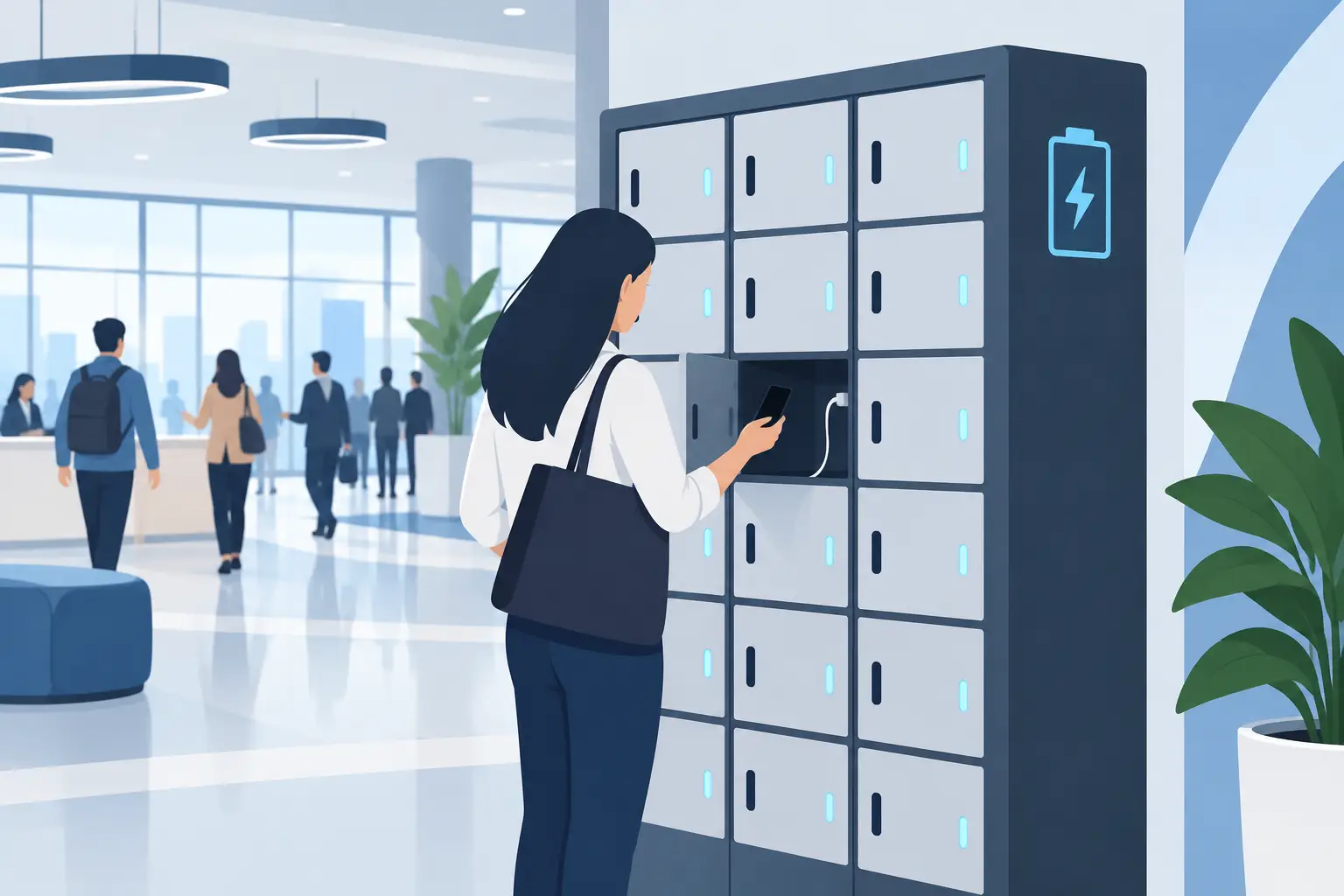
Charging Locker System Review for Busy Venues
Sep 27, 2026
Read this charging locker system review to compare security, charging speed, payment options, and ROI for events, offices, retail, and venues nationwide.
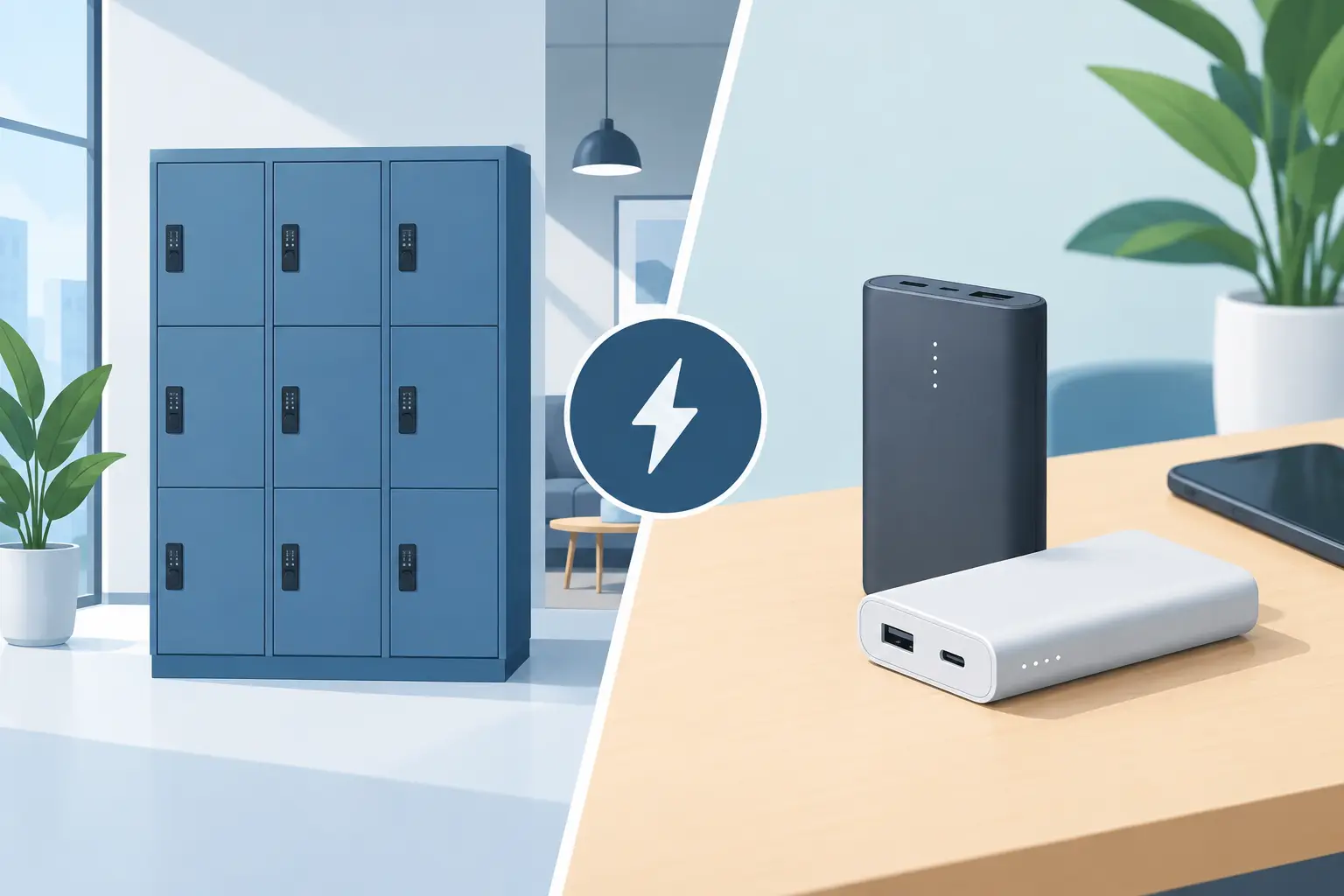
Lockers Versus Powerbanks: Which Fits Your Space?
Sep 25, 2026
Lockers versus powerbanks: compare security, dwell time, staffing, revenue, and deployment needs to choose the right charging amenity for your venue today.
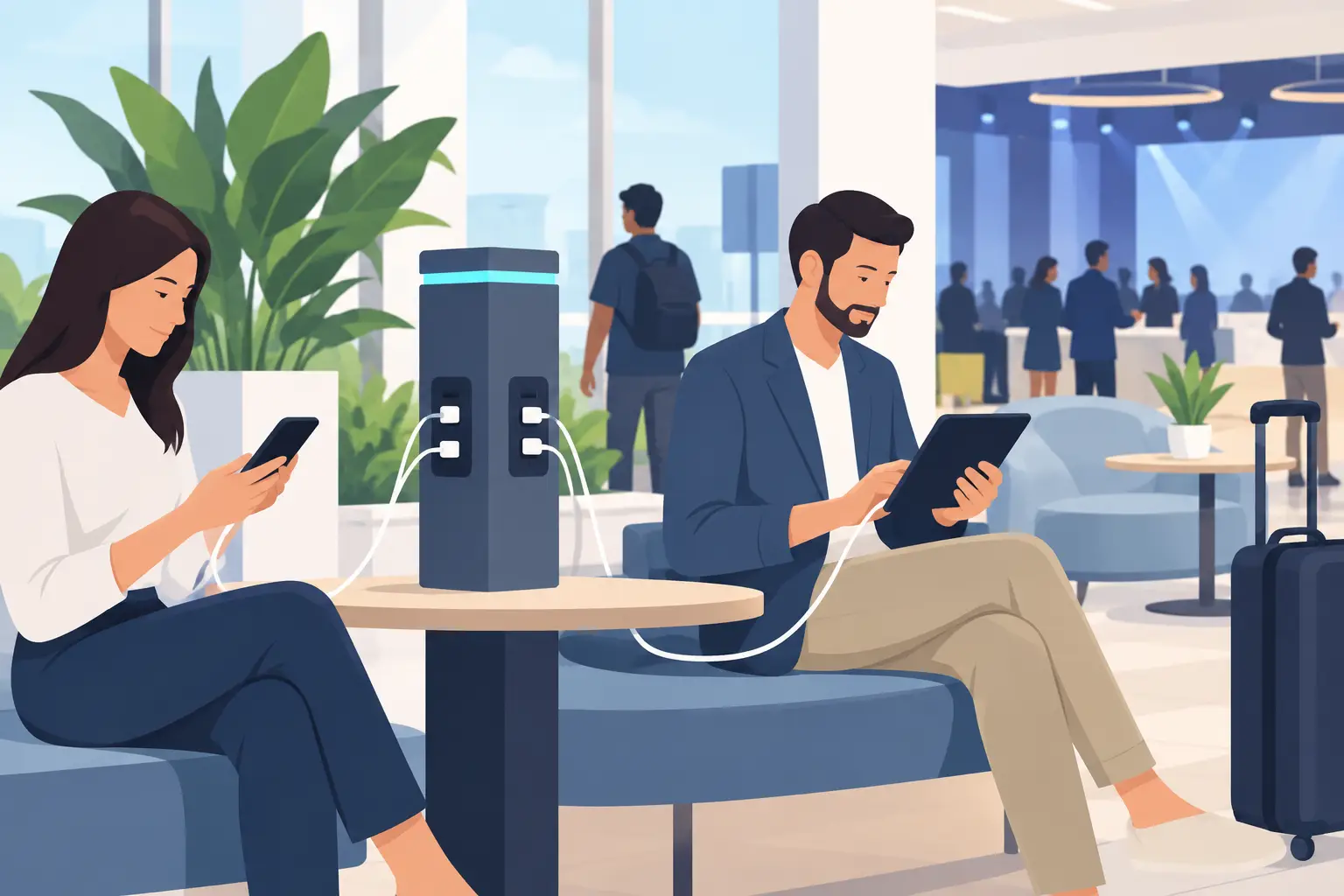
Public Device Charging Trends for Venues
Sep 23, 2026
Public device charging trends are reshaping venues, events, and workplaces with secure USB-C access, locker charging, and revenue-ready options for guests.
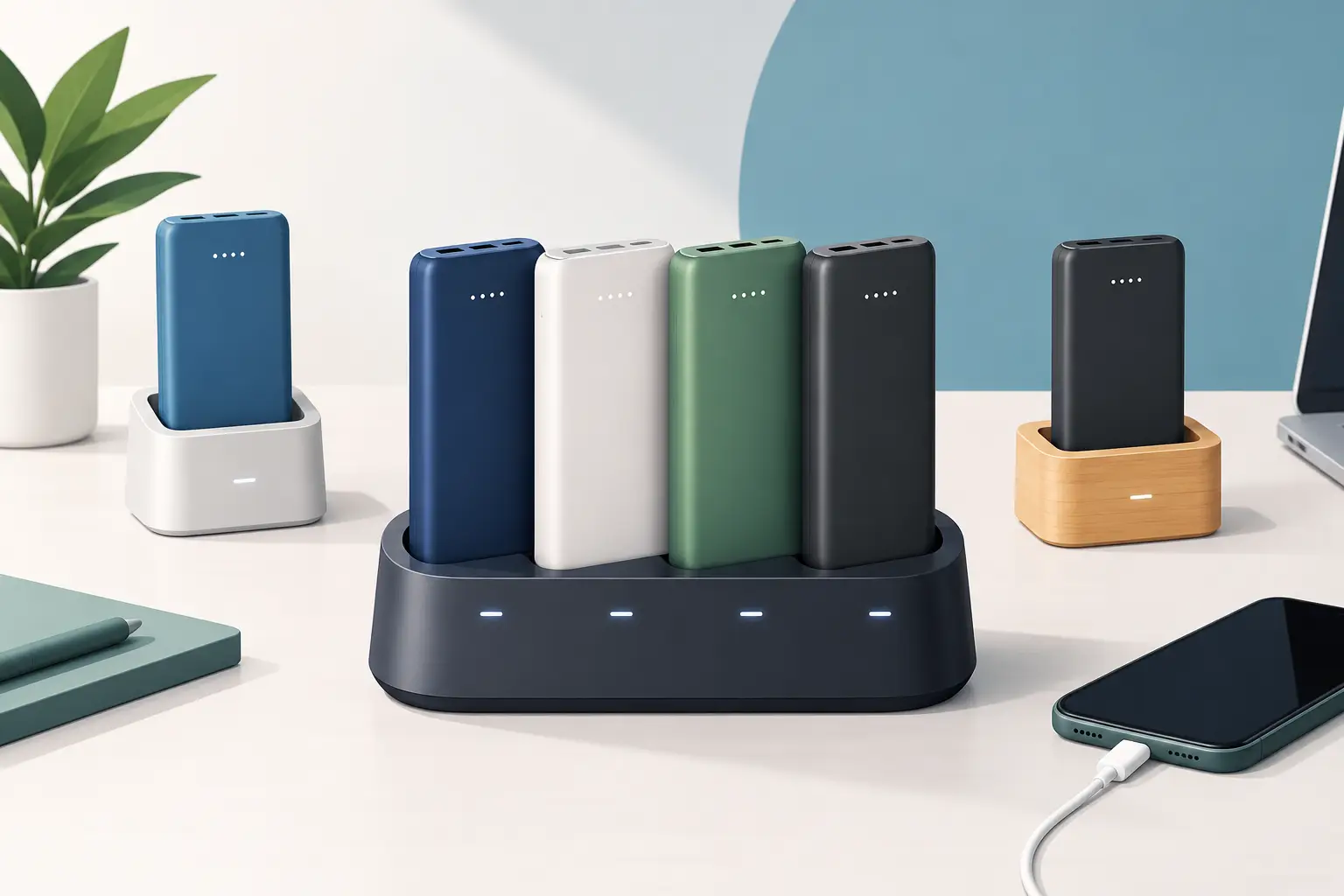
How to Create Branded Power Bank Docks That Sell
Sep 21, 2026
Learn how to create branded power bank docks that keep visitors engaged, strengthen your brand, and support free or paid charging programs on-site daily.

Locker Deployment Example for Busy Venues
Sep 19, 2026
See a locker deployment example that helps venues provide secure phone charging, reduce low-battery stress, and create a practical revenue option for guests.
Hotel Charging That Keeps Guests On Property
Sep 17, 2026
Hotel charging gives guests a secure place to power phones and laptops, extend their stay, and create new hospitality revenue opportunities on site daily.
How to Add Phone Charging to Your Business
Sep 15, 2026
Learn how to add phone charging to your business with secure, scalable stations that improve guest experience, dwell time, and revenue potential daily.
Best Secure Tablet Storage for Shared Devices
Sep 13, 2026
Find the best secure tablet storage for shared devices, events, offices, and public spaces with charging, access control, and room to scale confidently.

Power Bank Docking Review for Busy Venues
Sep 11, 2026
Use this power bank docking review to compare charging speed, security, payment options, branding, and operating costs before committing to deployment.

Charging Locker Procurement That Pays Off
Sep 09, 2026
Make charging locker procurement simpler with a practical plan for capacity, security, payment options, deployment, and long-term operating daily value.
Phone Charging Station Leasing for Businesses
Sep 08, 2026
Phone charging station leasing gives businesses a flexible way to add secure, branded charging while protecting cash flow and creating new revenue streams

Multi Device Charging Cabinets for Busy Venues
Sep 06, 2026
Multi device charging cabinets give visitors secure power, help staff manage shared devices, and create a practical amenity or revenue stream for venues.
How to Rent Charging Stations for Your Event
Sep 04, 2026
Learn how to rent charging stations for events, offices, and venues, from choosing secure formats to planning power, branding, delivery, and ROI needs.
Best Phone Charging for Hotels and Their Guests
Sep 02, 2026
Find the best phone charging for hotels with secure, guest-ready options that improve stays, support staff, and create new revenue opportunities on property.
Do Charging Lockers Prevent Theft at Events?
Aug 31, 2026
Do charging lockers prevent theft? Learn how lockable charging stations protect devices, reduce staff burden, and improve visitor confidence on site daily.
The Future of Public Charging Is Built for Dwell Time
Aug 29, 2026
The future of public charging will reward venues that pair fast, secure power with payment flexibility, strong uptime, and better visitor experiences.

How to Deploy Phone Charging Furniture Well
Aug 27, 2026
Learn how to deploy phone charging furniture in high-traffic spaces, from selecting locations and power to security, branding, pricing, and daily upkeep.
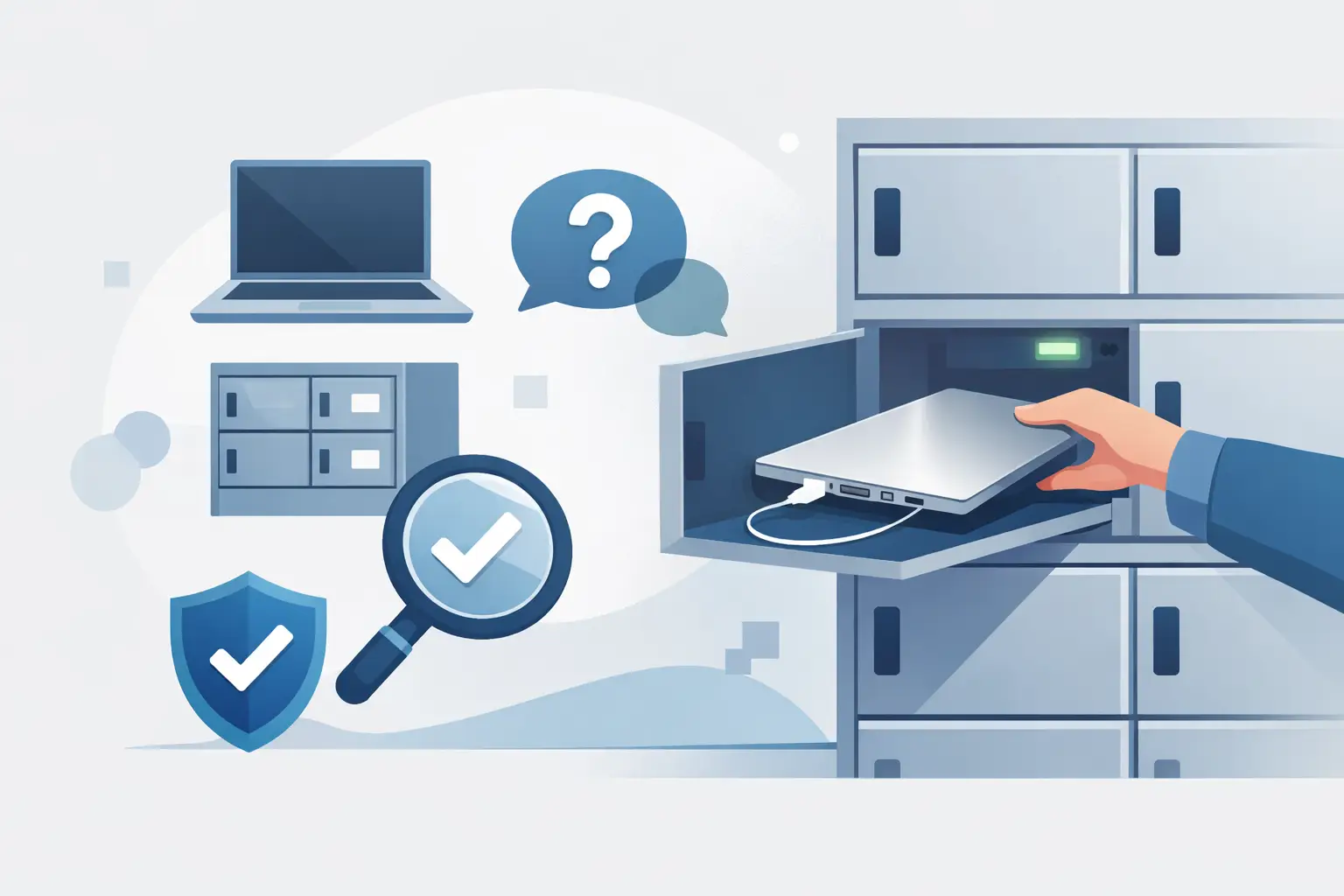
Can Charging Lockers Fit Laptops? What to Check
Aug 25, 2026
Can charging lockers fit laptops? Learn which locker dimensions, outlets, cables, and power limits support secure laptop charging at work and events today.
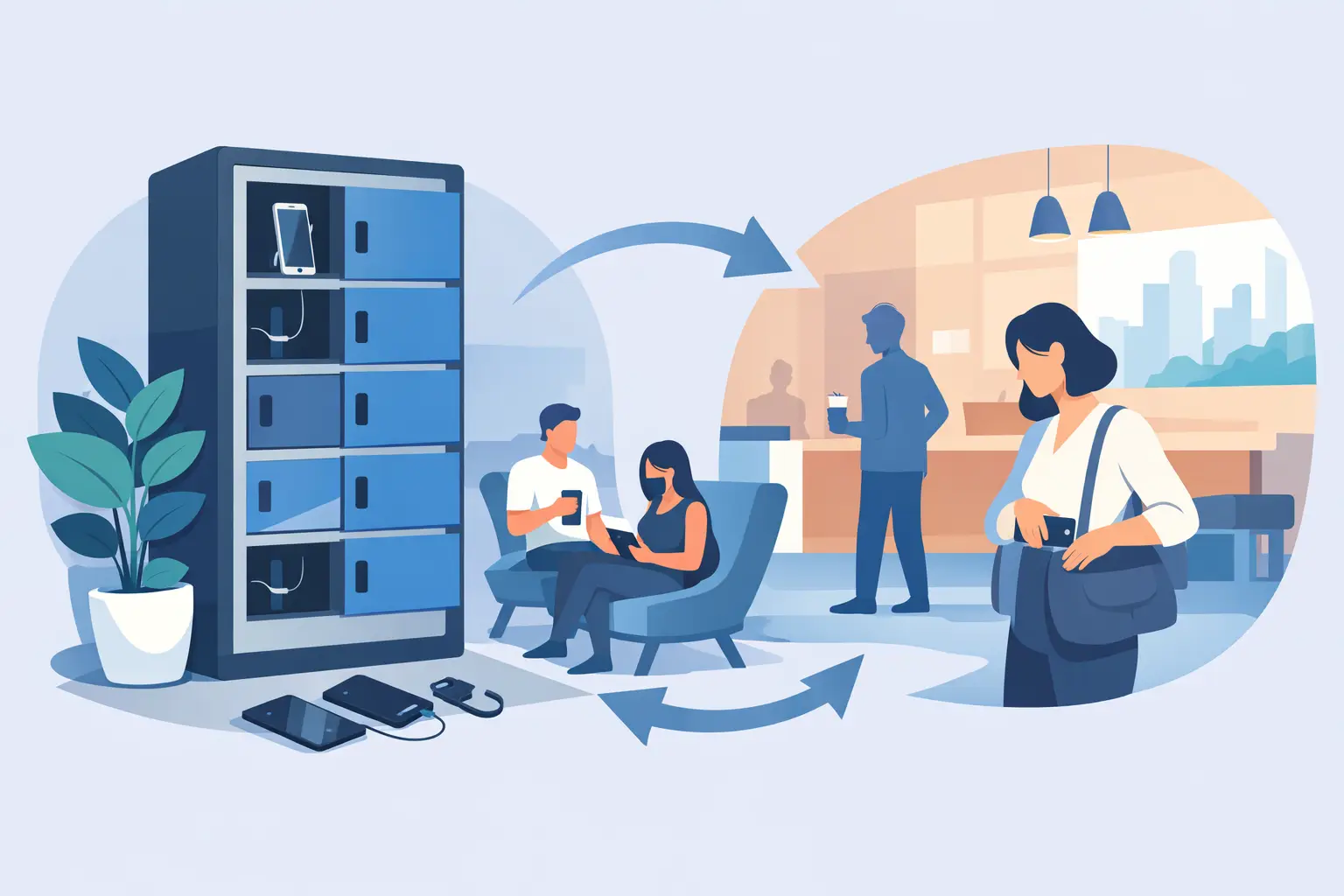
How to Lease Charging Lockers for Your Venue
Aug 23, 2026
Learn how to lease charging lockers with the right term, payment model, security features, and deployment plan for each location.
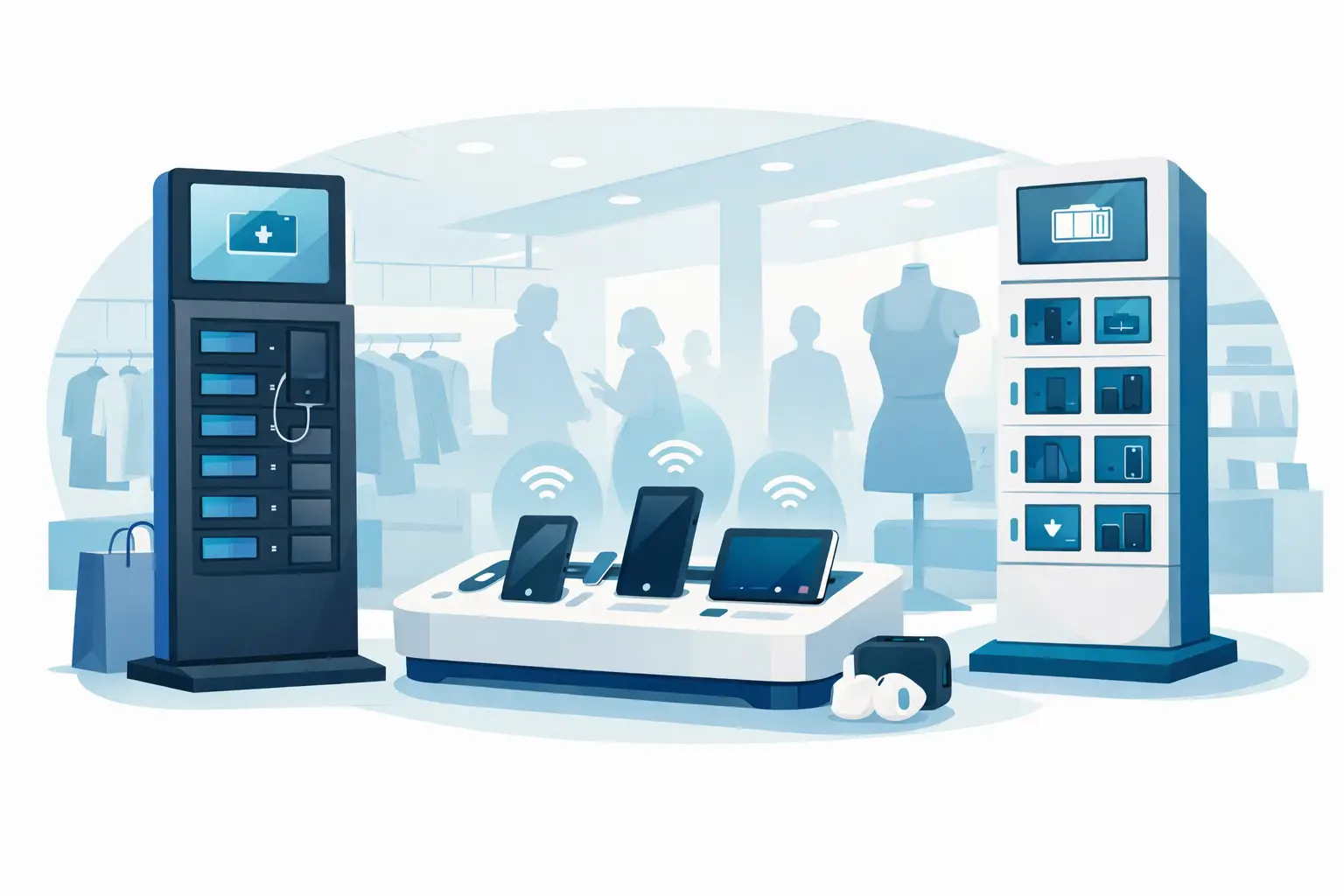
Best Charging Kiosks for Retail Stores Compared
Aug 21, 2026
Compare the best charging kiosks for retail to increase dwell time, protect customer devices, support modern USB-C needs, and create new revenue safely.
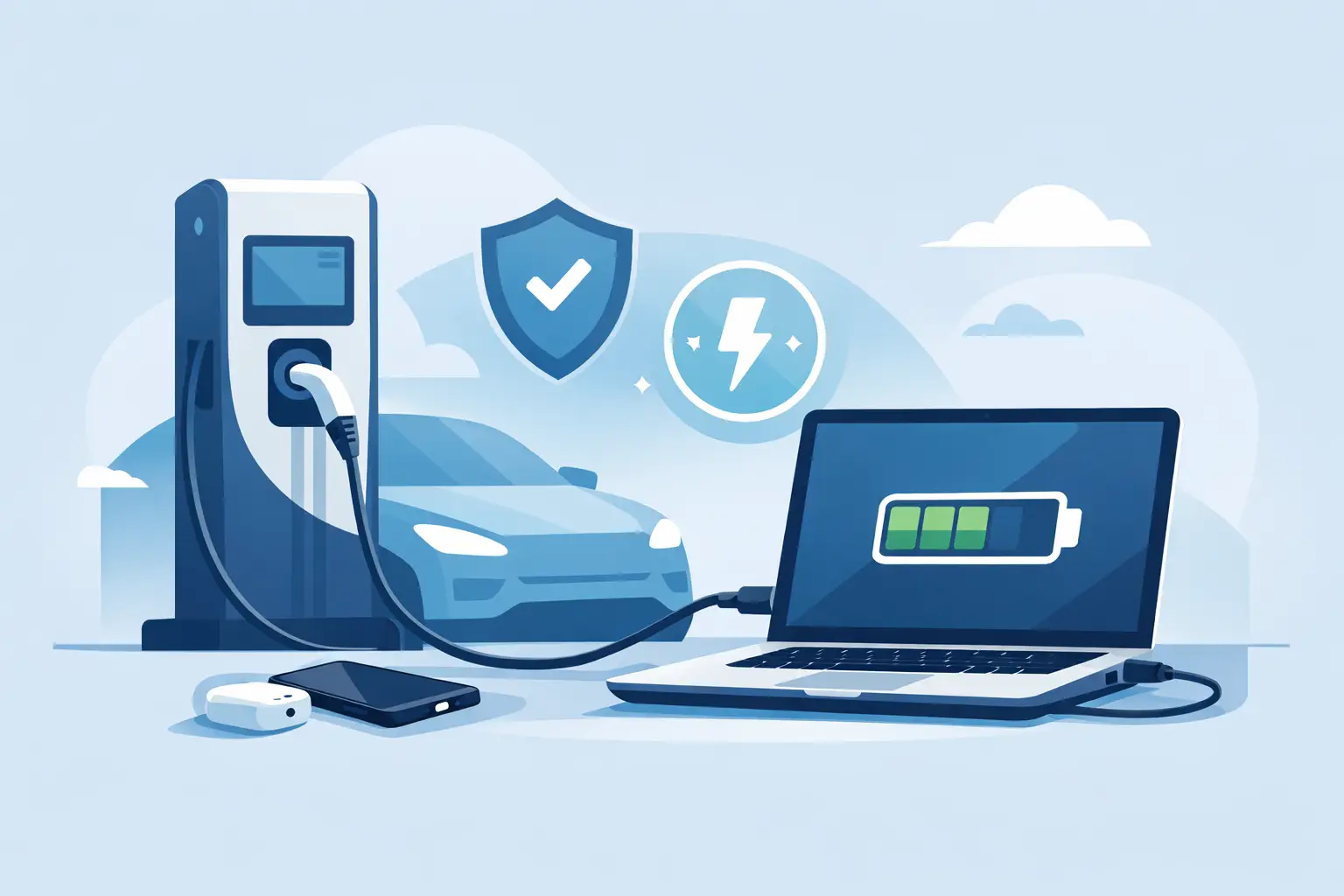
Can Charging Stations Charge Laptops Safely?
Aug 19, 2026
Can charging stations charge laptops? Learn which ports, wattages, and safety features businesses need to provide laptop power for visitors and staff.
Emergency Phone Charger Kiosk for Busy Venues
Aug 17, 2026
An emergency phone charger kiosk keeps guests connected, extends dwell time, and can turn charging access into a secure revenue opportunity for your venue today.
Fleet Device Charging Management That Works
Aug 15, 2026
Fleet device charging management keeps phones, tablets, and laptops ready, secure, and accounted for across every shift, site, and deployment without delays daily.
Best Event Phone Charging Rentals for Busy Venues
Aug 13, 2026
Find the best event phone charging rentals for secure, fast, branded power that keeps attendees engaged, extends dwell time, and can create event revenue.
Power Bank Rental vs Lockers: Which Fits?
Aug 11, 2026
Compare power bank rental vs lockers to choose the right charging solution for your venue, event, or workplace and improve guest experience and ROI today.
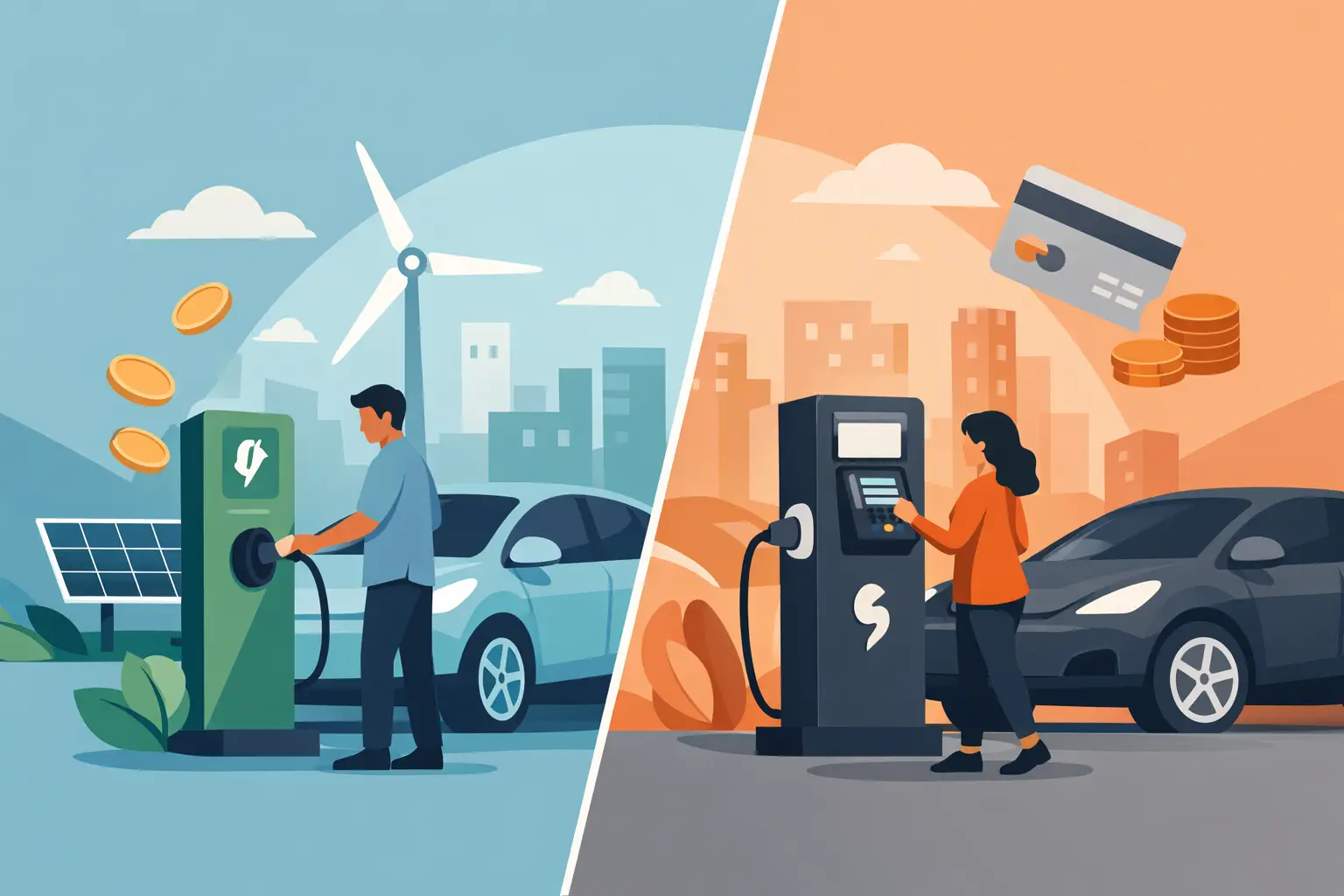
Free Charging vs Paid Charging: Which Works?
Aug 09, 2026
Free charging vs paid charging can improve visitor experience or create revenue. Learn how to choose the right model for your venue, event, or workplace.
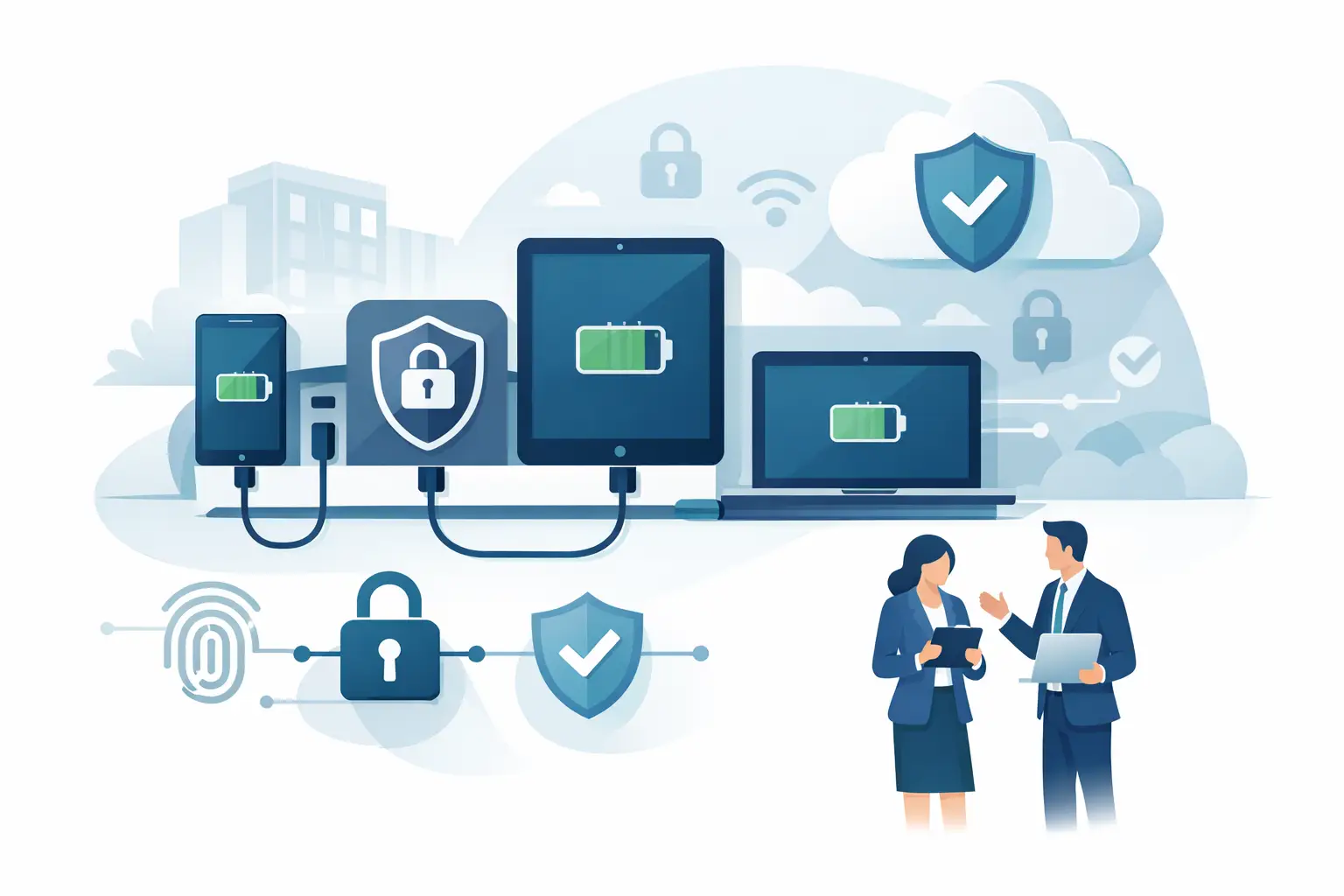
Secure Device Charging Guide for Businesses
Aug 07, 2026
Use this secure device charging guide to protect phones, tablets, and laptops while providing reliable, convenient power for every guest at your venue.

Charging Station Leasing Guide for Businesses
Aug 04, 2026
Use this charging station leasing guide to compare terms, station types, payment options, and ROI before adding secure device charging to your space today.
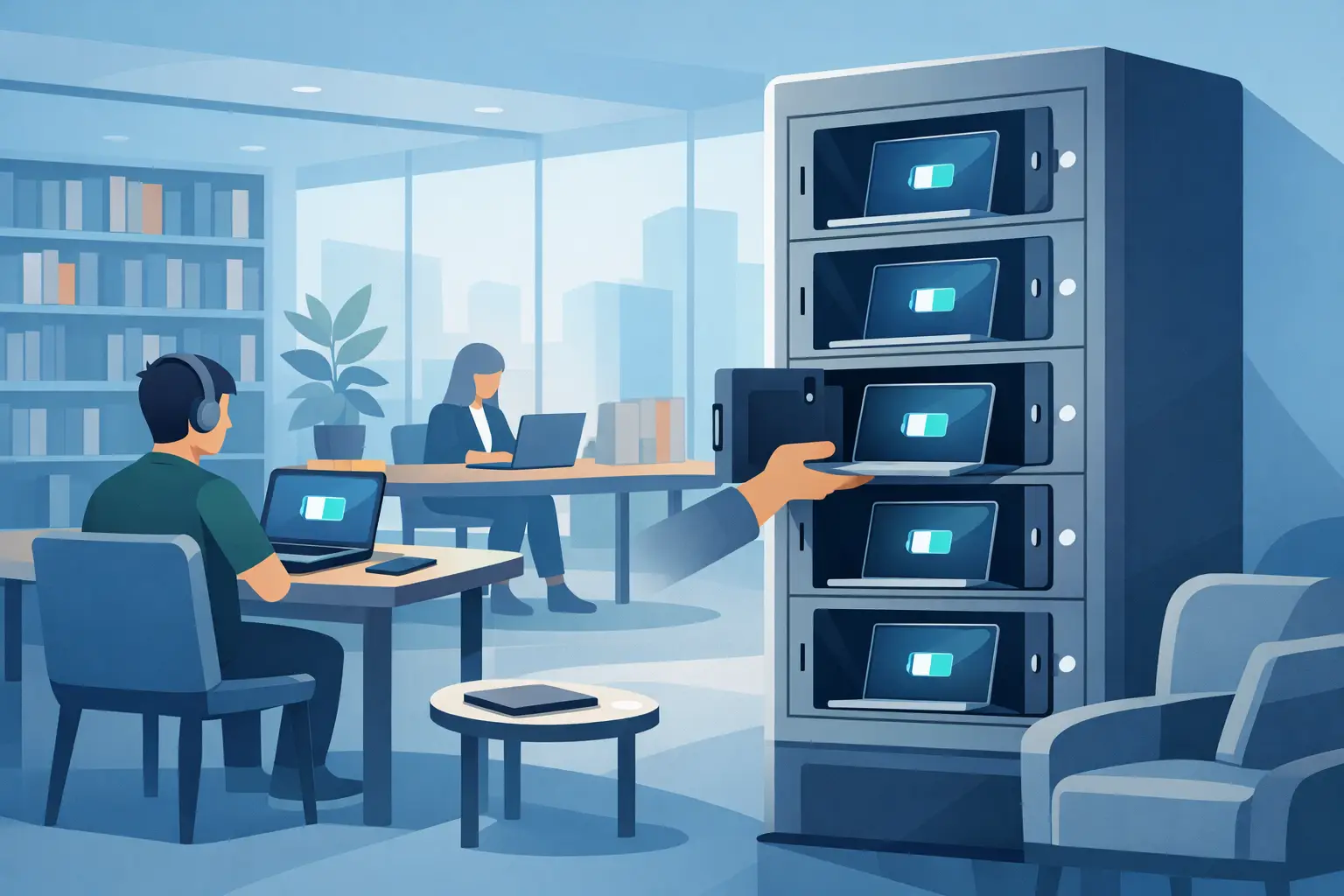
Laptop Charging Kiosk for Libraries That Works
Aug 03, 2026
Choose a laptop charging kiosk for libraries with secure storage, laptop-ready power, simple access, and a funding model that fits your space reliably.
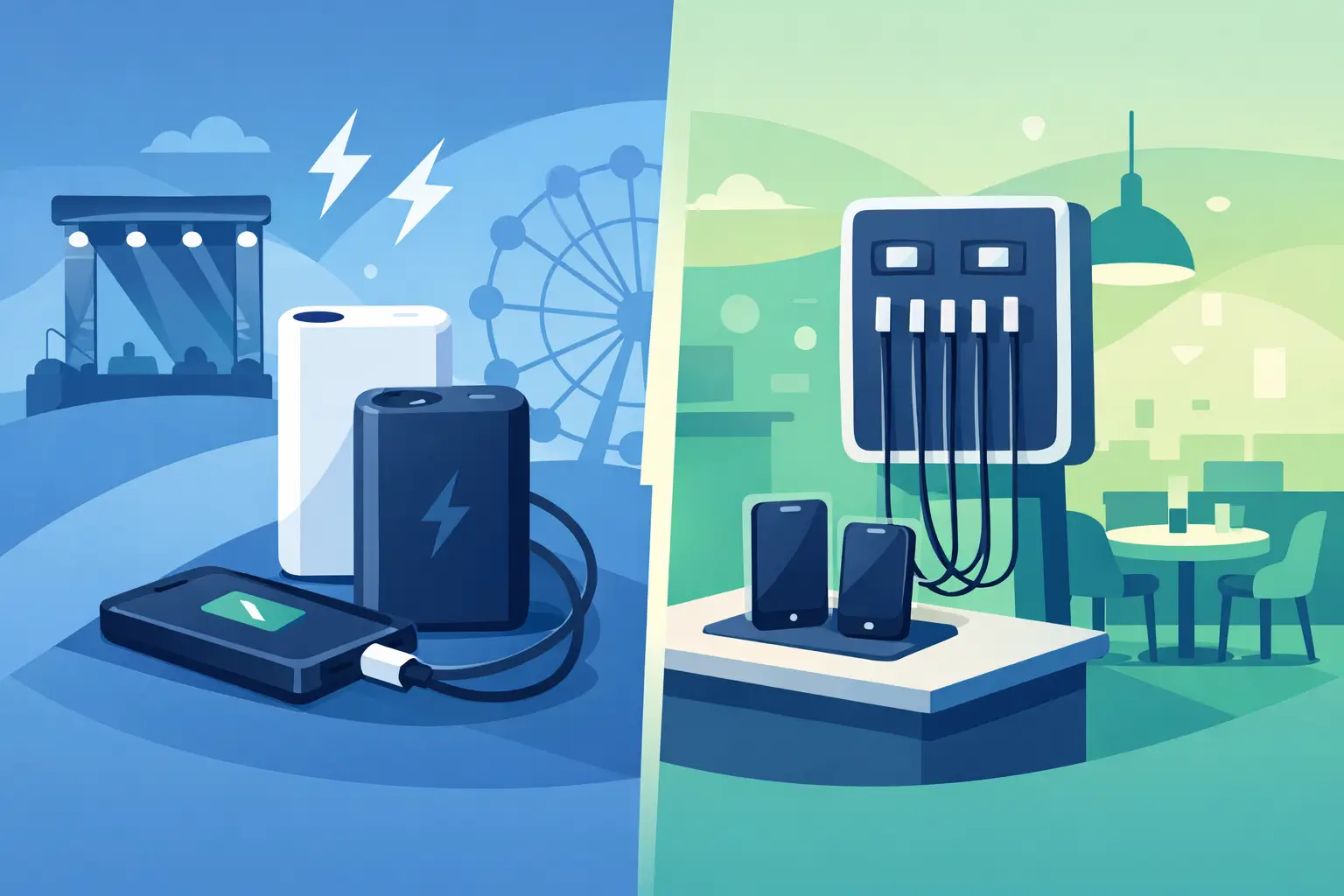
Power Banks vs Fixed Chargers for Venues
Aug 01, 2026
Compare power banks vs fixed chargers for events, venues, and workplaces. Choose secure charging that improves guest experience, uptime, and revenue onsite.
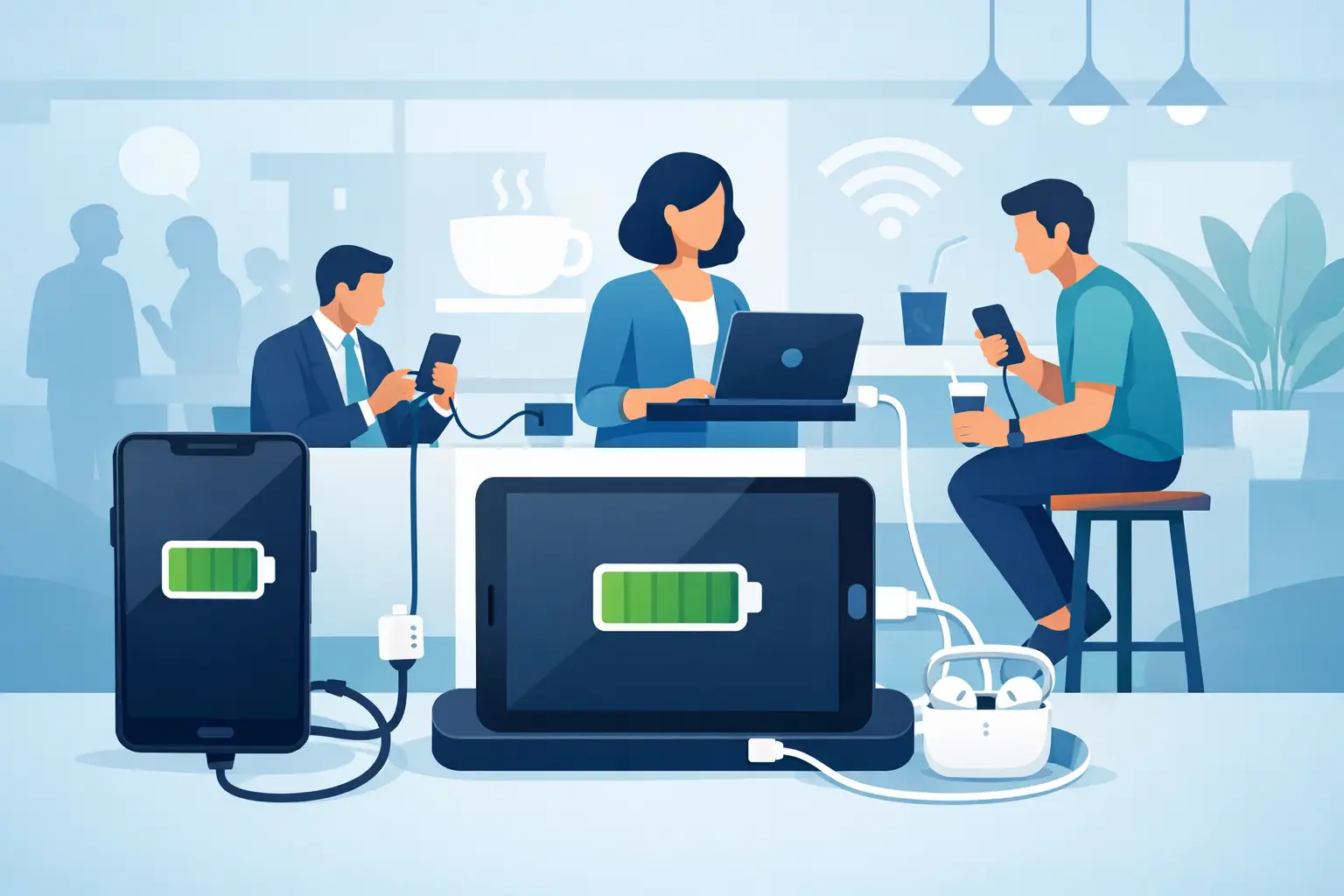
Why Offer Free Device Charging at Your Venue?
Jul 29, 2026
Why offer free device charging? Learn how it keeps visitors engaged, strengthens your brand, supports operations, and can create new revenue opportunities.
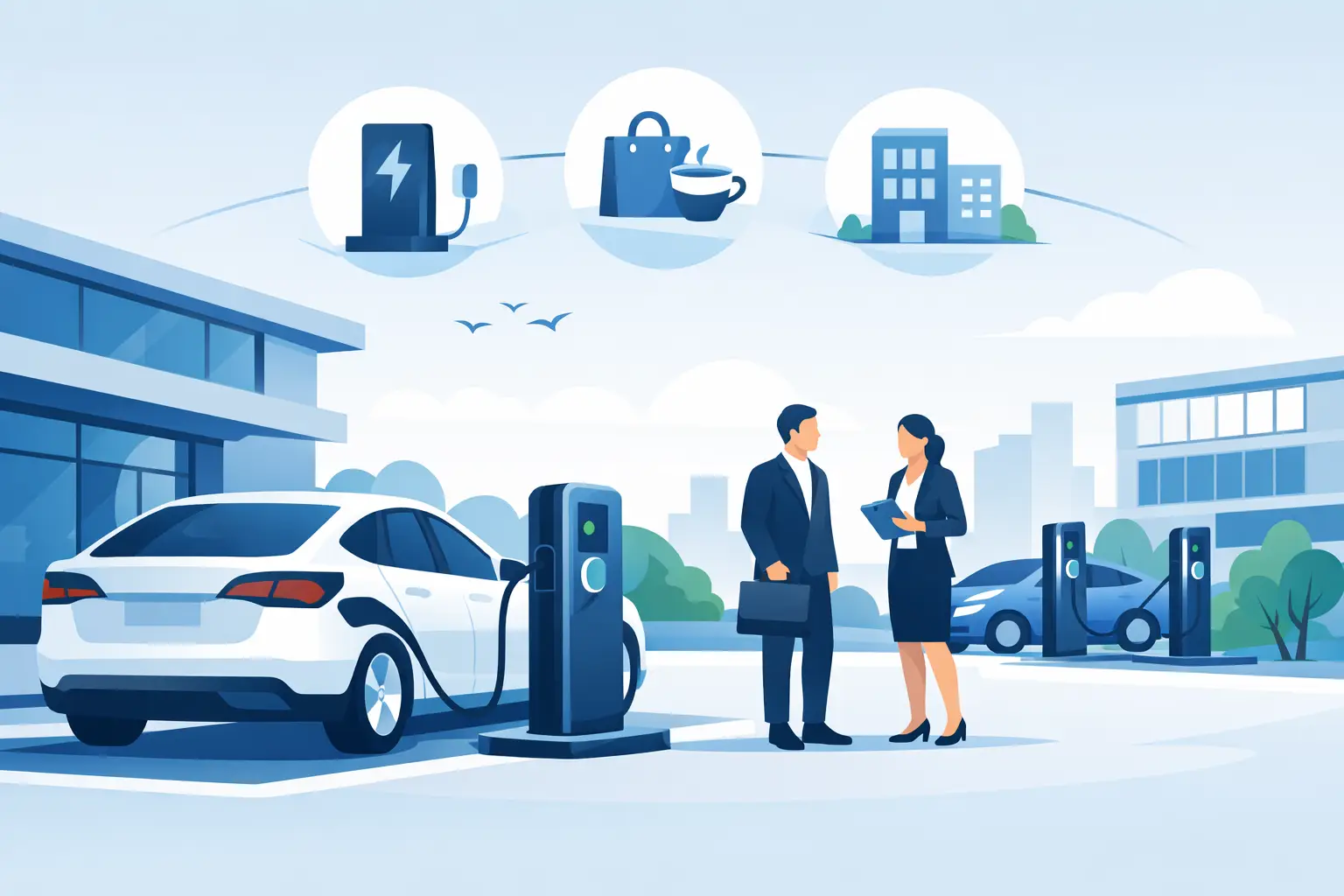
Public Charging Station Benefits for Business
Jul 27, 2026
Public charging station benefits include longer visits, happier guests, stronger brand visibility, and practical revenue options for high-traffic venues.

Phone Charging Lockers for Gyms That Members Use
Jul 26, 2026
Phone charging lockers for gyms keep members powered, valuables secure, and workouts on track while creating a valuable amenity or revenue opportunity.
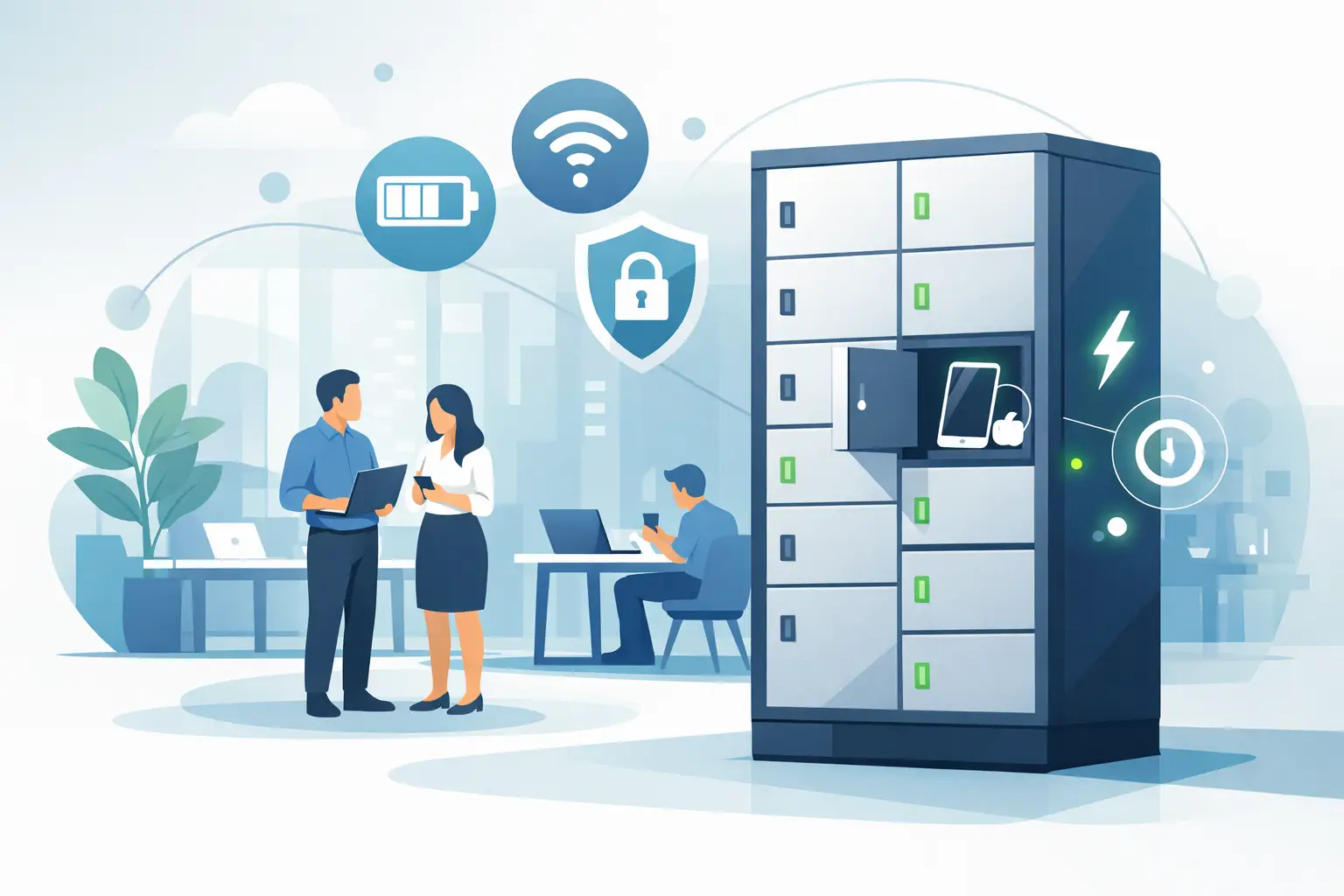
Best Charging Lockers for Offices in 2026
Jul 23, 2026
Find the best charging lockers for offices with secure storage, USB-C support, smart access, and the right capacity for staff, guests, and shared devices.
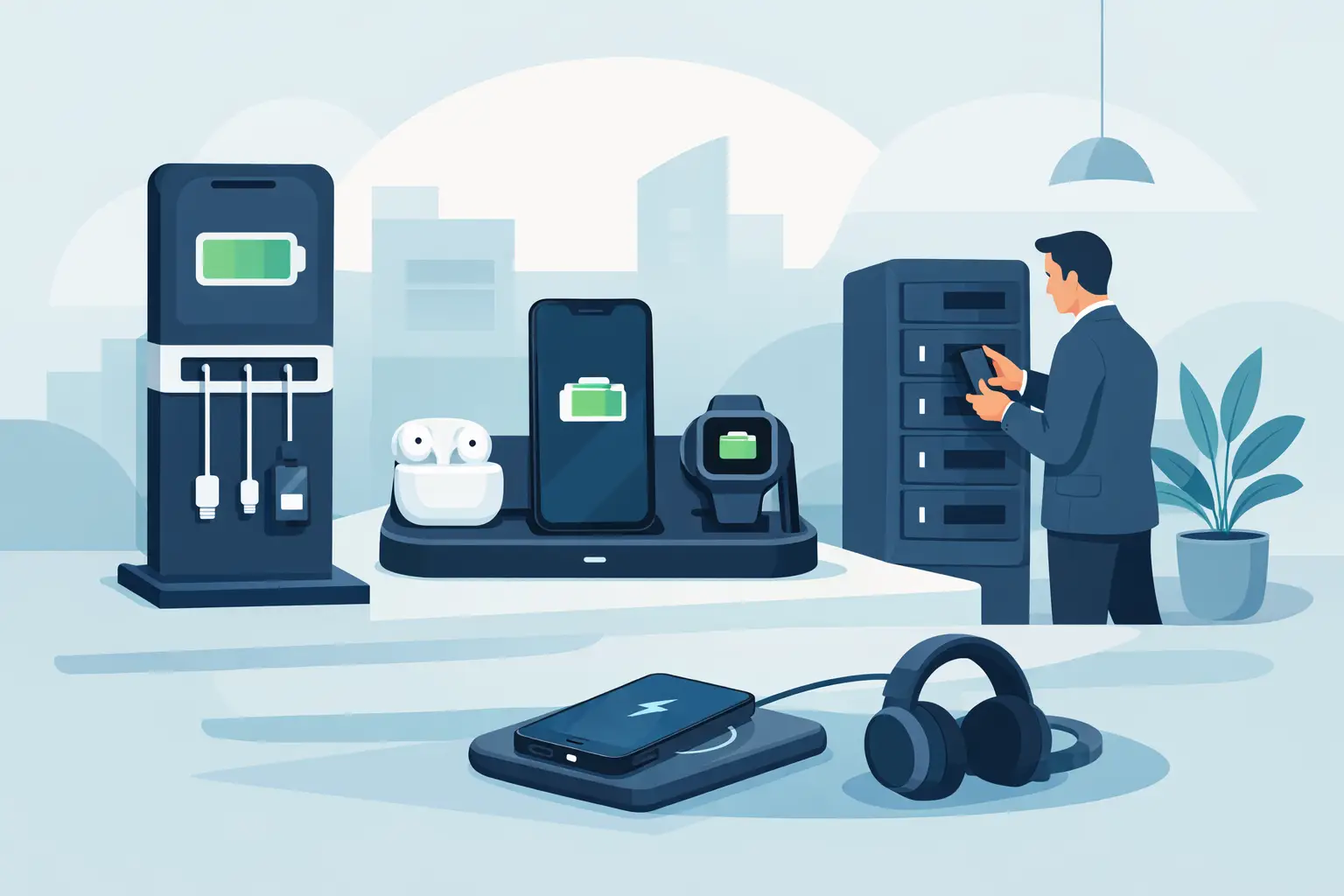
Phone Charging Stations That Work Harder
Jul 21, 2026
Phone charging stations keep guests engaged, staff productive, and events moving. Learn how to choose secure, scalable options that can earn revenue too.

How to Deploy Charging Amenities That Pay Off
Jul 19, 2026
Learn how to deploy charging amenities that keep visitors powered, increase dwell time, support operations, and create revenue in any venue with clarity.
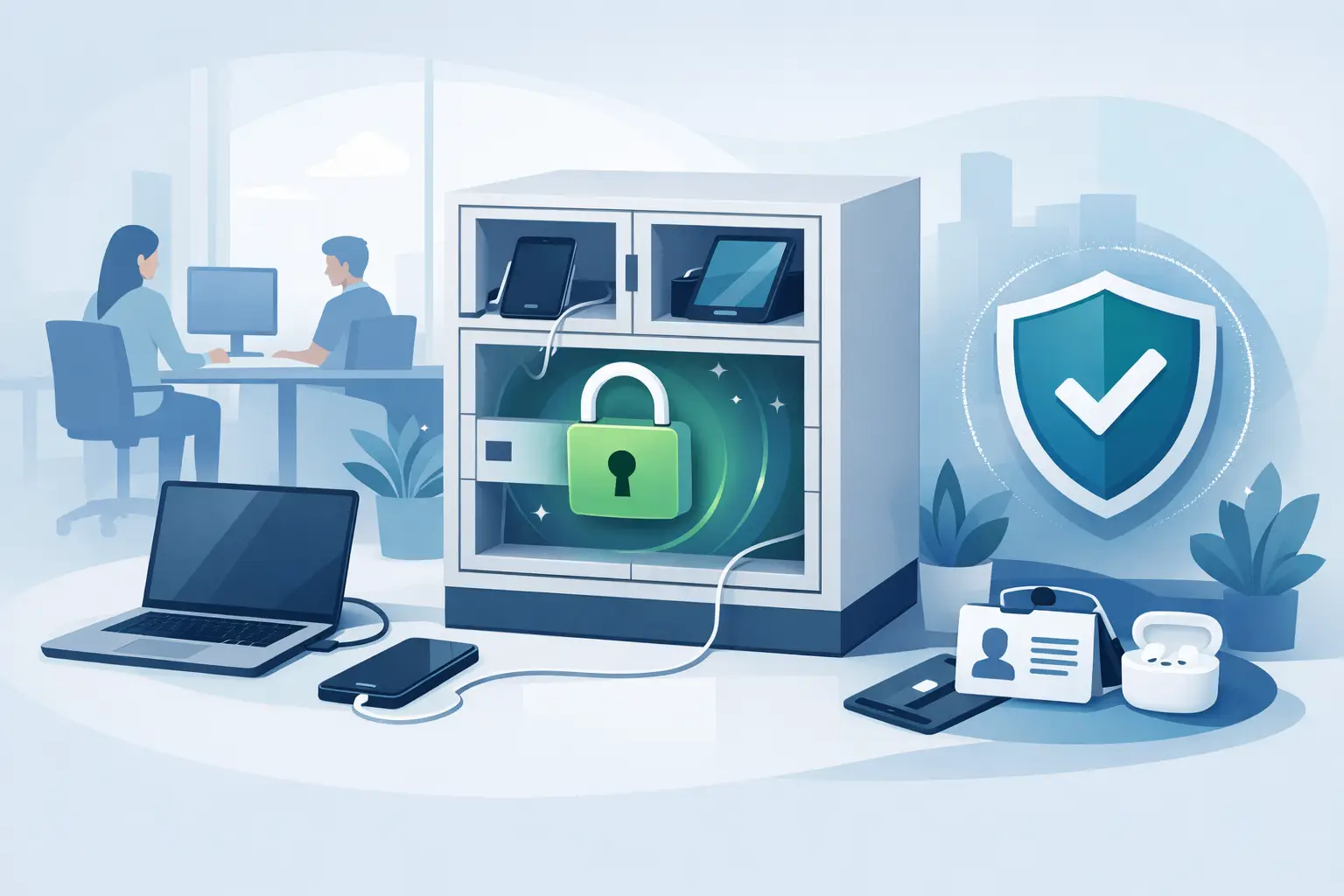
Secure Charging for Employee Devices at Work
Jul 18, 2026
Secure charging for employee devices keeps work moving while protecting phones, tablets, and laptops. Learn what a practical workplace setup needs today.
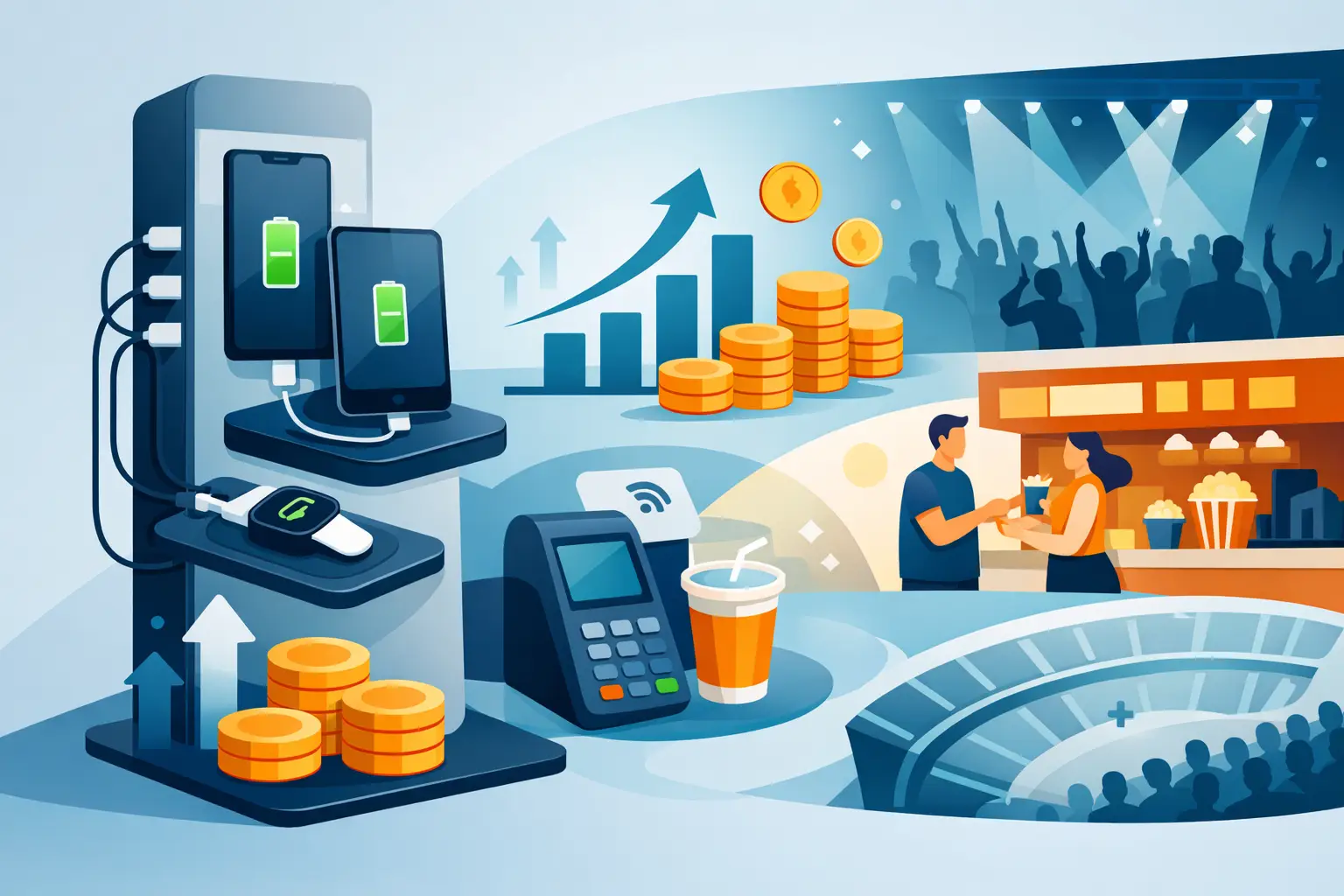
Venue Device Charging Solutions That Pay Off
Jul 16, 2026
Venue device charging solutions keep guests connected, increase dwell time, protect devices, and can create new revenue at events and public spaces daily.
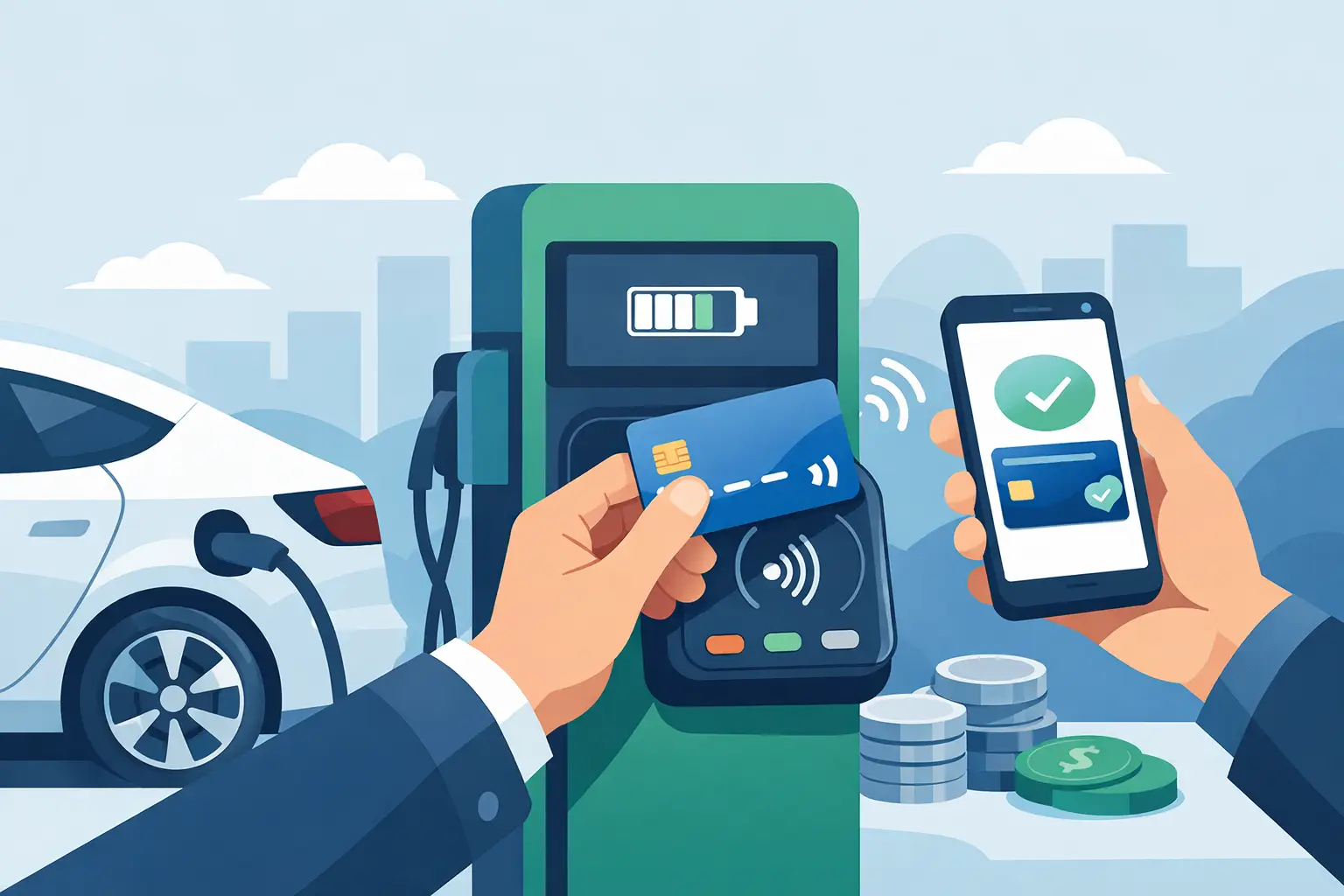
Can Charging Kiosks Take Payments? Yes, Here’s How
Jul 14, 2026
Can charging kiosks take payments? See how POS-enabled charging turns low-battery demand into convenience, longer visits, and new venue revenue streams.

Custom Branded Charging Stations That Earn Attention
Jul 11, 2026
Custom branded charging stations turn low-battery stress into longer visits, stronger brand visibility, and a practical revenue opportunity for venues.
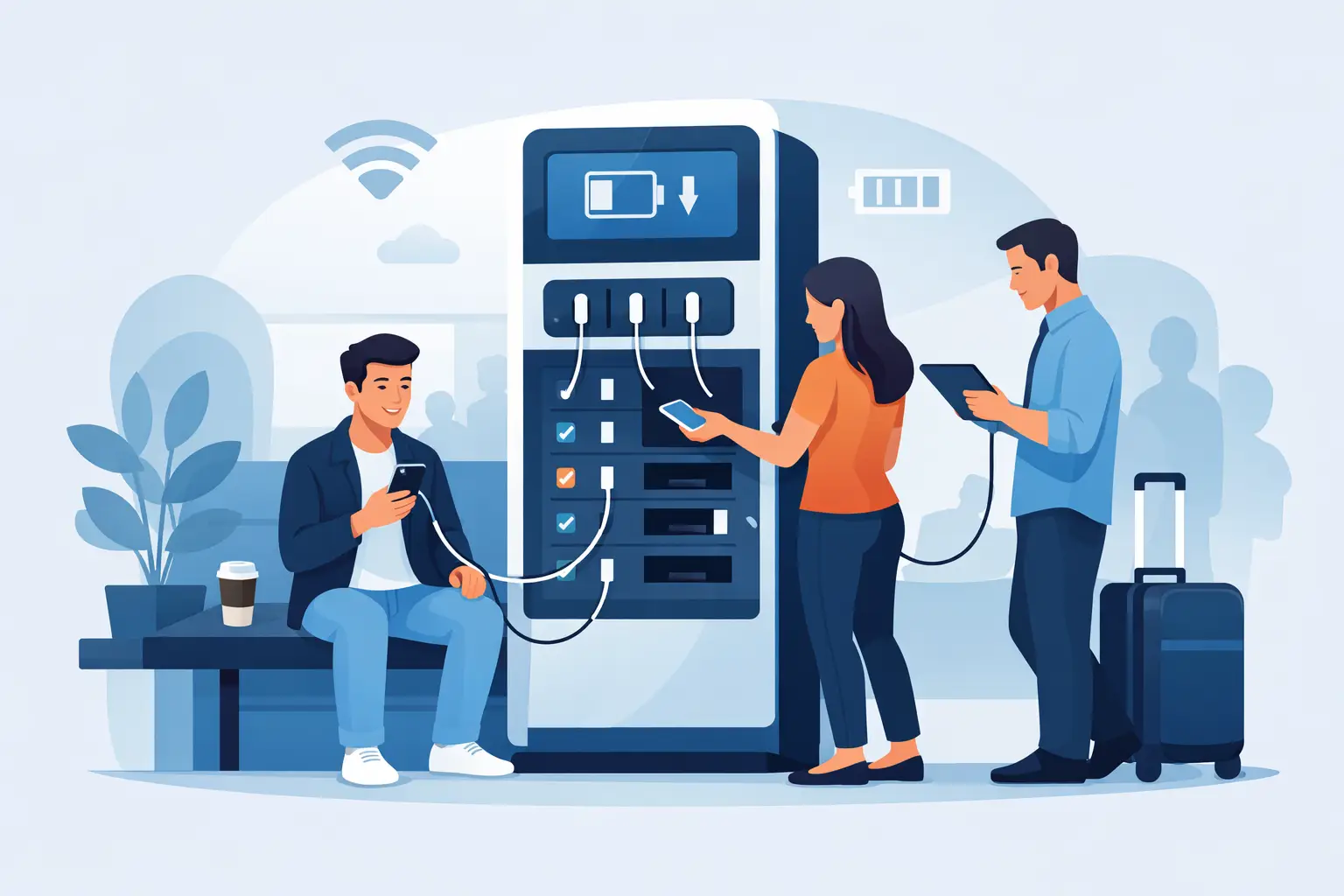
Charging Kiosks That People Actually Use
Jul 10, 2026
Charging kiosks keep guests powered, on-site, and engaged. Learn how to choose the right setup for security, revenue, and everyday use.
Charging Stations for Convention Centers
Jul 08, 2026
Charging stations for convention centers reduce attendee stress, boost dwell time, support sponsors, and create new revenue opportunities.

How to Lease Charging Kiosks Smartly
Jul 06, 2026
Learn how to lease charging kiosks with the right terms, pricing, features, and support so your venue adds convenience and potential revenue.
Visitor Amenity Charging Kiosk: What to Buy
Jul 04, 2026
A visitor amenity charging kiosk helps venues keep guests powered, engaged, and on-site while supporting security, branding, and revenue goals.

Business Charging Station Buying Guide
Jul 02, 2026
Business charging station buying guide for choosing secure, scalable charging solutions that improve guest experience and create revenue.
Contactless Payment Charging Station Benefits
Jun 30, 2026
A contactless payment charging station helps venues boost convenience, capture revenue, and keep guests engaged without adding operational friction.
How to Choose Charging Lockers for Your Space
Jun 28, 2026
Learn how to choose charging lockers for events, venues, offices, and retail spaces based on security, device mix, power needs, and ROI.

Are Public Charging Stations Safe to Use?
Jun 26, 2026
Are public charging stations safe to use? Learn the real risks, how secure charging stations work, and what businesses should provide.
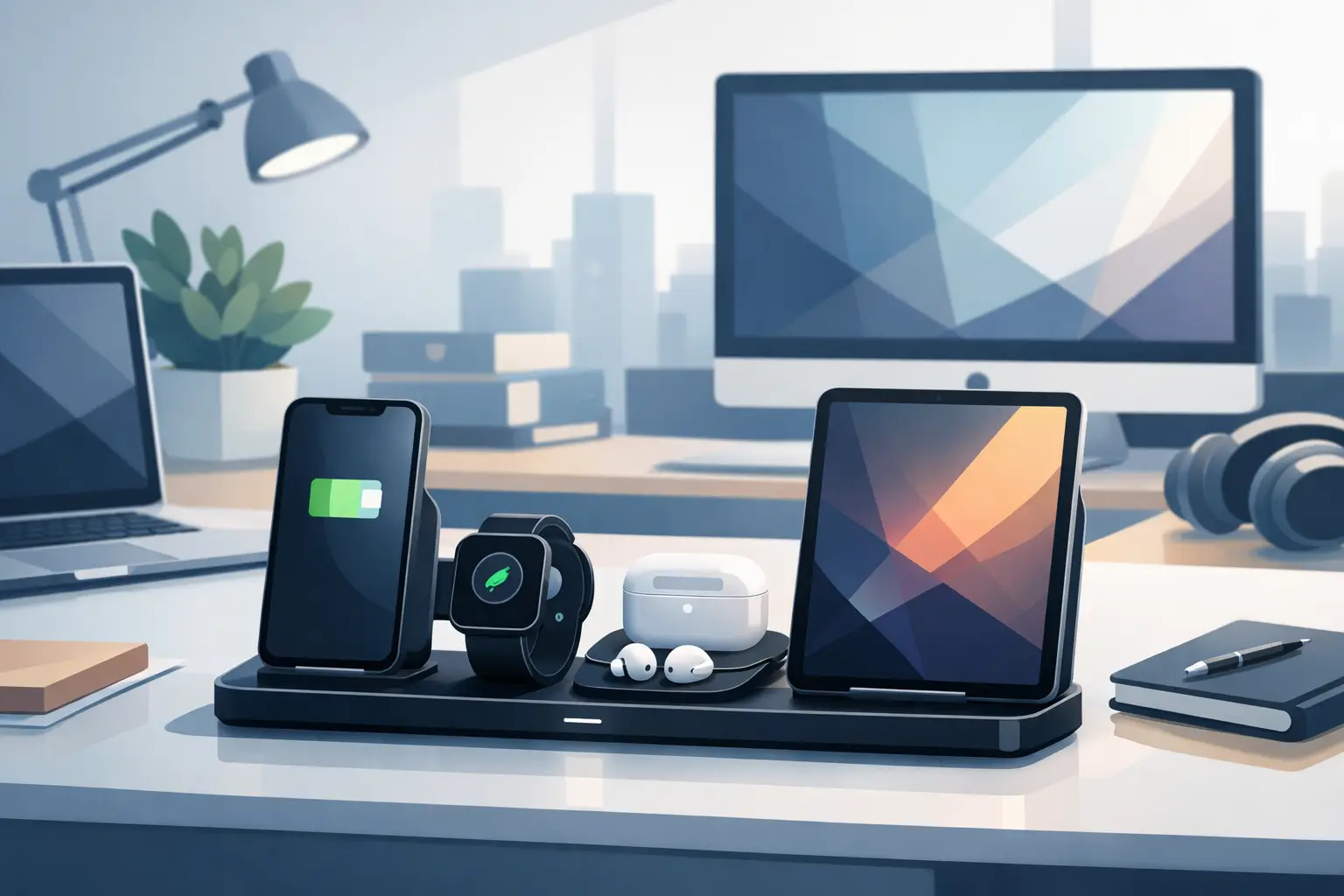
Best Desktop Charging Station for Office Use
Jun 24, 2026
Find the right desktop charging station for office use with tips on safety, device mix, cable management, security, and long-term value.
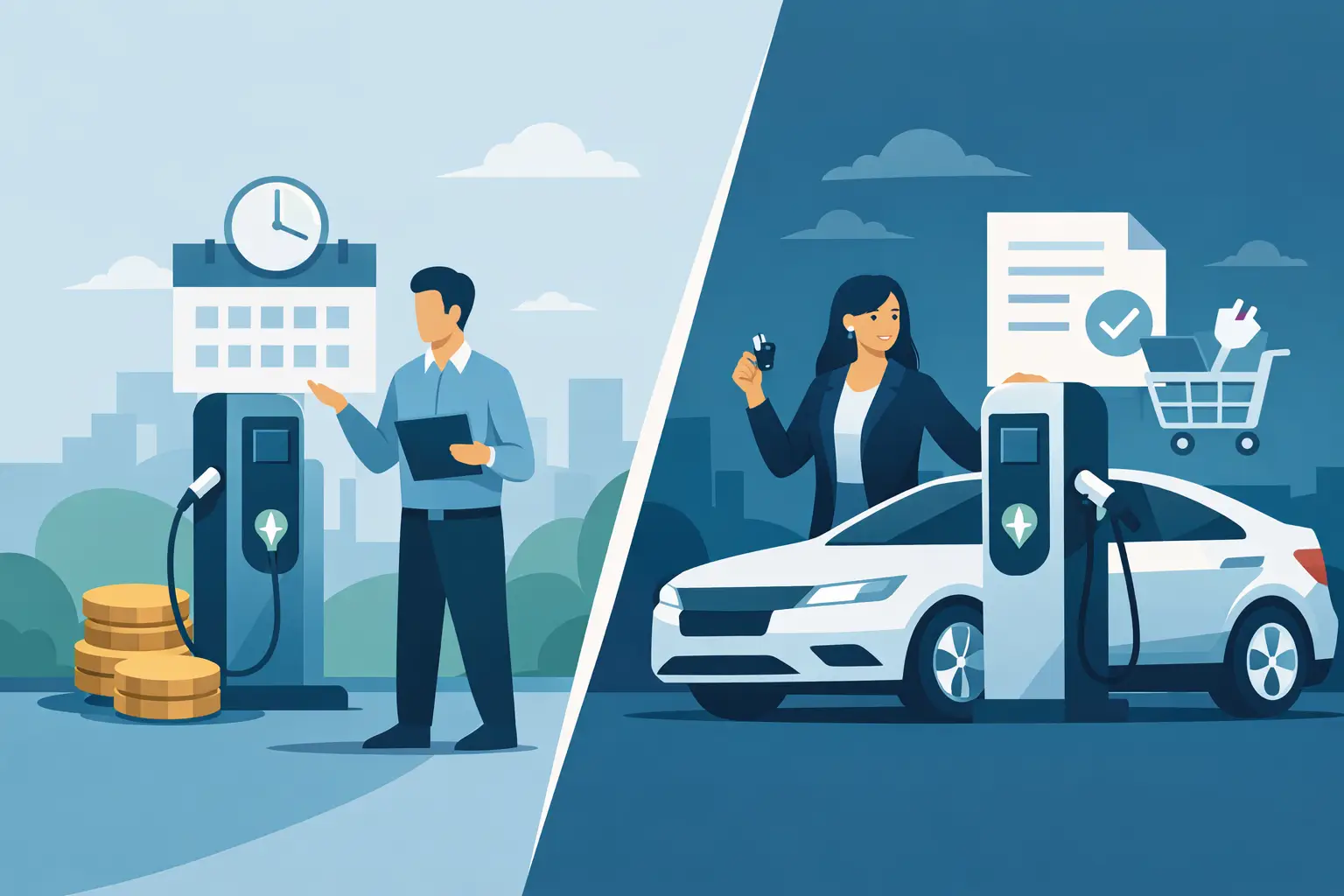
Leasing vs Buying Charging Stations
Jun 22, 2026
Leasing vs buying charging stations comes down to budget, flexibility, and ROI. Learn which model fits events, venues, offices, and retail.
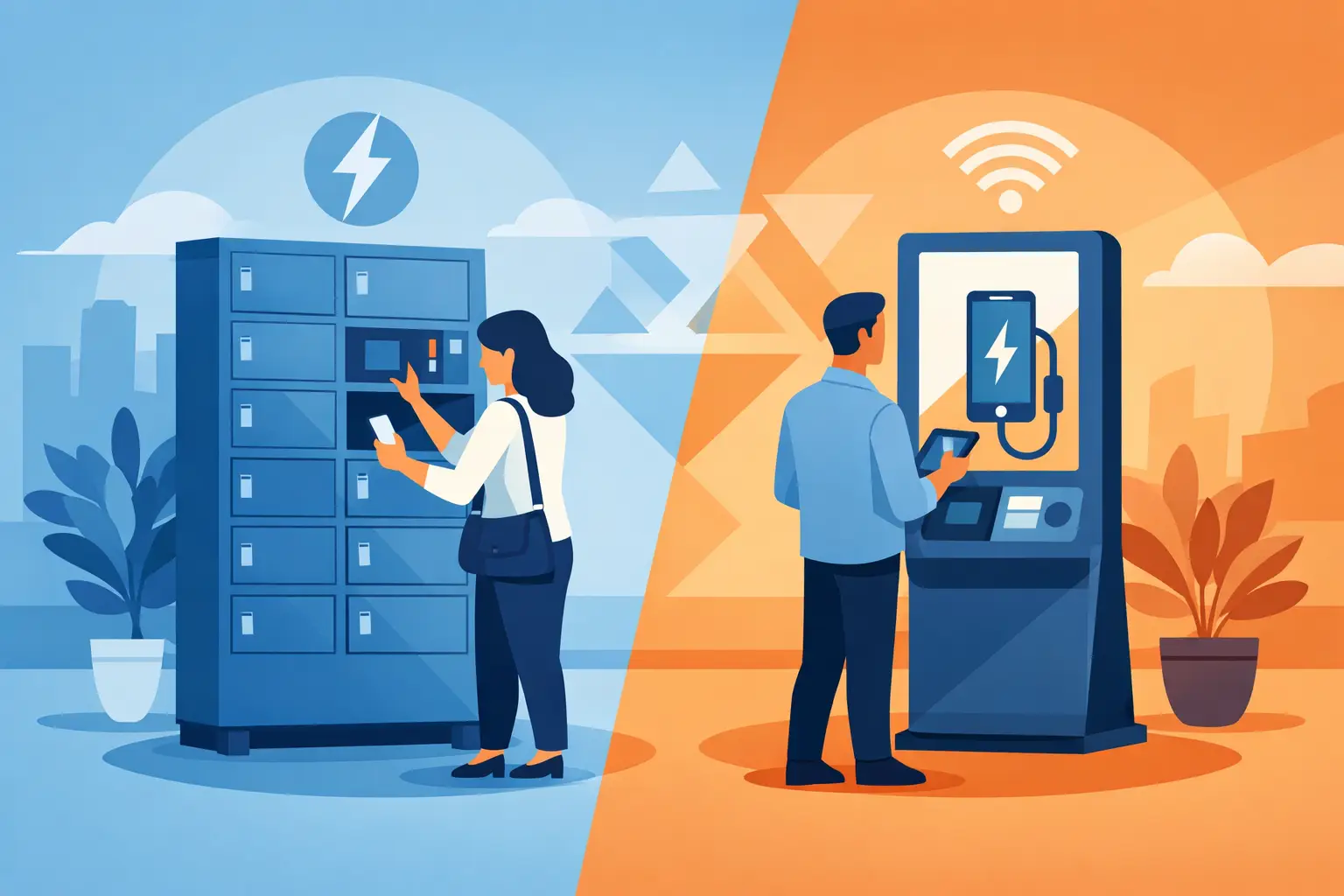
Charging Lockers vs Kiosks: What Fits Best?
Jun 20, 2026
Charging lockers vs kiosks: compare security, throughput, revenue, and fit by venue so you can choose the right charging setup for your space.

Charging Locker ROI Calculator Guide
Jun 17, 2026
Use a charging locker ROI calculator to estimate payback, revenue, and visitor impact. Learn which costs, assumptions, and metrics matter most.

How to Monetize Charging Kiosks
Jun 16, 2026
Learn how to monetize charging kiosks with the right pricing, placement, sponsorships, and formats to turn charging access into revenue.
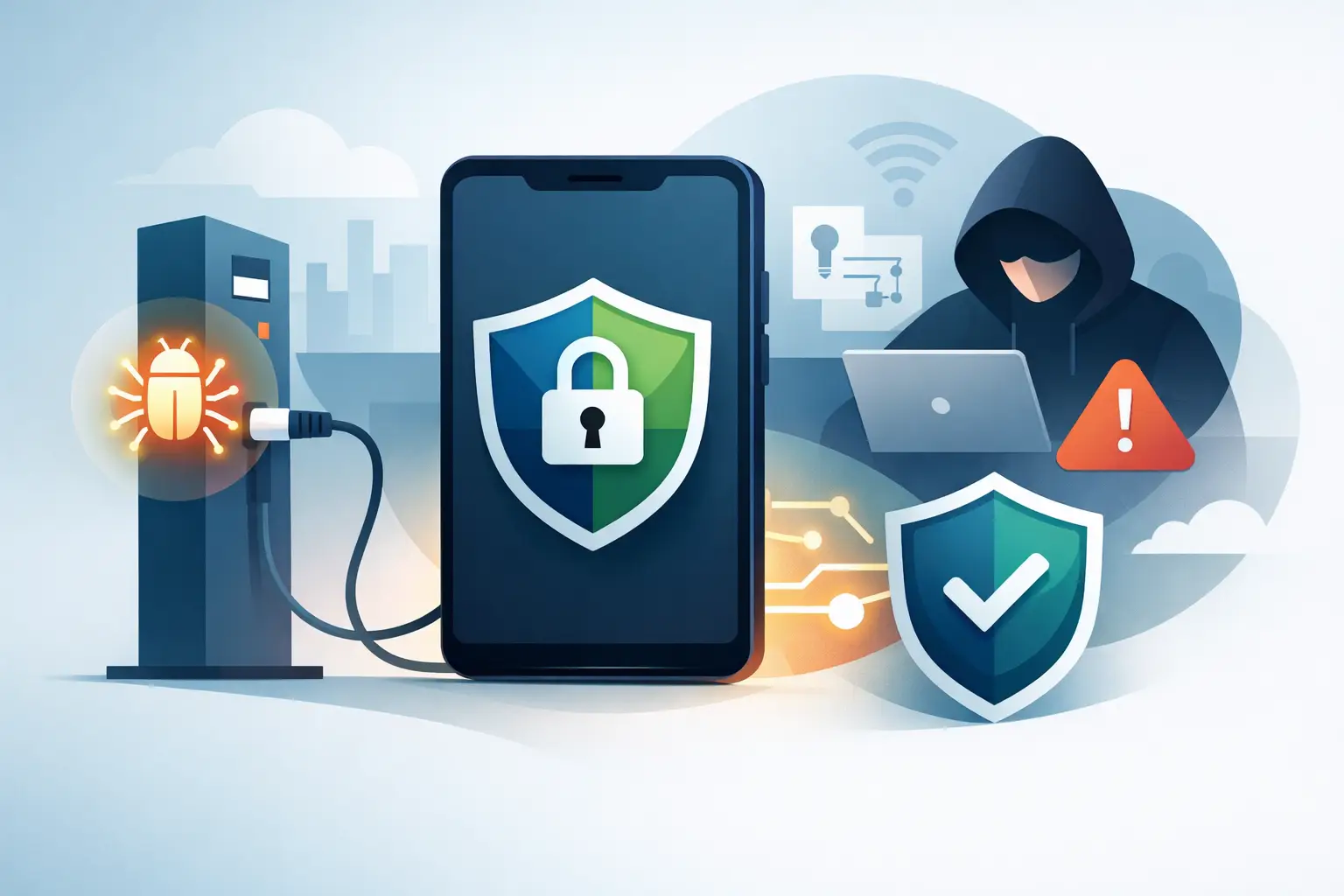
What Is Juice Jacking Protection?
Jun 13, 2026
What is juice jacking protection? Learn how it blocks data theft through USB ports and why businesses should offer safer public charging access.
USB C Charging Trends Businesses Should Track
Jun 12, 2026
USB C charging trends are reshaping public, workplace, and event charging. See what matters for compatibility, speed, safety, and ROI.
USB C Charging Station Commercial Guide
Jun 09, 2026
A practical look at usb c charging station commercial options, including use cases, power, security, placement, pricing, and ROI for busy venues.
Charging Table for Waiting Room Buyers
Jun 08, 2026
A charging table for waiting room spaces keeps guests powered, improves dwell time, and adds convenience without adding operational friction.

What a Custom Charging Kiosk Wrap Should Do
Jun 07, 2026
A custom charging kiosk wrap should attract attention, fit the venue, and support ROI. Learn what to include and what to avoid.
Branded Charging Station for Events That Works
Jun 06, 2026
A branded charging station for events keeps guests powered, boosts dwell time, supports sponsors, and adds measurable value to the event floor.
Conference Charging Locker Rental That Works
Jun 05, 2026
Conference charging locker rental keeps attendees powered, secure, and engaged while creating smoother events, stronger sponsor value, and revenue.
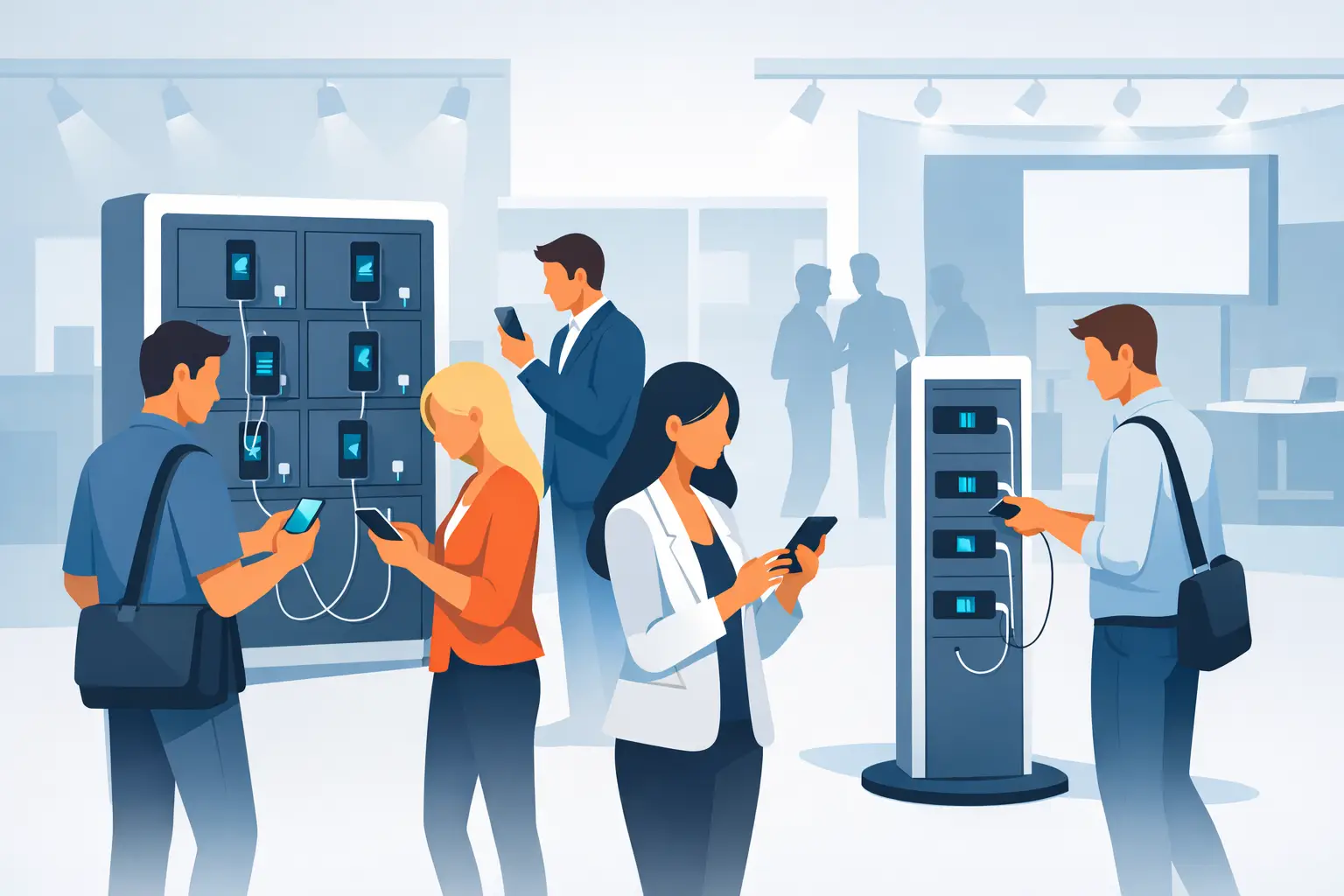
Trade Show Phone Charging Station Guide
Jun 04, 2026
A trade show phone charging station can boost booth traffic, dwell time, and leads while reducing attendee battery stress and improving event ROI.
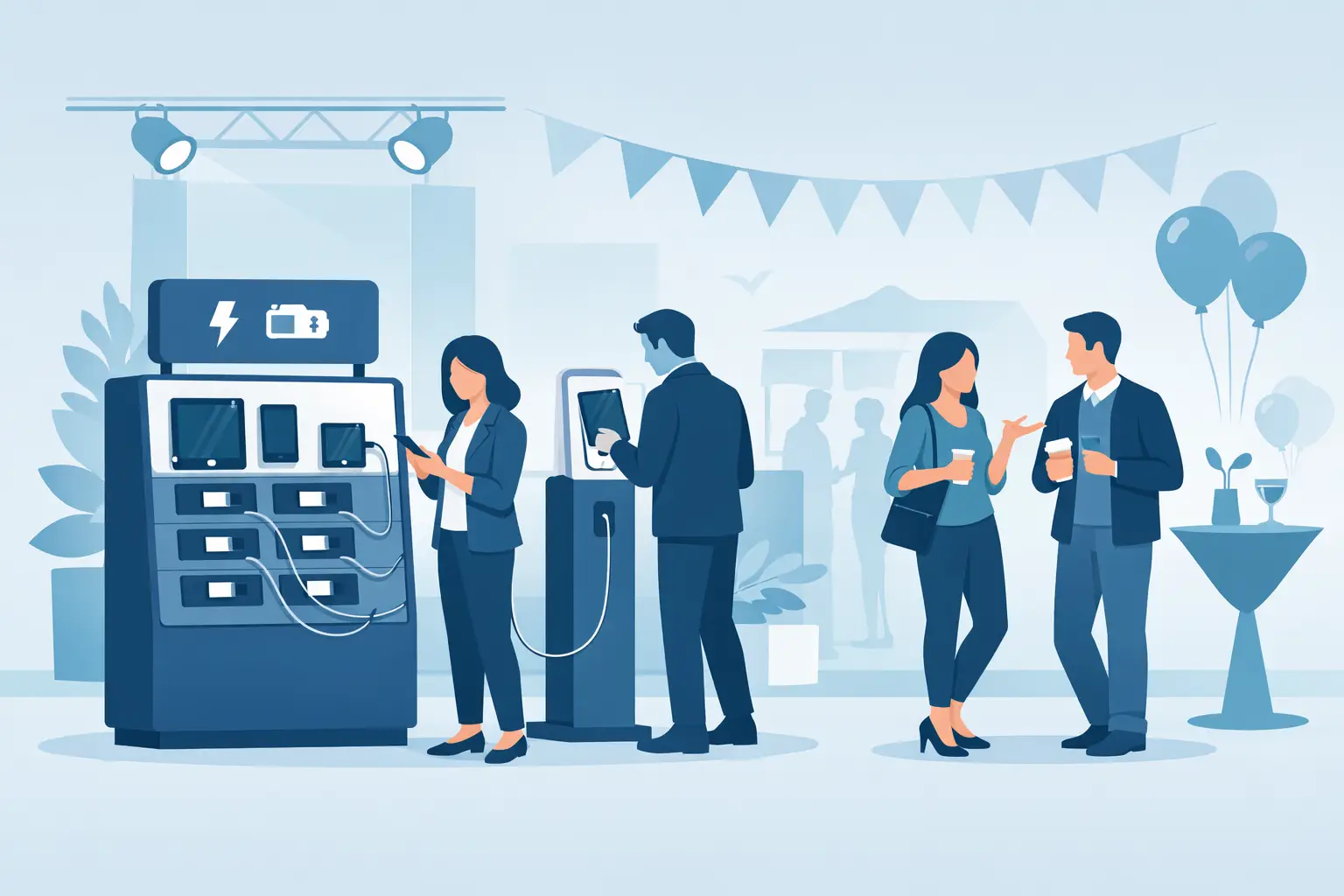
Event Charging Station Rental That Works
Jun 03, 2026
Event charging station rental keeps guests powered, engaged, and on site longer. Learn what to rent, what to ask, and how to avoid event-day issues.

Free Phone Charging Station Retail ROI
Jun 02, 2026
See how free phone charging station retail setups increase dwell time, improve customer experience, and support smarter in-store traffic flow.
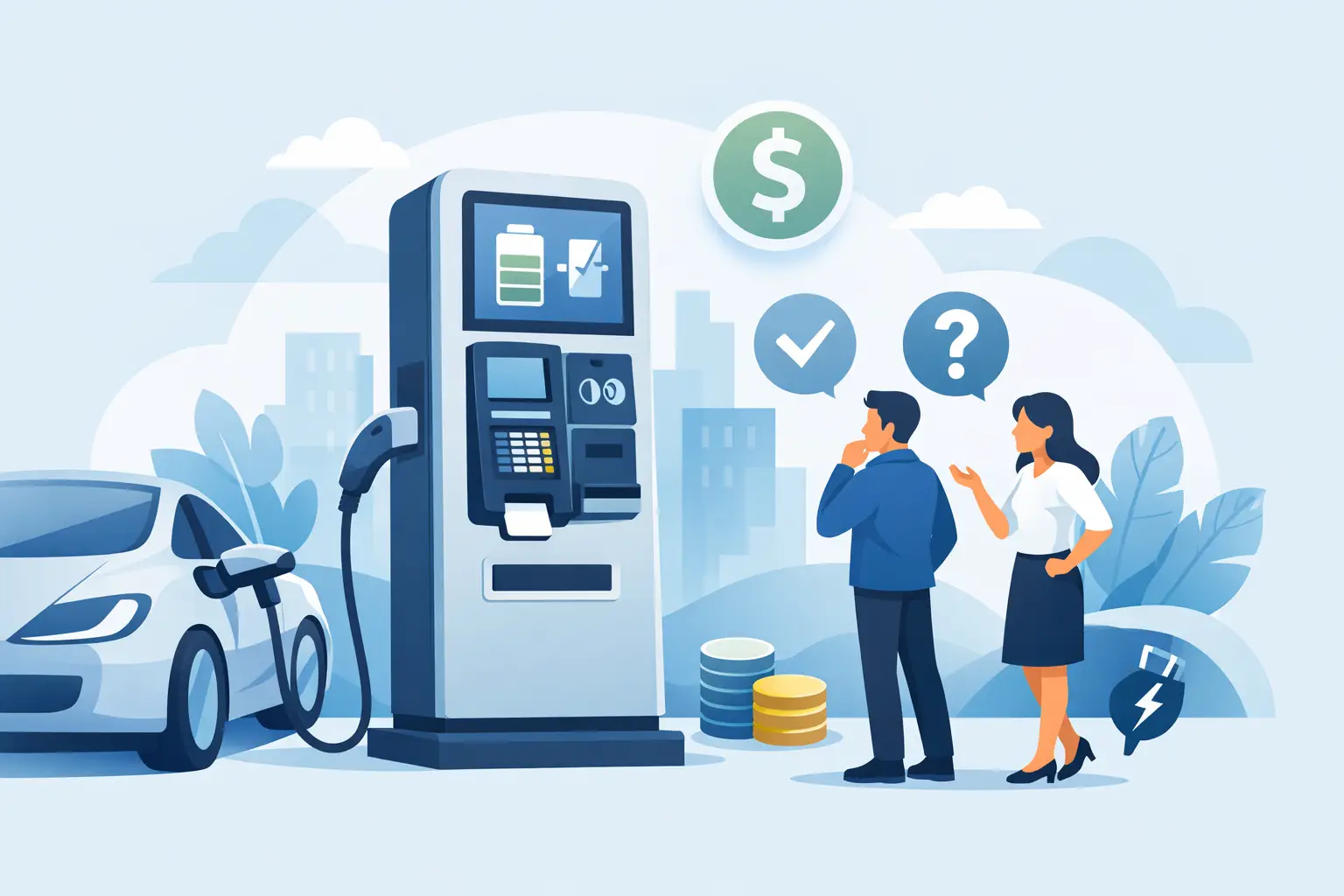
Charging Kiosk With Payment System: Worth It?
Jun 01, 2026
A charging kiosk with payment system can add revenue, improve guest experience, and extend dwell time. Here's how to choose the right setup.
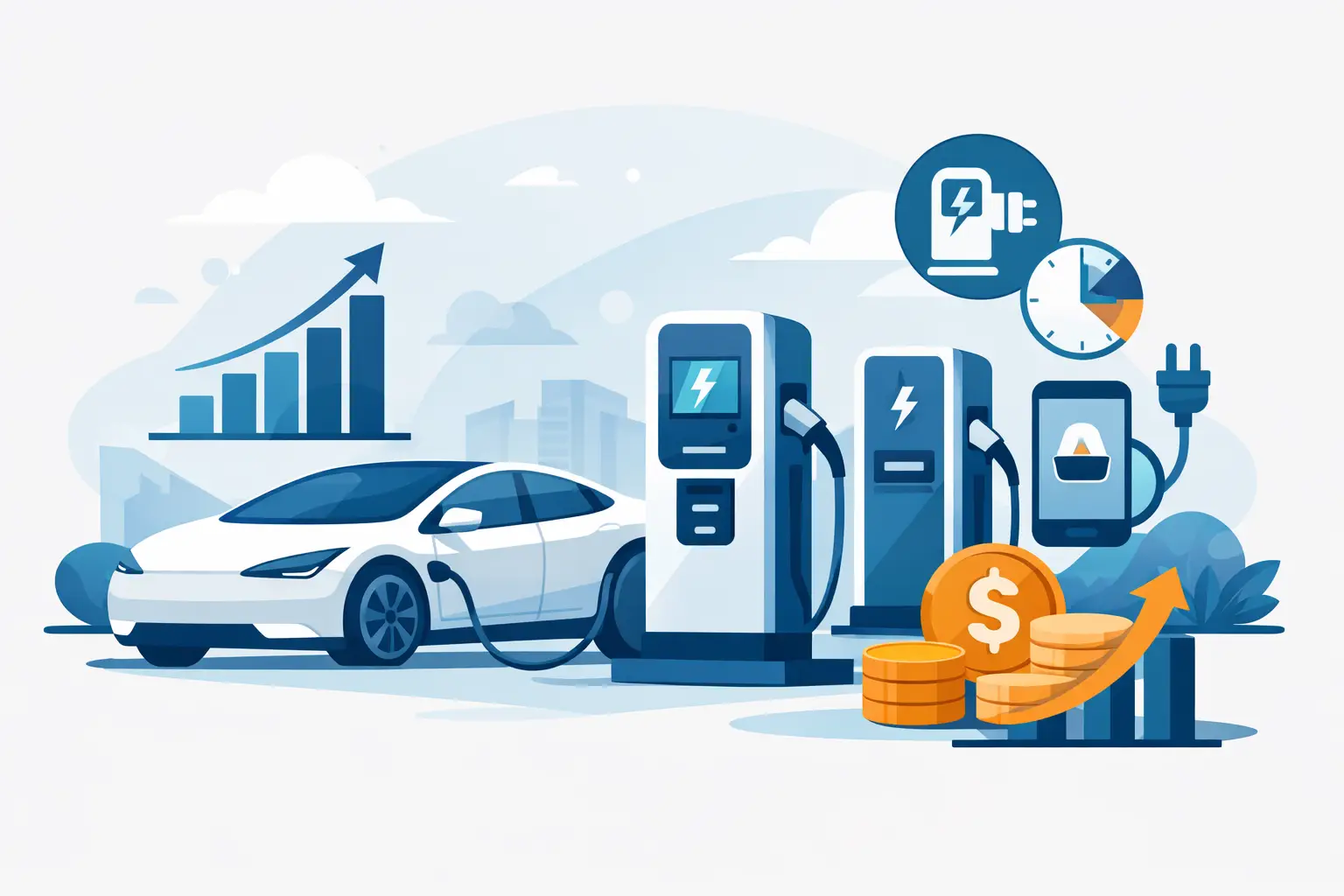
Pay Per Use Charging Station ROI Explained
May 31, 2026
Learn how a pay per use charging station creates revenue, improves visitor experience, and fits retail, events, offices, and public venues.
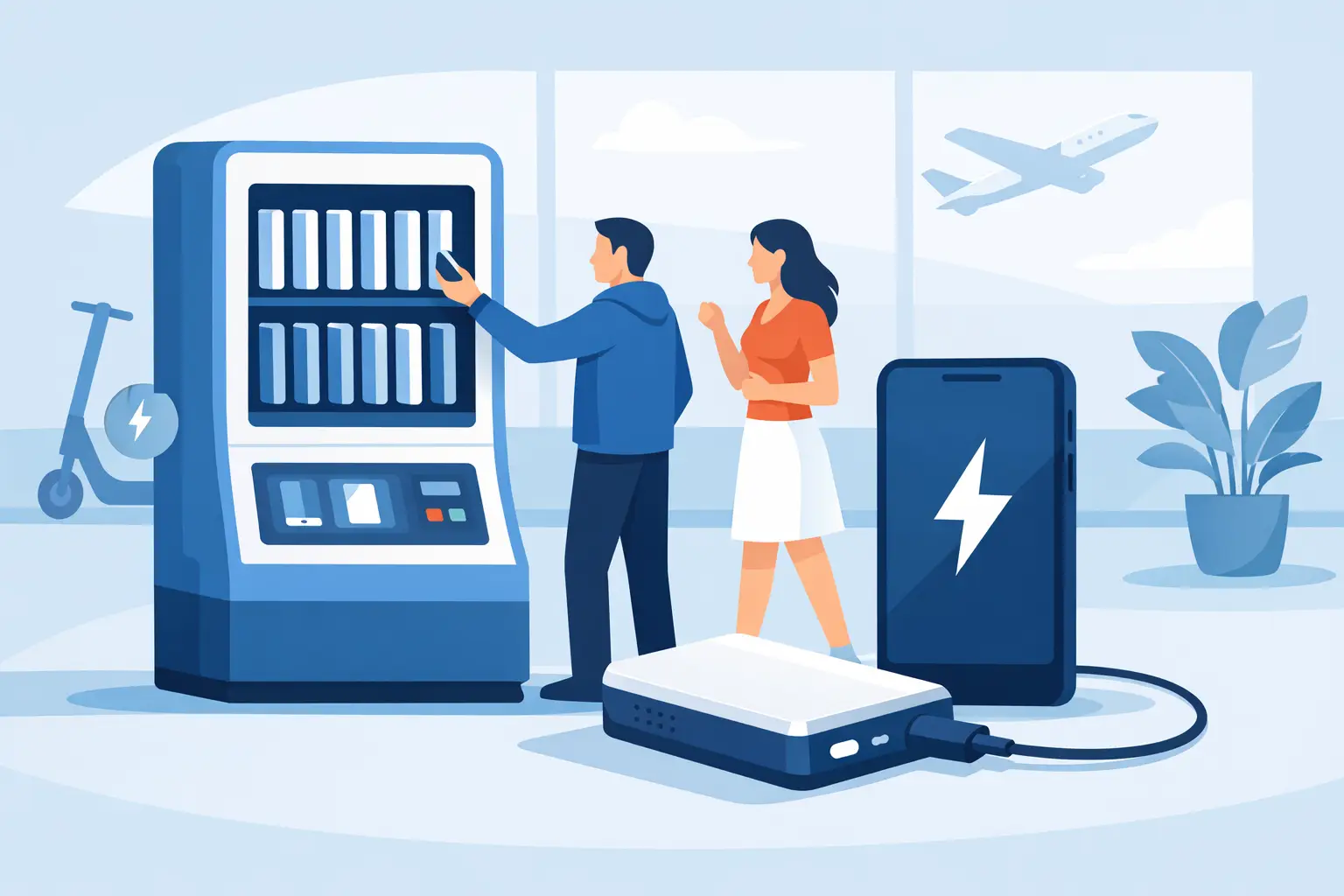
Power Bank Rental Station Buyer’s Guide
May 30, 2026
A power bank rental station helps venues keep guests charged, boost dwell time, and create revenue with flexible, low-friction charging access.
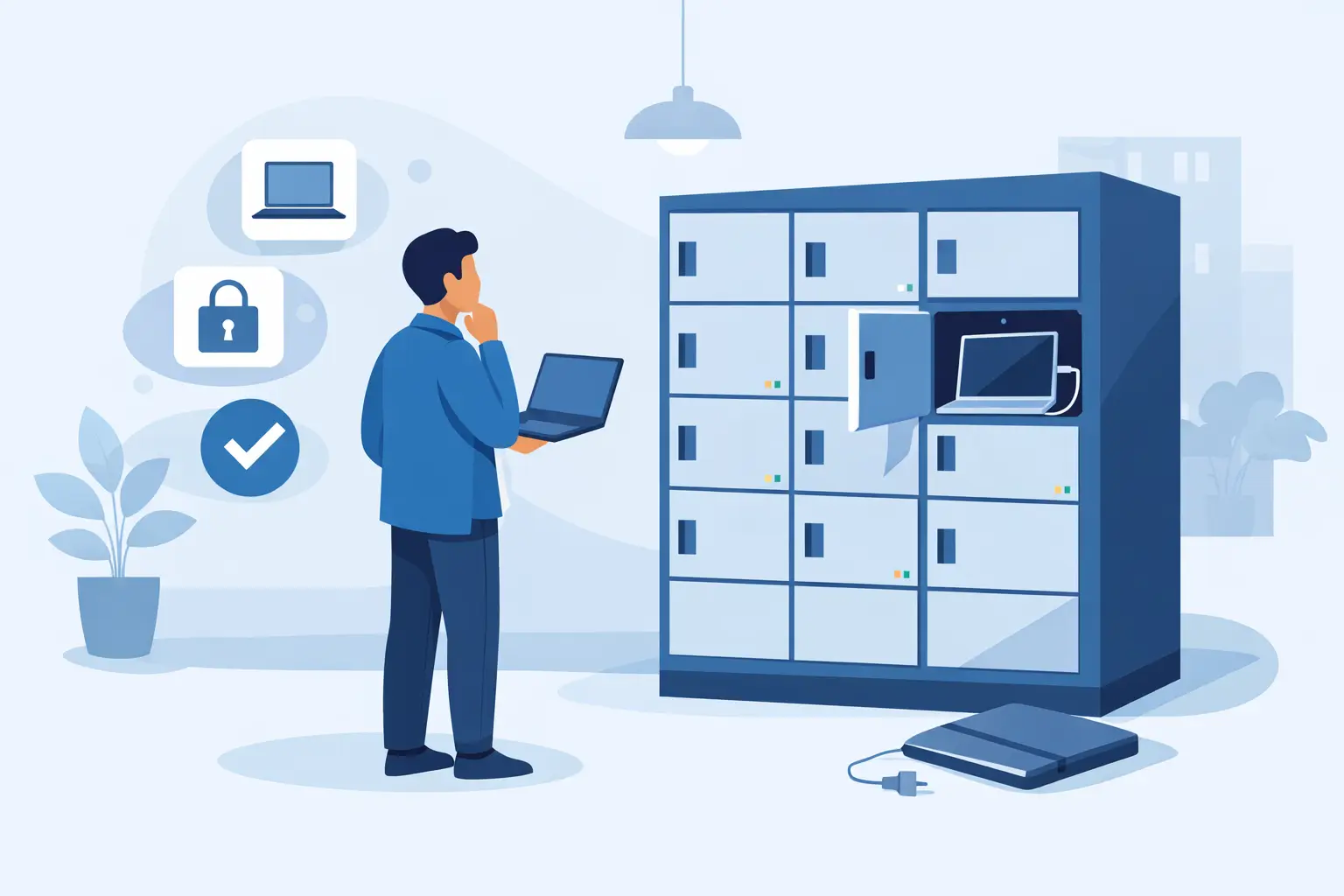
Choosing a Laptop Charging Locker Cabinet
May 29, 2026
Learn how to choose a laptop charging locker cabinet for offices, schools, events, and venues with the right mix of security, power, and ROI.
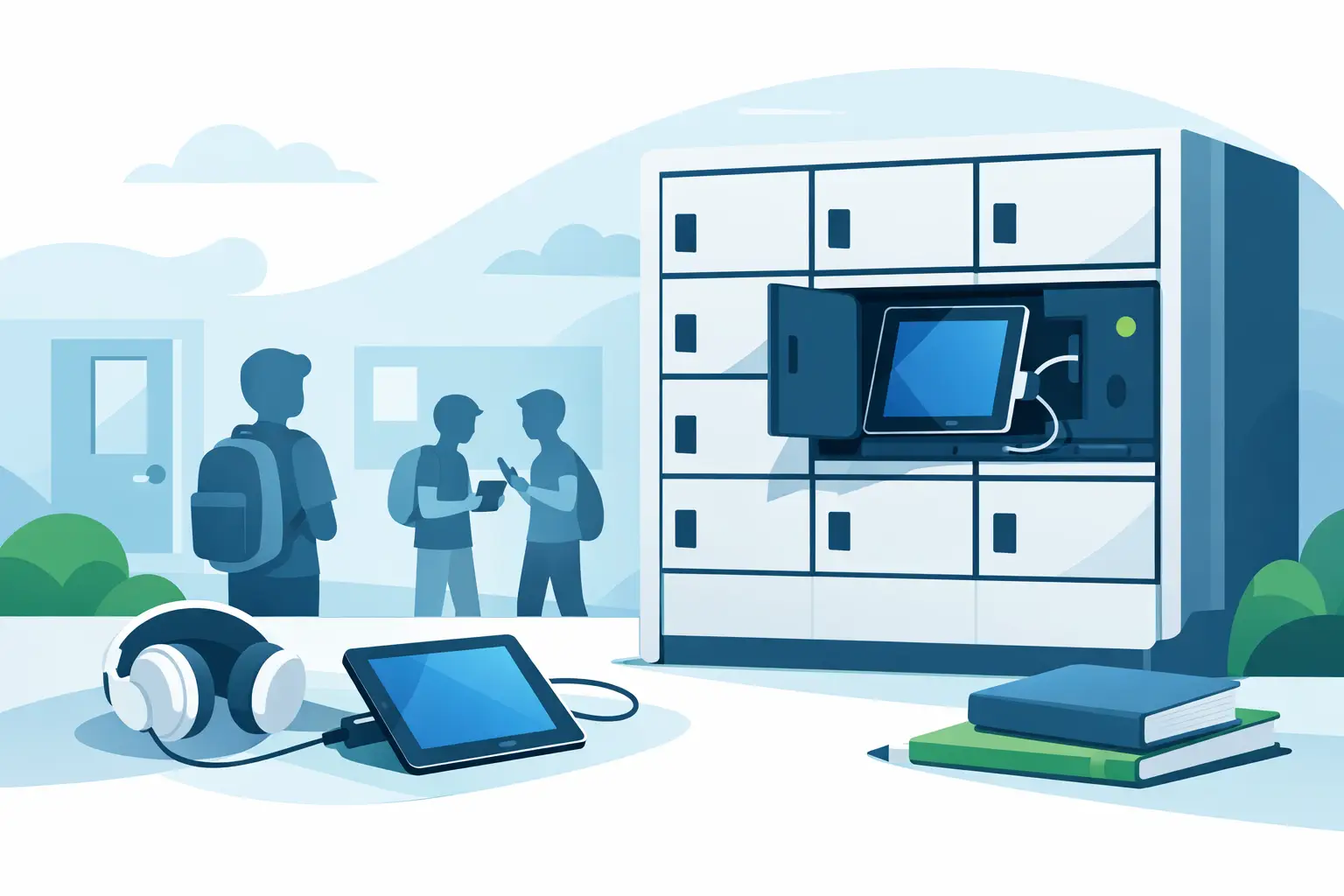
Tablet Charging Locker for Schools: What Matters
May 28, 2026
A tablet charging locker for schools improves device security, charging access, and classroom readiness. Here’s what buyers should evaluate.
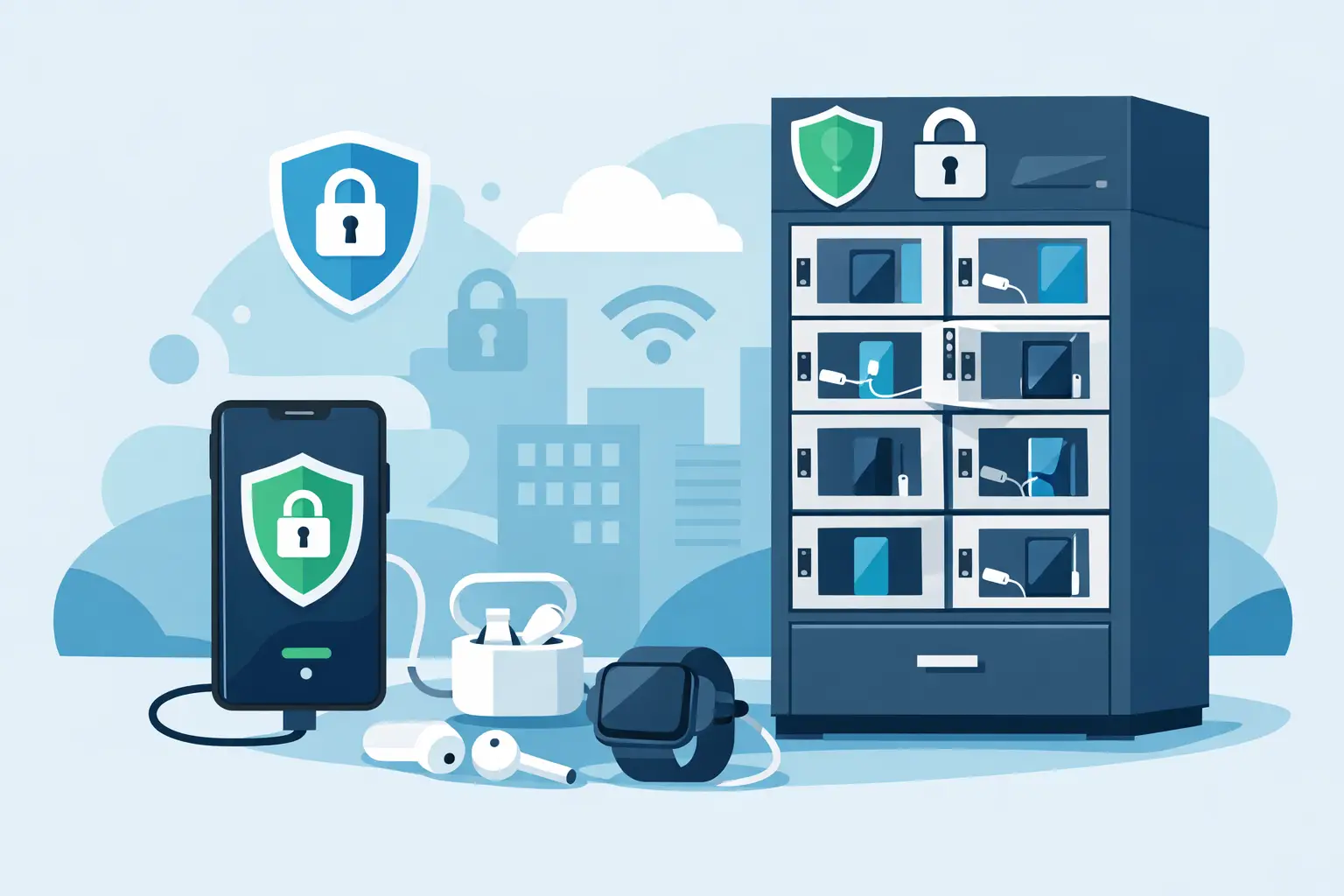
Secure Phone Charging Locker Buying Guide
May 27, 2026
Choose a secure phone charging locker that protects devices, improves guest experience, and fits your space, budget, and usage model.

Phone Charging Station for Business ROI
May 26, 2026
A phone charging station for business can boost dwell time, improve customer experience, and create revenue when matched to the right space.
How to make your phone battery last longer
Mar 20, 2025
It’s no secret that some smartphones have more powerful and longer lasting batteries than others. However, no matter how powerful the battery or how energy efficient your phone is, there are a number of apps and settings that will drain your battery faster. Identifying these apps and settings will help you keep usage to a […]
Phone Batteries – The Best and The Worst
Mar 29, 2017
When buying a new smartphone, there are a number of factors you will consider. From the brand and price, to the operating system, and other features like the camera. No matter what kind of phone you choose or the reason behind your purchase, one thing is for sure – you want the battery to last […]
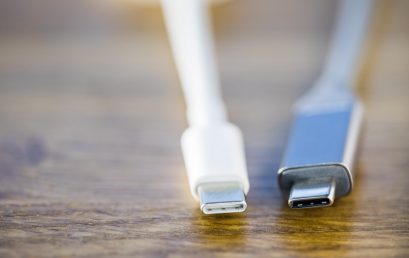
What is USB-C and why is it important?
Mar 15, 2017
By now, you may have heard people talking about USB type C or perhaps you have even tried it out yourself. Either way, many experts agree that this is the future of USB ports and cables. What many people may not realize is that this particular type of connection is significantly different from older types […]